Scandinavia gets less attention from rail travellers than it deserves. The conversation about scenic European trains tends to revolve around Switzerland, Austria, and Italy, and those countries do have extraordinary routes, which we’ve written about in our most scenic trains in Europe guide. But Scandinavia offers something different: a rawness and scale that the Alps, for all their drama, can’t match.
Norwegian trains climb through fjord country where the land drops vertically into water hundreds of metres below. Swedish sleeper trains cross the Arctic Circle in darkness, or, in summer, in perpetual daylight. Finnish trains run through boreal forests so vast and uniform that the field becomes almost abstract. The scenery isn’t manicured. It’s wild in a way that makes you feel the distance from anything familiar.
And the trains themselves are good. Scandinavian rail operators run modern, comfortable services with large windows, onboard WiFi (when coverage allows), and a general atmosphere of quiet competence. The infrastructure is well-maintained because Scandinavian countries believe in maintaining infrastructure. Delays happen, weather sees to that, but the baseline standard is high.
TL;DR: Scandinavia’s best scenic train routes include the Bergen Line (Oslo-Bergen, 7 hours, from 249 NOK), the Flåm Railway (one of the world’s steepest), the Nordland Line to the Arctic Circle, and the Stockholm-Narvik sleeper across northern Sweden. Book 60-90 days ahead for the best fares.
Norway: Where the Mountains Meet the Sea
Norway’s rail network was built through terrain that should have made railways impossible. The result is a collection of routes that rank among the most dramatic in the world.
The Bergen Line: Oslo to Bergen (7 hours)
This is the one that defines Norwegian rail travel. The Bergen Line covers 496 km between Oslo and Bergen, climbing from sea level to the Hardangervidda, Europe’s largest mountain plateau, at 1,222 metres, then descending through the western fjordlands to Bergen on the coast.
The journey has three distinct acts. The first two hours from Oslo cross forested hills and lake country, pleasant but not yet remarkable. Then the train begins to climb, and the field transforms. Trees give way to scrub, then to bare rock and snow. The Hardangervidda is an Arctic plateau in miniature, vast, treeless, often snow-covered even in summer. You pass Finse, the highest station on the line at 1,222 metres, which was the location for filming the ice planet Hoth in The Empire Strikes Back. (This is a more interesting fact than it has any right to be.)
The final descent from Myrdal to Bergen is the climax. The train drops through a series of tunnels and avalanche shelters into the narrow valleys of western Norway, with waterfalls visible through the windows and the green, wet field of the Bergen coast appearing gradually below.
Booking: Vy (the Norwegian state railway) offers Minipris tickets from 249 NOK (about 22 euros) when booked early. The standard fare is around 850 NOK. The early tickets sell quickly in summer, book 60-90 days ahead.
The Flåm Railway: Myrdal to Flåm (1 hour)
A branch line off the Bergen Line, the Flåm Railway descends 866 metres in just 20 km, making it one of the steepest adhesion railways in the world. The gradient reaches 5.5%, which doesn’t sound dramatic until you’re sitting in a carriage tilted at that angle and looking straight down into the Flåm Valley.
Twenty tunnels. One hour. A waterfall, Kjosfossen, where the train stops so passengers can stand on the platform and feel the spray. The valley narrows to a gorge, then opens suddenly to reveal the Aurlandsfjord at the bottom, with the village of Flåm at the water’s edge.
This is a tourist railway and it knows it, fares are higher than other Norwegian routes (around 400 NOK one-way), and the trains are busy in summer. But it’s genuinely spectacular, and it connects to the Bergen Line at Myrdal, making it easy to incorporate into a longer journey.
The Rauma Line: Dombås to Åndalsnes (1 hour 40 minutes)
Less famous than the Bergen Line but equally dramatic. The Rauma Line descends from the mountain town of Dombås to Åndalsnes on the Romsdalsfjord, passing through the Romsdal Valley, one of Norway’s deepest. The Trollveggen (Troll Wall), at 1,100 metres Europe’s tallest vertical rock face, is visible from the train.
The Kylling Bridge, a stone arch viaduct spanning 76 metres across a gorge, is the engineering highlight. The train crosses it at speed, and the valley floor is a long way down.
How to ride it: The Rauma Line connects with the Dovre Line at Dombås, which runs between Oslo and Trondheim. This makes it easy to include as a side trip on the Oslo-Trondheim route.
The Nordland Line: Trondheim to Bodø (9 hours 45 minutes)
Norway’s longest railway line runs 729 km from Trondheim to Bodø, crossing the Arctic Circle at the Polarsirkelen station, marked by a monument visible from the train. North of the circle, the field becomes sub-Arctic: sparse birch forest, frozen lakes in winter, and in summer, daylight that lasts all night.
The section around Mo i Rana is particularly good, the train runs along the coast with views of the Svartisen glacier across the water. This is not a route for people in a hurry; nearly ten hours is a commitment. But the length is part of the point. You’re crossing from temperate to Arctic Norway, and that transition takes time.
Sweden: Forests, Lakes, and the Arctic
Stockholm to Narvik: The Arctic Circle Night Train (19 hours)
This is one of the great sleeper train journeys. The SJ night train departs Stockholm in the evening and arrives in Narvik, Norway, a town on a fjord above the 68th parallel, the following afternoon. The route crosses the entire length of Sweden, passing through the boreal forests of Norrland and across the Arctic Circle.
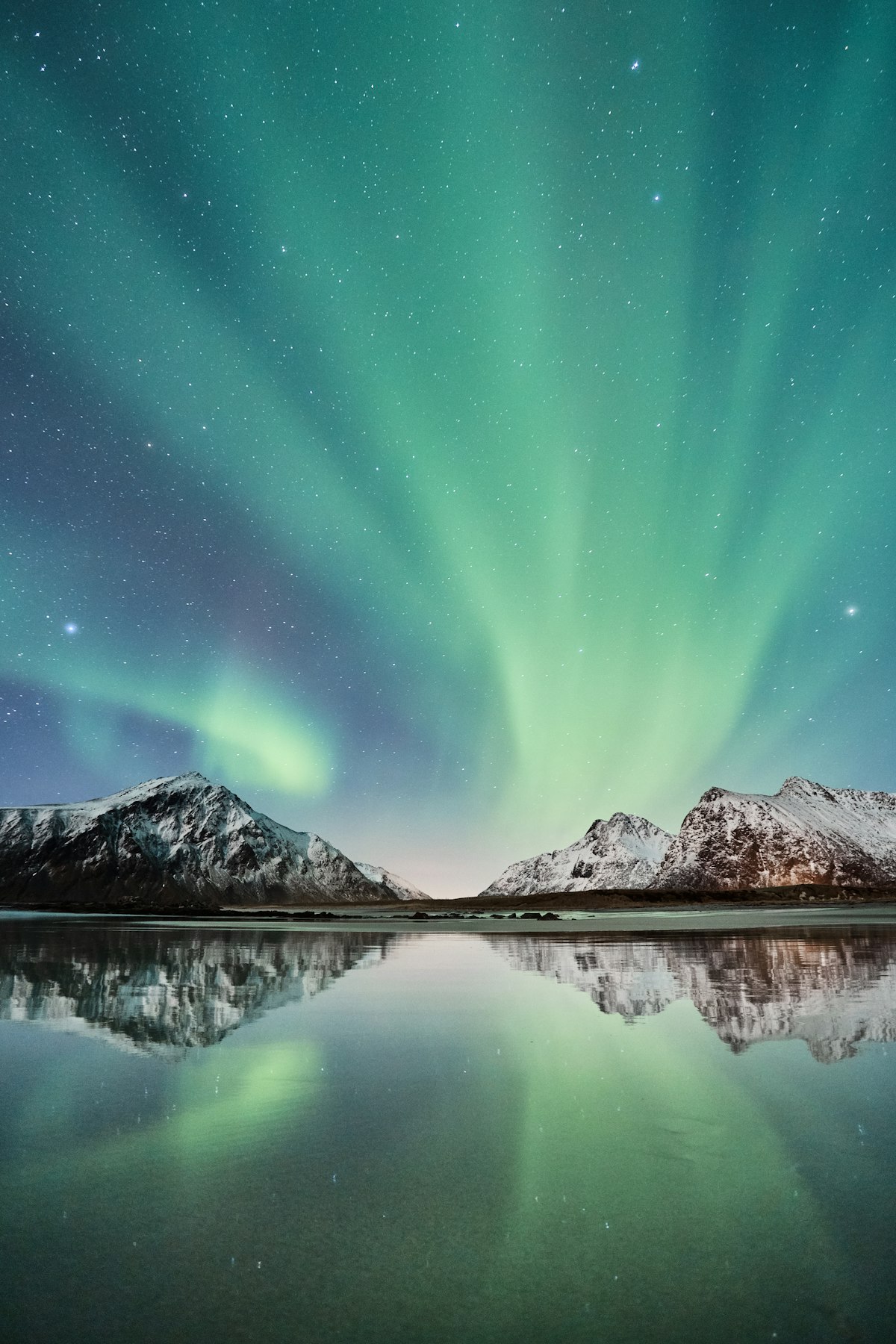
In winter, there’s a genuine chance of seeing the northern lights from your berth, the train passes through some of the most remote and dark territory in Europe between midnight and dawn. In summer, the midnight sun means the field is visible at 2 AM, an eerie experience of pine forests stretching to the horizon in golden light.
The final section from Kiruna to Narvik crosses the Scandinavian Mountains into Norway, descending to the coast through a field of birch, rock, and snow. The Ofoten Line, the Norwegian stretch, is considered one of the most scenic railway segments in northern Europe.
Booking: SJ offers fares from about 400 SEK (36 euros) for seats and from 800 SEK for couchettes. Book early, this route is popular, especially in winter for northern lights season.
The Inlandsbanan: Mora to Gällivare (15 hours)
Sweden’s Inland Line is a summer-only railway that runs 1,067 km through the interior of Sweden, forests, lakes, reindeer crossings, and very few people. The train stops occasionally for moose on the tracks, which tells you something about the density of human habitation along this route.
This is slow travel in its purest form. The train averages about 70 km/h. The field is repetitive in a meditative way, birch, pine, lake, birch, pine, lake, interrupted by small towns and the occasional dramatic river crossing. It’s not for everyone. For the right temperament, it’s extraordinary.
The Inlandsbanan runs from mid-June to late August. There’s a two-day version with an overnight stop in Östersund, which is recommended, fifteen hours on a single train through Swedish forests requires either strong enthusiasm or strong coffee.
Stockholm to Gothenburg: SJ High-Speed (3 hours)
Not a scenic route in the dramatic sense, but a fast, comfortable connection between Sweden’s two largest cities through gentle farmland, forests, and the occasional lake. The SJ X2000 tilting train covers the 455 km in about three hours.
This is Sweden’s equivalent of Paris to Lyon or Madrid to Barcelona, a business route that happens to be pleasant. Fares from 195 SEK (about 17 euros) booked early.
Finland: The Boreal North
Helsinki to Rovaniemi: Gateway to Lapland (8-12 hours)
Finland’s main north-south line runs from Helsinki to Rovaniemi, the “official” hometown of Santa Claus, on the Arctic Circle. The journey takes 8-12 hours depending on the service, passing through the Finnish lake district and then into the boreal forests of Lapland.
The overnight Santa Claus Express is the most atmospheric option. You board in Helsinki in the evening, sleep through central Finland, and wake up in Lapland, potentially to a field of snow and ice if you’re travelling in winter. VR (Finnish Railways) offers single and double sleeper cabins with beds, reading lights, and the austere comfort that Finns do well.
The Finnish field is subtle. There are no mountains, Finland’s highest point is 1,324 metres, and most of the country is flat. What there is: water. Finland has 188,000 lakes, and the train passes an improbable number of them. The field shimmers.
Booking: VR offers early-bird fares from about 30 euros for seats. Sleeper berths from 60-100 euros. Book at vr.fi.
How to Plan a Scandinavian Train Trip
Book early for Norwegian routes. Vy’s Minipris fares are significantly cheaper than walk-up prices. The Bergen Line can cost 249 NOK booked early or 850 NOK on the day, the same seat, the same train, three times the price.
Consider the Eurail Scandinavia Pass. If you’re visiting two or more Scandinavian countries, the regional pass can be economical, especially for flexibility. Check point-to-point prices first, early-bird fares can undercut the pass.
Summer vs. winter changes everything. Norway’s routes are most dramatic in winter (snow, northern lights, frozen fjords) but some sections have reduced service. Summer offers midnight sun and the Inlandsbanan. The Bergen Line and Nordland Line run year-round.
Bring layers and food. Scandinavian trains are comfortable but onboard catering is limited and expensive. A packed lunch and warm layers for platform stops make the journey better.
Connect to our Copenhagen to Stockholm guide for the cross-border section between Denmark and Sweden, and our Oslo guide for planning around the Norwegian capital.
Is Scandinavia Worth the Trip for Train Travel?
Absolutely, with the caveat that Scandinavian rail travel requires a different mindset than Swiss or Italian rail travel. The distances are longer. The population density is lower. The scenery is vast rather than intimate. You’re not darting between medieval cities an hour apart; you’re crossing a continent-sized field that makes you feel small.
That feeling, of genuine remoteness, of wild field that doesn’t care whether you’re there or not, is increasingly rare in Europe. Scandinavian trains offer it reliably, comfortably, and (booked early) affordably. If you’ve done the Swiss and Austrian routes and want something that feels genuinely different, go north.