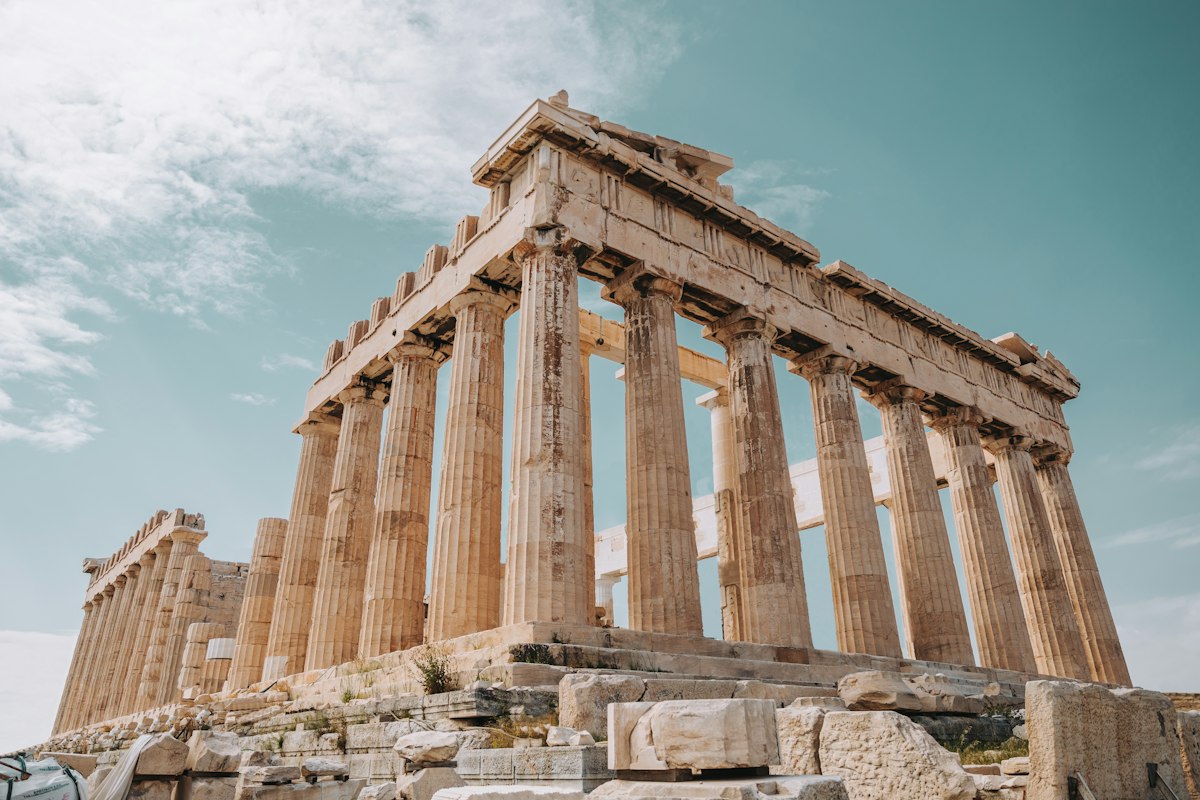
Athens arrives on you slowly. The first thing you notice from the train window, coming in from the airport on the Proastiakos, is how much of the city is flat and spread and ochre-coloured under a sky of implausible blue. Then the Acropolis appears — not dramatically, not like a postcard, but casually, between buildings, above a motorway overpass, as though it has always been there and sees no reason to announce itself. Which is, of course, precisely the point.
This is one of the oldest cities in the world. It has outlasted empires. It is not interested in impressing you. What it offers instead is something rarer: the experience of walking streets that have been walked for 3,000 years, eating in neighbourhoods that tourists have not yet homogenised, and using a train network that, while modest by northern European standards, connects you surprisingly well to the ancient world just beyond the city limits.
planning a slow travel trip through Europe
TL;DR: Athens Larissa Station sits 10 minutes’ walk from Omonia and 20 minutes from the Acropolis. The Proastiakos suburban rail connects the airport to the city in 40 minutes for €10. InterCity trains link Athens to Thessaloniki in 4h 30min (€15–€35). Day trips to Corinth run in 1h 15min for around €7. The Athens Metro is cheap and efficient — three lines, €1.40 per ride. Plan for 7–10 days minimum if you’re travelling slowly. Ferry connections to the islands leave from Piraeus on Metro Line 1.
Getting to Athens by Train
From the Airport: Proastiakos Suburban Rail
The most practical arrival into Athens — and, for slow travellers, the most pleasant — is by suburban rail from Eleftherios Venizelos Airport. The Proastiakos (Προαστιακός, meaning “suburban”) is Greece’s commuter rail network, and the airport line is its most useful route.
The journey from the airport to Athens Larissa Station (Σταθμός Αθηνών Λάρισα) takes approximately 40 minutes and costs €10 one-way or €18 return (OASA fares, 2026). Tickets are available from machines at the airport station concourse. The train runs roughly every 30 minutes during the day; check real-time departures on the OASA Transit app before you board.
Larissa Station is central. From there, Omonia Square — the civic heart of modern Athens — is a 10-minute walk west. Monastiraki, the flea market district at the edge of the Plaka, is 20 minutes on foot or two Metro stops on Line 2.
The taxi alternative costs €40–€55 from the airport to the centre, depending on traffic. It is rarely worth it. The Proastiakos is faster at peak times, costs a fraction of the price, and drops you closer to most accommodation.
A word on luggage: the suburban rail has good luggage space — overhead racks and floor space at the carriage ends. Athens airport is rarely chaotic at the departure platform. If you arrive early morning and your accommodation check-in is at 3pm, most central hotels in the Plaka and Monastiraki areas will store your bags without charge.
From Thessaloniki: InterCity Across Central Greece
The train between Athens and Thessaloniki is one of the foundational journeys of Greek rail travel. The two cities — Athens in the south, Thessaloniki (Greece’s second city) in the north — are connected by InterCity (IC) services operated by HellasTrains, the successor to the former state railway OSE.
The fastest service takes approximately 4 hours 30 minutes, running several times daily in each direction. Advance tickets cost €15–€25 in second class, €25–€40 in first class — book through the HellasTrains website (hellastrains.gr, 2026) or at station ticket counters. The UI on the HellasTrains booking platform is functional but not elegant; the price calendar requires some patience. Book at least a week ahead for the cheapest fares.
The route runs south through the Thessalian plain, past the extraordinary landscape of Meteora (which you cannot stop at directly on this service, but which warrants a separate detour), through Larissa — the agricultural capital of central Greece — and eventually into the Athens basin. North of Larissa, on a clear day, you can see the summit of Mount Olympus to the east: snow-capped even in late spring, the highest mountain in Greece at 2,917 metres, the home of the gods by ancient agreement. It appears for perhaps 20 minutes of the journey. It is worth the window seat.
The Thessaloniki–Athens service is not the Frecciarossa. Greek railways have a complicated recent history — infrastructure investment stalled for decades under successive governments, and some of the line is still single-track with slower speeds. The 4h 30min journey time is fast enough to be genuinely useful; the trains are clean and have café service. The landscape is the entertainment. Bring something to read for the flat stretches and pay attention when the terrain becomes interesting.
From Sofia, Bulgaria: International Rail
For travellers arriving overland from Eastern Europe, the Sofia–Athens international service offers a remarkable journey through the Balkans. The train takes approximately 7–8 hours and operates daily, crossing the Bulgarian–Greek border near Kulata. Tickets cost €25–€45 depending on class and booking lead time.
This is slow travel at its most literal. The route passes through the Axios River valley and into the narrow mountain passes of northern Greece, with border formalities at Kulata/Promachonas. The train is not fast, the stations are often small and unmarked, and the café car is a variable proposition. But arriving in Athens after a night train from Sofia — awake at dawn as the city sprawls into view across the Attica plain — is an experience that no flight from Sofia Airport can approximate.
Athens Larissa Station: Your Rail Hub
Athens Larissa Station is the city’s main railway terminus, and it is comfortable without being beautiful. Located in the Metaxourgeio district west of Omonia, it handles all long-distance domestic services plus international trains. The adjacent Athens Peloponnese Station (Σταθμός Πελοποννήσου) — immediately next door, connected by a pedestrian bridge — handles the suburban rail lines including Proastiakos services to the airport.
Inside Larissa: a decent café, left-luggage lockers (useful for day-trippers arriving before check-in), a newsagent, and ticket counters with English-speaking staff during business hours. The station is not a destination in itself, but it is clean, well-signed in English and Greek, and located on Metro Line 2 (Red) at Larissa Station stop — two stops north of Syntagma, the main central square.
From Larissa Station to the Acropolis: take Metro Line 2 south to Syntagma (2 stops, 4 minutes), then Line 3 west to Monastiraki (1 stop, 2 minutes), then walk south uphill through the Plaka for 15 minutes. Total journey from the station: around 25 minutes.
Getting Around Athens
The Athens Metro
Athens has three Metro lines, and they are more useful than first-time visitors expect:
-
Line 1 (Green) — Kifissia to Piraeus: The original line, partly elevated, partly underground. The central underground stretch from Kifissia south through Omonia, Monastiraki, and Thissio to Piraeus is the most useful for visitors. The Monastiraki and Thissio stops are both within walking distance of the Acropolis. Piraeus — the end of Line 1 — is the port for ferry connections to the islands.
-
Line 2 (Red) — Anthoupoli to Elliniko: A modern line crossing the city east–west. Syntagma is the central interchange. Larissa Station is two stops north of Syntagma on this line.
-
Line 3 (Blue) — Nikaia to Donatou/Airport: The airport line (via Proastiakos interchange at Donatou) and the line serving the northern and eastern suburbs. Monastiraki and Syntagma are the useful city-centre stops.
Fares: A single ticket costs €1.40 and is valid for 1.5 hours across all modes (Metro, bus, tram, trolleybus). A 24-hour travel card costs €4.10; a 5-day card costs €9.00. These are extraordinary value. Athens public transport is among the cheapest in Western Europe.
The OASA Transit app (available in English) shows live departure times for Metro, bus, and tram services. Download it before you need it.
The ancient city lies under the Metro. Several stations display artefacts uncovered during construction: Syntagma Station has a small museum of finds from the Eridanos River cemetery, visible through glass panels on the platform level. Monastiraki Station displays ancient water pipes and building foundations. You are, in the most literal sense, travelling through archaeology.
The Tram to the Coast
Athens has a tram network connecting the city centre to the southern coastal suburbs — and it is one of the more pleasant ways to spend an afternoon. From Syntagma (interchange with the Metro), the T3 tram line runs south through Neos Kosmos and Kallithea to the coast, then east along the Saronic Gulf to Glyfada and eventually Voula. The full journey from Syntagma to Voula takes about 45 minutes.
Glyfada is Athens’ beach suburb: expensive, slightly glitzy, and popular with Athenians on summer evenings. Voula is quieter, more residential. The tram fare is included in standard OASA tickets and travel cards — the same €1.40 covers you.
The tram is not fast. In heavy traffic it is very slow. But in summer, with the windows open and the coast appearing, it is one of those small urban pleasures that slow travel is specifically designed to notice.
Day Trips from Athens by Train
Corinth: Ancient Greece in 75 Minutes
Ancient Corinth is one of the most rewarding day trips from Athens, and the train makes it straightforward. Services run from Athens Larissa Station to Korinthos (Corinth) in approximately 1 hour 15 minutes, with several departures throughout the day. The fare is €6–€8 one-way depending on the service type.
From Corinth station, Ancient Corinth — the archaeological site with the Temple of Apollo (one of the oldest surviving Doric temples in Greece, circa 540 BCE) and the excellent Archaeological Museum — is a 4km taxi ride (€8–€10) or a 45-minute walk. The Acrocorinth — the medieval fortress on the imposing rock above — adds another hour if you have the legs for it.
Allow a full day: three to four hours at the site and museum, lunch in the modern town (the tavernas near the ancient site are better than they look), and an afternoon train back to Athens.
Korinthos is also the end of the electrified suburban line. West of Corinth, trains continue to Kiato — the current western terminus of the Proastiakos network — which serves as the jumping-off point for buses into the Peloponnese: Nafplio, Epidaurus, and Olympia. For travellers with more time, a three-day Peloponnese loop using a combination of Proastiakos trains and local buses is entirely feasible from Athens.
The Proastiakos to Kiato: Gateway to the Peloponnese
The Proastiakos suburban rail runs west from Athens through Corinth and on to Kiato, the current end of the electrified line. The journey from Athens Larissa Station to Kiato takes approximately 1 hour 45 minutes and costs around €8.
Kiato is not itself a destination — it is a transit point. But from Kiato, KTEL buses (the national intercity coach network) run frequently to Nafplio (2 hours), Epidaurus (1h 30min), and Patras (1h). If you want to experience the Peloponnese without renting a car, this is the most practical approach.
The ancient theatre at Epidaurus has nearly perfect acoustics — a whisper on the circular stage is audible at the top of the 55 rows. The approach by bus from Kiato, through olive groves and citrus orchards, is half the experience. This is not a journey you should rush.
Athens for Slow Travellers: The Neighbourhoods
Most visitors spend their time in the Plaka — the tourist district immediately below the Acropolis — and the adjacent Monastiraki. Both are worth visiting, but neither is where Athens actually lives. If you’re staying for a week or more, here are the neighbourhoods that matter.
Exarcheia: The Radical Heart
Exarcheia is Athens’ most politically charged neighbourhood: anarchist posters, community gardens, excellent bookshops, and some of the best cheap tavernas in the city. It is perfectly safe to visit during the day; street art is extraordinary. The weekly Exarcheia street market (Saturday mornings, Kallidromiou Street) is an Athens institution — locals buying vegetables, herbs, olives, and cheese from farmers who have driven in from Attica and beyond.
Metro: Line 2, Omonia stop, then walk north 10 minutes.
Koukaki: The New Plaka
Koukaki sits on the southern slope of the Acropolis hill, between Monastiraki and Kallithea. Ten years ago it was a quiet residential neighbourhood; it is now what the Plaka was before tourism industrialised it — the cafes, wine bars, and restaurants that Athenians actually use. Wander Drakou Street on a Thursday evening and you’ll find exactly this.
Monastiraki Flea Market
Every Sunday morning, the streets radiating from Monastiraki Square turn into an outdoor market of improbable variety: vintage clothing, military surplus, broken electronics, genuine antiques, coffee, and gyros from Thanasis (Mitropoleos 69 — the best souvlaki in central Athens by the consistent opinion of anyone who has tried it more than once). The market is busiest between 9am and 1pm. The Acropolis is visible from multiple angles. It is a fine way to spend a Sunday morning.
Thanasis, Mitropoleos 69 — the lamb and beef souvlaki are outstanding; the pitta is grilled rather than steamed, which matters. Open from around 10am until midnight. Expect a queue on Sunday mornings. It is worth the queue.
Eating in Athens: Markets and Essentials
Varvakios Agora: The Central Market
The Varvakios Agora (Κεντρική Αγορά) on Athinas Street — a 10-minute walk north of Monastiraki — is Athens’ central covered market, operating on the same site since 1886. The meat hall in the central building is a full-blooded, unapologetic display of the Athenian carnivore tradition: whole carcasses, offal, tripe, blood sausages. The fish market on the eastern side is quieter and more accessible; come early (before 10am) for the best selection.
Adjacent to the meat market, the fruit and vegetable market spills across Evripidou Street to the west. Buy citrus fruits, tomatoes, and tomatokeftedes (tomato fritters from Santorini, sold bagged at several stalls) for a fraction of supermarket prices. The spice shops on Evripidou sell dried herbs, mountain tea (tsai tou vounou), and every form of dried legume you can name.
Practical Athens Eating Notes
- Lunch is the main meal. Most tavernas and estiatorio restaurants serve a proper hot lunch from 1pm–4pm and then a shorter dinner from 8pm–midnight. Eating at 7pm will mark you as a tourist.
- House wine (hima or barrelled wine) is served in small carafes and is invariably cheaper and more characterful than bottled wine in traditional tavernas. Ask for hima lefko (white) or hima kokkino (red).
- The mezze tradition in Athens means that a full meal often involves four or five small dishes rather than a single main — taramosalata, tzatziki, grilled vegetables, fried cheese, then a meat or fish dish. Ordering this way is cheaper and more interesting than a single entrée.
Practical Information
The OASA Transit Card
The rechargeable OASA transit card (physical card, available from Metro station machines and ticket counters) accepts all standard fare products: single tickets, day passes, and weekly passes. It is marginally more convenient than buying paper tickets for each journey. If you’re staying more than three days, get one.
The Athens Transport app (OASA Transit) is the essential companion: live Metro and bus times, journey planning, and fare information in English.
Ferry Connections from Piraeus
Athens is also a gateway to the Greek islands, and the connection is Metro Line 1 south to Piraeus — approximately 20 minutes from Monastiraki, €1.40. Piraeus port is one of Europe’s busiest, handling ferries to the Cyclades (Santorini, Mykonos, Paros, Naxos), Dodecanese (Rhodes, Kos, Patmos), Crete, and beyond.
For slow travellers, combining an Athens base with island ferry travel — arriving by train, exploring the city, then island-hopping by sea before returning by train — makes Athens feel less like a stopover and more like a hub. Which is what it has always been.
Getting from Athens to the Rest of Europe
Athens is connected to Thessaloniki by InterCity rail (4h 30min), which is itself connected to Belgrade, Budapest, and the European network beyond. For most international connections, the practical route is Athens → Thessaloniki by train, then Thessaloniki → Sofia → Budapest/Belgrade by overnight train or continued InterCity services. It is not fast. It is, however, the kind of journey that rewards patience.
planning a slow travel trip across Europe by train
How Long to Stay in Athens
The standard tourist itinerary gives Athens three days. The standard tourist itinerary is wrong.
Three days is enough for the Acropolis, the National Archaeological Museum, a souvlaki at Thanasis, and a brief walk through the Plaka. It leaves no time for the Central Market on a busy morning, or an afternoon at the Benaki Museum, or an evening in Koukaki discovering that Athens has a wine bar scene of surprising quality, or a day trip to Corinth, or sitting in Exarcheia on a Saturday afternoon with a coffee and a newspaper and the feeling that you are somewhere that has not yet been entirely translated into a product for visitors.
Plan for seven to ten days minimum if you’re travelling slowly. Use Athens as a base: trains and ferries fan out in every direction. The city rewards the kind of attention that slow travel, by definition, allows.
There is a particular quality to Athens in the early morning — before the heat, before the crowds, before the tourist sites have opened — when the light on the marble of the Acropolis is pale and cool and the city is still waking. Set your alarm for it at least once. The €1.40 Metro ticket and a 20-minute walk will take you there.
Related Reading
- Greece Island Hopping by Ferry: The Complete Route Guide — Greece island hopping by ferry is the only real way to do the Cyclades and Dodecanese.
- Greek Islands for Slow Travelers: Which Island and How Long to Stay — Greek islands slow travel done right: island character guides for Naxos, Paros, Folegandros, Hydra, Samos, and…
- Greek Ferries: Everything You Need to Know Before You Go — Greek ferries practical guide: booking platforms, ticket types, operators ranked honestly, port logistics, what to…