There is a moment, somewhere around the midpoint of the causeway that carries you into Venice, when the city seems to materialise from the water itself, buildings rising without foundations, suspended between sea and sky. No road can offer this. No flight comes close. Only the train delivers you to Venice the way Venice deserves to be approached: slowly, ceremonially, across the surface of the lagoon.
The journey from Florence to Venice by train is one of the great short rail trips in Europe, practical enough to do in a morning, yet beautiful enough to linger in your memory long after the trip ends. This guide covers everything you need: journey times, prices, which train to book, what to expect on board, and how to make the most of that extraordinary final approach.
TL;DR
The Florence to Venice train takes 2 hours 5 minutes on the fastest Frecciarossa services, with around 30+ departures daily from Florence Santa Maria Novella. Tickets start from €15 booked in advance, rising to €80 or more for flexible first-class fares last-minute. Book direct via Trenitalia or for the best prices.
How Long Does the Florence to Venice Train Take?
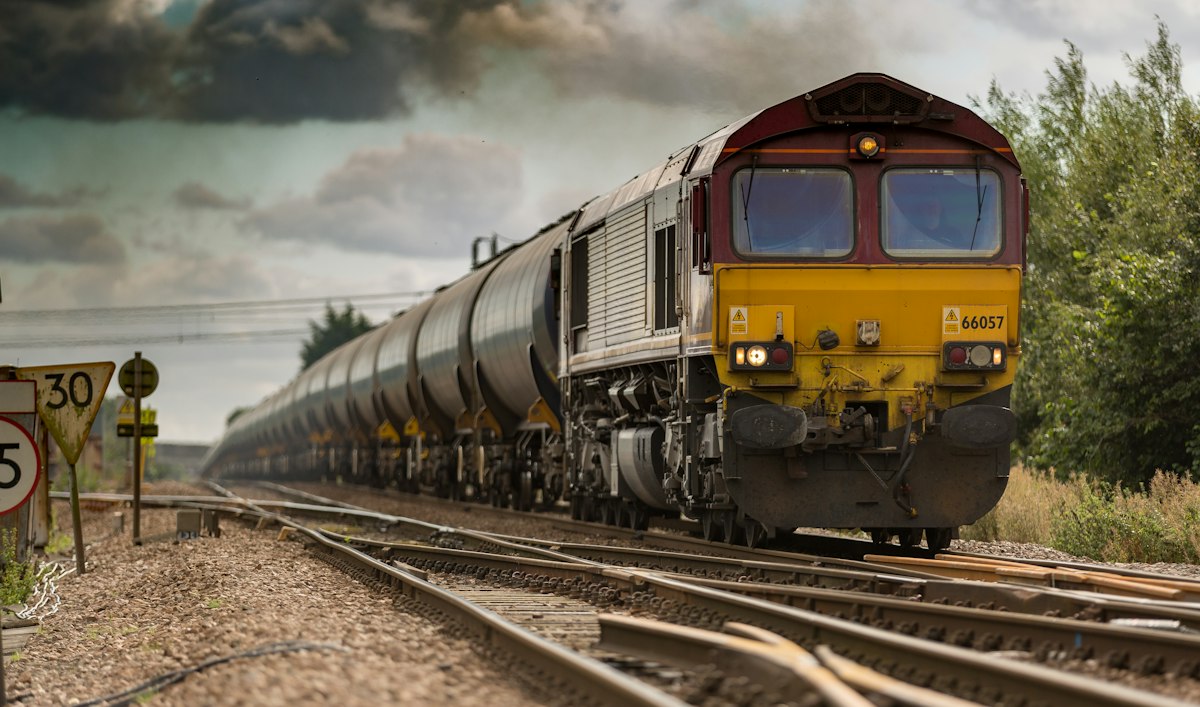
The fastest Florence to Venice trains take just over 2 hours, specifically, 2 hours 5 minutes on the Frecciarossa high-speed service. That’s roughly the same time it takes to watch a film, and considerably shorter than the administrative ordeal of flying between two airports that serve neither city particularly well.
Regional trains take longer, typically 2.5 to 3 hours, and involve a change in Bologna or Padua. They’re cheaper, but the time cost is real and the comfort is noticeably lower.
| Service | Journey Time | Direct? | Frequency |
|---|---|---|---|
| Frecciarossa (high-speed) | ~2h 05m | Yes | Every 30–60 min |
| Italo EVO / AV | ~2h 10m | Yes | Several daily |
| InterCity | ~2h 30m | Yes (some) | Limited |
| Regionale | 2h 45m–3h+ | No (change at Bologna) | Frequent |
Both Florence Santa Maria Novella and Venice Santa Lucia are central stations, you step off the train into the heart of each city, without transfers or shuttle buses.
How Much Does the Florence to Venice Train Cost?
Prices on the Florence to Venice route range from €15 to €80, depending on how far in advance you book, the operator, and the class of travel.
The cheapest fares, typically €15–€25, are advance-purchase “Super Economy” or “Economy” tickets on Frecciarossa or Italo. These are non-refundable and non-exchangeable, but if you know your travel date, they’re outstanding value for a two-hour high-speed journey. Standard flexible tickets run €40–€60, while first-class (Frecciarossa “Executive” or Italo “Prima”) can reach €70–€80.
Frecciarossa pricing tiers:
- Super Economy: from ~€15–€20
- Economy: ~€25–€35
- Business: ~€45–€55
- Executive: ~€65–€80
Italo pricing:
- Low: from ~€17–€23
- Economy/Flex: ~€28–€50
- Prima (first class): ~€60–€80
Regional trains are typically €10–€15, but the trade-off in journey time and comfort rarely makes sense for this particular route unless your budget is extremely tight.
Booking tip: Tickets open roughly 4 months in advance, and the cheapest fares sell out fast on popular travel dates, especially summer weekends and Italian national holidays. Book as early as you can for significant savings.
You can book directly via Trenitalia or Italo, or use a booking aggregator like which shows both operators side-by-side and is particularly useful if you’re booking as part of a longer European journey.
Price Comparison Table
| Ticket Type | Operator | Price (advance) | Price (flexible) | Refundable? |
|---|---|---|---|---|
| Regionale | Trenitalia | €9–€12 | €9–€12 | Yes |
| Frecciarossa Super Economy | Trenitalia | €15–€20 | N/A | No |
| Frecciarossa Economy | Trenitalia | €25–€35 | N/A | No |
| Italo Low | Italo | €17–€23 | N/A | No |
| Frecciarossa Business | Trenitalia | €45–€55 | €55–€65 | Yes |
| Frecciarossa Executive | Trenitalia | €65–€80 | €80+ | Yes |
| Italo Prima (1st class) | Italo | €60–€80 | €80+ | Yes |
Florence to Venice Train Timetable
There is no need to memorise a fixed schedule, Frecciarossa services run so frequently that you can treat this corridor almost like a metro. That said, here are the parameters for planning:
- First departure (Florence SMN): approximately 05:35 (Frecciarossa to Venice)
- Last departure: approximately 21:35 (check Trenitalia for the exact final service)
- Frequency: Frecciarossa every 30–60 minutes throughout the day; Italo 4–6 departures spread across the day
- Total daily services: 30+ departures combined (Frecciarossa + Italo + InterCity)
- Peak hours: Trains around 07:00–09:00 and 17:00–19:00 fill faster, book seats in advance during these windows
Timetables are best checked in real time at Trenitalia.com (enter Florence S.M.N. → Venezia S.Lucia) or the Trenitalia app. Schedules operate year-round with minimal seasonal changes.
How to Book: Step-by-Step on Trenitalia.com
Trenitalia’s website is reliable and straightforward once you know where to look. Here is the exact process:
- Go to trenitalia.com and select “Buy” from the top menu.
- In the journey planner, enter “Firenze S.M.N.” as the departure station and “Venezia S.Lucia” as the destination (type these exactly, autocomplete will find them).
- Select your travel date and number of passengers. Leave return blank for a single journey.
- Click Search. Results appear in chronological order showing Frecciarossa services first.
- Select your preferred train. Pricing tiers appear: Super Economy → Economy → Business → Executive. Pick Super Economy for the lowest price (non-refundable).
- Click Select seats to choose your carriage and seat number. Select a window seat on the left side (seats A or B in most configurations) for lagoon views.
- Create a free Trenitalia account or continue as a guest. Enter passenger details (name must match your ID or passport exactly).
- Pay by card, Visa, Mastercard, and PayPal are all accepted.
- Your ticket arrives by email as a PDF with a QR code. Download it to your phone, no need to print. The conductor scans the QR code on board.
The whole process takes under 5 minutes once you have an account. The Trenitalia app (iOS/Android) works identically and stores your tickets automatically.
Which Train Should You Take? Frecciarossa vs Italo vs Regional
Three types of train serve this route, and the right choice depends on your priorities.
Frecciarossa (Trenitalia) is the backbone of Italian high-speed rail, the red trains you’ll recognise from every Italian train station. They’re fast, frequent, comfortable, and now cover the Florence–Venice route roughly every 30 to 60 minutes throughout the day. Wi-Fi is available (quality varies), power sockets are at every seat, and the onboard café car sells decent espresso. Booking opens 4 months ahead.
Italo is the private competitor, sleek, slightly newer-feeling in places, and occasionally cheaper than Frecciarossa on the same journey. Italo trains have their own catering service and a loyalty programme. The key difference: Italo runs fewer daily departures on this route (typically 4–6 services), so you have less flexibility if plans change.
Regional trains (Regionale/InterCity) are the budget option. They’re dramatically slower, often requiring a change in Bologna, and the seats are basic. For a solo backpacker on a tight schedule with no flexibility, they work. For anyone else, the extra €10–20 for a high-speed ticket buys a meaningfully better experience.
| Frecciarossa | Italo | Regional | |
|---|---|---|---|
| Journey time | ~2h 05m | ~2h 10m | 2h 45m–3h+ |
| Price from | ~€15 | ~€17 | ~€10 |
| Frequency | High (every 30–60 min) | Moderate (4–6/day) | High |
| Comfort | Excellent | Excellent | Basic |
| Direct? | Yes | Yes | Usually no |
| Eurail valid? | Yes (reservation req.) | No | Yes |
| Onboard café | Yes | Yes | No |
Which Ticket Should I Buy? The Decision Box
Choose Frecciarossa if: you want the most departures, plan to book in advance, and value reliability and comfort. The Super Economy fare at €15–€20 is excellent value for a 2-hour high-speed journey.
Choose Italo if: you find a cheaper fare on the same date (always worth a quick comparison) and your travel time is fixed. Italo’s trains are equally comfortable; the only downside is fewer departure times.
Choose Regionale if: your budget is under €12, you are in no hurry, and you do not mind a 45–60 minute connection at Bologna Centrale. Not recommended for most travellers, the time cost outweighs the price saving on this route.
Choose Business or Executive if: you want table service, extra legroom, and a quieter carriage for a longer working journey, or you are making this a special occasion. The upgrade from Economy to Business is often only €10–€15 more and delivers a meaningfully better experience.
If you’re travelling between Easter and September, book at least 3–4 weeks out. The Florence–Venice corridor is one of the busiest tourist routes in Europe, and the €15 Super Economy fares evaporate quickly during peak season.
What to Expect on the Journey
The route from Florence to Venice runs northeast through Tuscany, passes through the industrial outskirts of Bologna (where many services make a brief stop), and then continues through the flat Veneto plain before the field does something quietly astonishing: it runs out of land.
The Lagoon Crossing
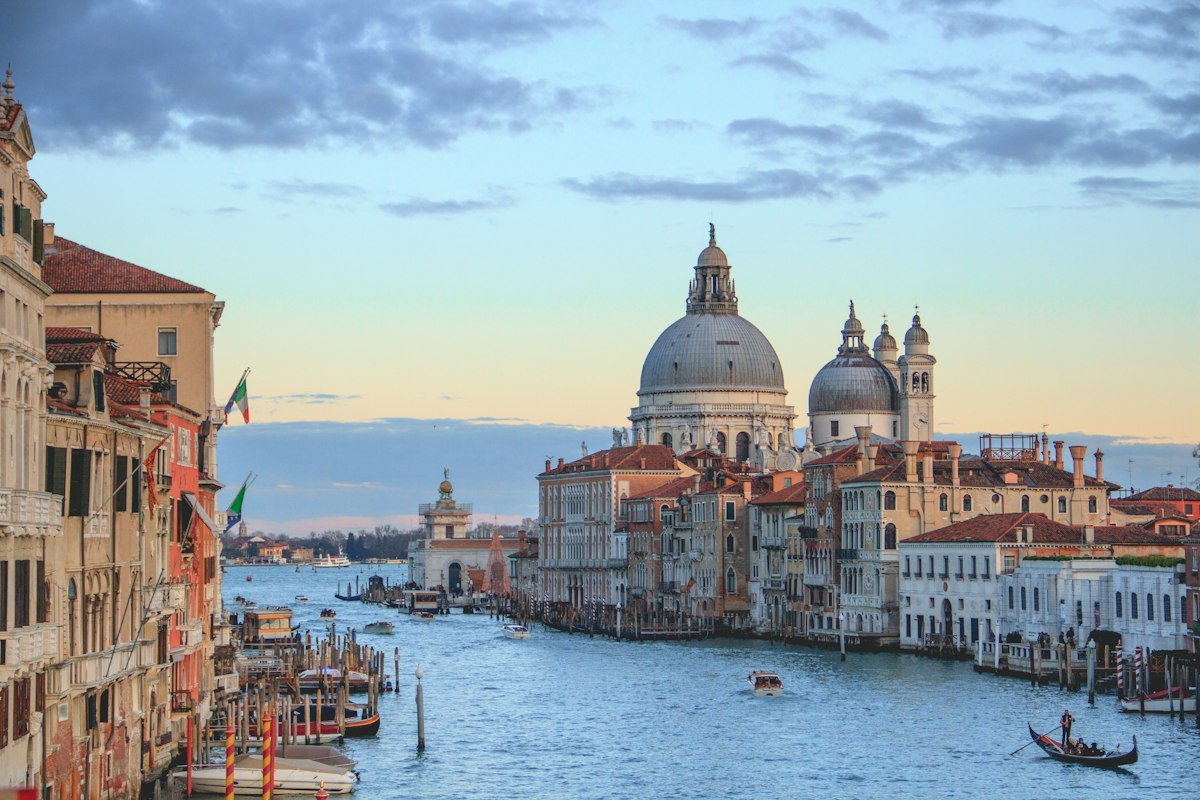
The final 4 kilometres of the journey take place on the Ponte della Libertà, a long, low causeway built in 1846 that carries both rail and road traffic across the Venetian Lagoon. There is nothing quite like it in European rail travel. The water stretches to the horizon on both sides; the city materialises ahead of you like a hallucination. Seabirds move through the light. The whole thing takes perhaps four minutes, and every one of those minutes is worth being awake for.
Sit on the right side of the train (facing direction of travel, from Florence) for the best views of Venice as you approach across the lagoon. Both trains from Florence and Milan converge on the same westbound causeway, and the historic city is to the south, on your right. In the late afternoon, the light on the water is exceptional.
The first time you cross this causeway, you’ll almost certainly reach for your phone to photograph it. Take one shot, then put it down and just look. The experience of arriving in Venice by train is one of those rare moments that photographs always fail to capture.
Onboard Experience
Both Frecciarossa and Italo offer air conditioning, luggage storage above seats (plus a dedicated luggage area at the end of each carriage for large bags), power sockets, and Wi-Fi. The onboard café, called the Bistrot on Frecciarossa, serves sandwiches, pastries, and proper Italian espresso. The seats are wide and comfortable in standard class; business class adds a table service option and more legroom.
Announcements are made in Italian and English. The trains generally run on time, Italian high-speed rail has a punctuality rate above 85% on most routes, comparable to France’s TGV.
Arrival: Venice Santa Lucia
The train pulls directly into Venezia Santa Lucia, the main station, sitting at the northwest tip of the Grand Canal. Step outside and you’re immediately confronted with the top of the Grand Canal: the Scalzi Bridge to your left, vaporetto stops immediately in front, and the city spreading out before you with zero transitional buffer. There is no taxi rank, no car park. You are simply, immediately, in Venice.
Florence to Venice Train Tips
Choose Your Seat Carefully
When booking, select a window seat on the right side of the train (window seats D or F depending on the configuration, in the direction of travel from Florence). Both Florence and Milan trains approach Venice via the same causeway from the west, with the historic city on the south/right side. Frecciarossa and Italo both display a seat map at booking, look for the right-hand window seats. Frecciarossa allows seat selection at booking; Italo does too on most services. Don’t leave it to chance.
Luggage at Santa Lucia
Venice Santa Lucia has luggage storage (deposito bagagli) just inside the main entrance, operated by Radical Storage and the station’s own service. Prices run approximately €6–€8 per bag for 5 hours. If you’re arriving for a day trip, this is essential, Venice’s streets are not kind to rolling suitcases, and bridges (dozens of them) require lifting bags repeatedly. Alternatively, book near the station to drop bags before check-in.
Florence Station Guide: Santa Maria Novella (SMN)
Florence Santa Maria Novella is a compact, well-organised station, easy to handle compared to Rome or Milan. Here is what to know:
- Main entrance: faces Piazza della Stazione; the historic centre and Duomo are a 10-minute walk directly east
- Platforms: numbered 1–16, clearly signed with large departure boards. Platforms are announced 15–20 minutes before departure, this is normal in Italy, not a sign of a delay
- Left luggage (deposito bagagli): near platform 16, on the left as you face the platforms. Open from around 06:00 to 23:00. Cost approximately €6 for the first 5 hours, €0.90/hour thereafter
- Which exit to use: the main exit onto Piazza della Stazione takes you towards the Duomo (east). The secondary exit onto Piazza Adua is useful for buses and taxis heading to the Oltrarno neighbourhood
- Facilities: pharmacy, supermarket (useful for picnic supplies before a morning train), multiple cafés, ATMs
- Arrival time: arrive 15–20 minutes before departure. There are no gates or security checks, you walk straight to the platform once it is announced
Venice Arrival Guide: Santa Lucia Station
Venice Santa Lucia (VCE) is the end of the line, literally. The tracks stop here and the city begins. What to do immediately on arrival:
- Step outside: the station’s front door opens directly onto the Grand Canal. Take a moment, the view hits hard the first time
- Left luggage: deposito bagagli is just inside the main station hall near the entrance, operated by the station and Radical Storage. Approximately €6–€8 per bag for 5 hours, open daily from around 06:00–23:00
- Vaporetto (water bus): the stops are 50 metres to the left and right of the station exit. Buy tickets at the ACTV booth or from machines on the pier before boarding, inspectors are active and fines are steep (€50+)
Vaporetto options from Santa Lucia:
| Line | Route | Time to San Marco | Single Fare | Best For |
|---|---|---|---|---|
| Line 1 | Full Grand Canal (all stops) | ~45 min | €9.50 | Sightseeing, first visit |
| Line 2 | Express (fewer stops) | ~25 min | €9.50 | Getting somewhere quickly |
| Line 5.1 / 5.2 | Northern lagoon route | ~35 min to San Marco | €9.50 | Quieter alternative |
A 24-hour pass (€25) pays for itself with three journeys and is the smart choice for a full day in Venice. A 48-hour pass (€35) is better value for an overnight stay.
Water taxis: available from the dock to the left of the station. Journey time is 15–30 minutes to most hotels; expect to pay €70–€100 for a private taxi to San Marco. This is a genuine luxury, worth it for a honeymoon or anniversary trip, otherwise unnecessary.
Walking: many Venice hotels are 15–30 minutes on foot from Santa Lucia. If your hotel is in the Cannaregio or San Polo neighbourhoods, walking with a small bag is often faster than waiting for a vaporetto. Download the offline Venice map on Google Maps before you arrive, mobile data is unreliable on the narrow calli.
Booking Platforms
- Trenitalia.com, official site for Frecciarossa and regional trains; best for Italy-only travel
- Italotreno.it, official Italo site; worth checking separately as fares don’t always appear on aggregators
- ****, shows both operators side-by-side; good for multi-country European trips
- Eurail app, if you’re travelling on a pass Eurail pass guide
Common Mistakes to Avoid
These are the errors that catch first-time travellers on the Florence–Venice route most often.
Getting off at Venezia Mestre instead of Venezia Santa Lucia. Mestre is the mainland stop immediately before Venice, an industrial suburb with no tourist interest. The train announces it, and some passengers panic and disstart here by mistake. Stay on board. The next stop (2–3 minutes later) is Venezia Santa Lucia: the island station, directly on the Grand Canal. Your ticket should say “Venezia S.Lucia”, if it does, you are going to the right place.
Buying a ticket on the platform machine instead of online. Platform ticket machines (the grey Trenitalia machines) sell primarily Regionale tickets at walk-up prices. They often do not offer Frecciarossa Super Economy fares, which are only available online at trenitalia.com or via the app. Always book online, you will almost always pay less and get a better seat selection.
Forgetting to validate an old-style ticket. Named, seat-assigned e-tickets bought online do not need validating. But if someone gives you a physical anonymous ticket, or you buy at the counter without assigning a seat, you must stamp it in the yellow machine on the platform before boarding. Unstamped tickets can result in a €50+ fine even if you paid for them.
Arriving at the wrong Florence station. All Florence-to-Venice trains depart from Firenze Santa Maria Novella (SMN), not Firenze Campo di Marte or Firenze Rifredi. SMN is the main central station. If you are unsure, your ticket will state the departure station.
Not checking whether your Eurail pass covers Italo. It does not. If you have a Eurail pass and want to travel on Italo, you must buy a separate point-to-point ticket. Eurail covers Frecciarossa and Trenitalia services only.
Boarding without checking the platform number. Italian trains do not use a gating system. Platforms are posted on the departure board 15–20 minutes before departure. Check the board when it updates, do not assume you know the platform from a previous trip, as it can change.
Taking the Regionale without factoring in the connection time. Regional trains require a change at Bologna Centrale with 10–25 minutes between services. If your connecting train is late, you may miss the next Regional service. The money saved rarely justifies the anxiety, particularly with luggage.
Related Reading
- Rome to Florence by Train: Times, Prices & Booking Tips, Rome to Florence by train takes 1h 30m on the Frecciarossa.
- Milan to Venice by Train: The Complete Guide, Milan to Venice by train takes just 2 hours 27 minutes on the Frecciarossa.
- Venice Simplon Orient Express: The Complete Guide, The Venice Simplon Orient Express: cabins, prices from £3,530, routes, booking strategy, and a frank look at whether…
Frequently Asked Questions
Is there a direct train from Florence to Venice?
Yes, both Frecciarossa and Italo run direct (non-stop or one intermediate stop at Bologna) services between Florence Santa Maria Novella and Venice Santa Lucia. Journey time is around 2 hours 5–10 minutes. There are 30+ departures daily, with services running from around 5:35 a.m. to 9:30 p.m. Regional trains typically require a change at Bologna, adding 30–60 minutes to the total journey.
How much does the Florence to Venice train cost?
Tickets range from €9 (Regionale) to €80+ (Frecciarossa Executive, flexible). The best value for most travellers is the Frecciarossa Super Economy or Italo Low fare, from €15–€20 when booked 4–8 weeks ahead. These are non-refundable but represent outstanding value for a 2-hour high-speed journey. Standard flexible fares run €40–€60. See the full price table in the guide above.
How long does the Florence to Venice train take?
The fastest Frecciarossa services take exactly 2 hours 5 minutes. Italo runs in around 2 hours 10 minutes. InterCity trains take around 2 hours 30 minutes. Regional trains via Bologna take 2 hours 45 minutes to 3 hours depending on connection time. Only the high-speed services run direct, Regional trains always require a change.
Which train is best for Florence to Venice?
Frecciarossa is the best all-round option: most frequent (every 30–60 minutes), most comfortable, and reliably on time. Italo is an excellent alternative if you find a cheaper fare on the same date, but runs only 4–6 times per day. Regionale trains are cheapest (€9–€12) but take up to 3 hours and require changing at Bologna, not recommended unless budget is the overriding priority.
Can I take luggage on the Florence to Venice train?
Yes, there are no luggage size restrictions on Frecciarossa or Italo. Overhead racks and a dedicated luggage area at the end of each carriage accommodate large suitcases. Florence SMN has left-luggage near platform 16 (€6/first 5 hours). Venice Santa Lucia also has deposito bagagli near the main entrance (€6–€8 for 5 hours), essential for day-trippers arriving before hotel check-in.
Do I need to validate my Florence to Venice train ticket?
Named e-tickets bought online (the standard type) do not need validating, your name and seat are on the booking. Validation is only required for older anonymous paper tickets. If in doubt, use the yellow stamping machines on the Florence platform before boarding. Travelling with an unvalidated anonymous ticket risks a €50+ fine even if you paid for it.
The Arrival That Stays With You
There’s a reason people have been writing about arriving in Venice by train since the railway opened in 1846. It hasn’t lost its power. Whatever the season, the grey fog of February, the blazing light of July, the copper evenings of October, crossing that lagoon on the train is one of those travel experiences that earns its reputation fully.
The journey from Florence is short enough to feel effortless and long enough to feel like a proper transition: two cities, two entirely different moods, connected by 140 kilometres of Italian rail. Florence is stone and Renaissance geometry; Venice is water and light and beautiful, improbable chaos. You step off the train and the city begins immediately, without ceremony, without preamble.
Book your Florence to Venice train early, sit on the left side, and be awake for the causeway. The rest takes care of itself.
Ready to plan your wider Italian rail adventure? Use our Find Your Perfect Italian Journey to build a custom itinerary, or explore our guide to the Rome to Venice by train route if you’re planning a longer loop through the country.
And once you arrive: , because where you sleep in Venice matters almost as much as how you arrive.