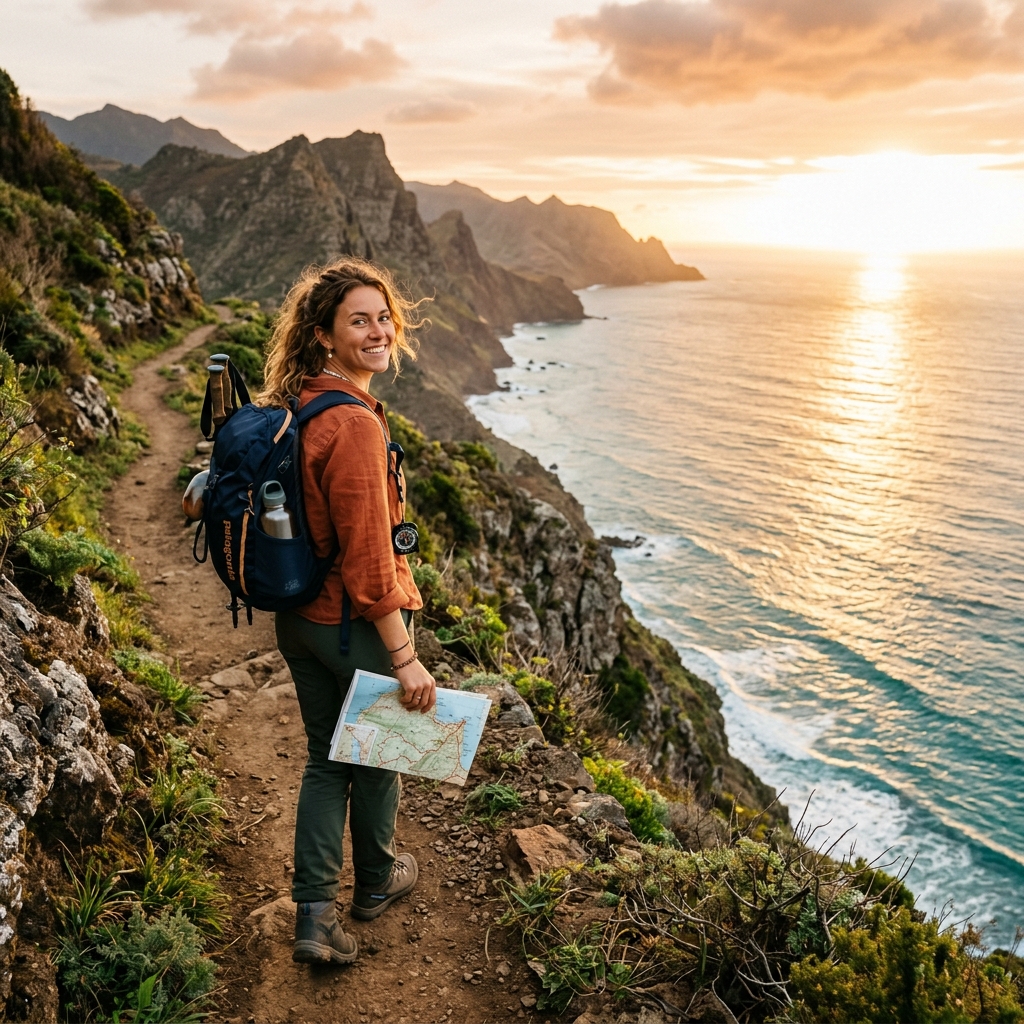
The conversation around solo female travel safety follows a predictable pattern. One camp says “the world is dangerous, do not go alone.” The other camp says “you will be fine, just be confident.” Neither is useful. The world is not uniformly dangerous, and confidence without strategy is not a safety plan.
This page is the destination-and-data version: pick the first trip from crime and infrastructure, then pack. The sibling, Solo Female Travel Safety Tips: The Practical Guide That Skips the Paranoia, is the risk-taxonomy piece — petty theft vs theater, when to lie about traveling alone, and street-harassment responses. Keep both URLs; they answer different questions.
What works is specific, actionable preparation — the kind that reduces actual risk rather than just reducing anxiety. This guide covers what experienced solo female travelers actually do, based on patterns from women who travel alone regularly across dozens of countries.
The goal is not fearlessness. It is informed decision-making. There is a difference between knowing how to minimize risk and pretending risk does not exist.
Before You Leave: Preparation That Matters
Choose Your Destination with Data, Not Fear
Some countries are genuinely easier and safer for solo female travelers than others. This is not about avoiding entire continents — it is about matching your experience level to the destination’s demands.
For a first solo trip, choose a destination with strong public transport, low crime, widespread English, and an established solo travel culture. Portugal, Japan, the Czech Republic, New Zealand, and Ireland are all strong first choices. Our detailed ranking of the safest countries for solo female travel provides specific safety data for each.
For more experienced solo travelers, the destination list opens significantly. Most of the world is safe for prepared solo female travelers. The key variables shift from “is it safe?” to “how much cultural navigation does it require?” and “how well does the infrastructure support independence?”
Tell Someone Your Itinerary
Share your full itinerary — flights, accommodation addresses, daily plans — with a trusted person at home. Update them when plans change. This is not paranoia; it is a basic safety protocol that costs nothing and can matter enormously if something goes wrong.
A shared Google Doc or a location-sharing app like Google Maps’ “Share Location” feature gives someone at home real-time awareness of where you are without requiring you to check in constantly.
Research Local Norms
Cultural expectations around women vary significantly by country and region. Understanding local dress codes, social customs, and behavior norms before arrival reduces unwanted attention and demonstrates respect for local culture.
In conservative regions — parts of the Middle East, South Asia, and North Africa — covering shoulders and knees significantly reduces street harassment. In Japan, being quiet on public transport is expected of everyone. In parts of Latin America, making eye contact with strangers on the street can be interpreted as an invitation to conversation.
None of this should stop you from going. But knowing the rules of the place you are visiting helps you navigate it safely and comfortably.
Accommodation Safety
Book Your First Night in Advance
Arriving in a new country without accommodation booked is a recipe for poor decisions. You will be tired, possibly disoriented, and vulnerable to taxi drivers or touts who steer you toward accommodation that pays them commission.
Book your first two nights before arrival. Choose accommodation that is well-reviewed on multiple platforms (not just one), centrally located, and accessible by public transport from the airport.
Vet Your Accommodation Carefully
Read reviews from other solo female travelers specifically. Most booking platforms allow you to filter reviews by traveler type. Look for mentions of:
- Staff helpfulness and responsiveness
- Neighborhood safety at night
- Quality of door locks and room security
- Whether the reception or front desk is staffed 24 hours
- Proximity to public transport
Use a Portable Door Lock
This is the single most recommended safety item among experienced solo female travelers. A portable door lock or door stop alarm adds a physical security layer to any accommodation, regardless of how good the existing lock appears. It weighs almost nothing and fits in a jacket pocket.
In budget guesthouses, Airbnbs, and hotels with worn hardware, this provides genuine peace of mind. Some travelers also carry a rubber door stop as a silent alternative — wedge it under the door from inside and the door cannot be opened.
Choose Your Room Location Wisely
When checking in, request a room that is not on the ground floor (easier to access from outside) and not at the end of a long, empty corridor. Middle floors near elevators or stairwells offer both security and easy access to common areas.
If a room feels wrong when you enter — broken lock, isolated location, strange vibe from staff — trust that feeling and ask to change rooms or leave. A night’s accommodation fee is never worth your safety.
Street Safety and Daily Navigation
Walk with Purpose
Projecting confidence reduces targeting for scams, theft, and harassment. Walk at a steady pace with your head up and your path clear, even if you are not sure where you are going. If you need to check your phone for directions, step into a shop or cafe rather than stopping on the sidewalk.
This is not about pretending. It is about signaling that you know what you are doing — which, even when you do not, discourages opportunistic approaches.
Plan Your Route Home Before You Go Out
Before heading out for the evening, note how you will get back to your accommodation. Save the address in your phone in the local language (critical in countries with non-Latin scripts). Screenshot the route on Google Maps in case you lose data connectivity. Know the location of the nearest taxi rank or metro station.
The most vulnerable moment is the transition from a night out to getting home safely. Having a plan before you need one eliminates rushed, alcohol-influenced decisions about transport.
Use Registered Taxis and Ride-Share Apps
In most international cities, ride-share apps (Uber, Grab, Bolt) are safer than street taxis because the driver is identified, the route is tracked, and you have a digital record of the trip. When ride-share is not available, use taxi ranks at hotels or official taxi stands rather than hailing on the street.
Share your live trip with a trusted contact — both Uber and Grab have this feature built in. If a driver’s route deviates from the expected path, speak up immediately and be prepared to exit.
Trust Your Instincts — Without Apology
Women are socialized to be polite, accommodating, and reluctant to cause a scene. In an uncomfortable situation abroad, these instincts work against your safety. If someone is making you uncomfortable, you do not owe them continued conversation, an explanation, or an opportunity to prove they are harmless.
Walk away. Enter a shop. Approach a group of women or a family. Loudly say “no” in any language. The social cost of being rude to a stranger is zero. The potential cost of being polite to someone dangerous is not.
Essential Safety Gear
Gear does not replace good judgment, but a few items provide practical security:
- Personal safety alarm — A 120+ decibel alarm on a keychain that draws immediate attention. Pull the pin and the sound carries for blocks. Under $15 and weighs nothing.
- Portable door lock — Adds a physical security layer to any room. Essential for budget accommodation.
- Anti-theft crossbody bag — Slash-proof straps, RFID-blocking pockets, and lockable zippers. Pacsafe makes the best options for travelers. Wear it cross-body with the opening against your body.
- Headlamp — For poorly lit streets, early morning departures, and accommodation with unreliable lighting. Frees both hands.
- Portable phone charger — Your phone is your map, your translator, your emergency contact tool, and your ride-share app. If it dies, you lose all of those simultaneously. Keep it charged.
Digital Safety
Avoid sharing real-time location on social media. Post photos after you have left a location, not while you are there. Geotagging in real time tells everyone — including people you do not want knowing — exactly where you are.
Use a VPN on public wifi. Hotel, cafe, and airport wifi networks are vulnerable to data interception. A VPN encrypts your connection and costs $3 to $8 per month.
Store document copies digitally. Photograph your passport, visa, travel insurance, and credit cards. Store these in a secure cloud folder (Google Drive, iCloud) and email a copy to yourself and a trusted contact. If your physical documents are lost or stolen, you can access everything from any device.
When Something Goes Wrong
Despite preparation, things can go wrong. Knowing the response protocol before you need it matters.
Theft: File a police report immediately — you will need it for insurance claims. Cancel stolen credit cards via your banking app. Access document copies from your cloud storage. Contact your embassy if your passport was stolen.
Harassment or assault: Remove yourself from the situation. Go to the nearest police station, hospital, or embassy. Contact your travel insurance provider, as most comprehensive policies cover emergency support, counseling, and evacuation.
Medical emergency: Call local emergency services (save the number before arrival). Contact your travel insurance provider’s 24-hour emergency line. If you are conscious and mobile, go to the nearest hospital — most countries treat emergency patients regardless of insurance status.
The Perspective Check
Solo female travel is not reckless. It is one of the most empowering experiences available. The preparation outlined here is not about being afraid — it is about being competent. The same way you lock your door at home without living in fear, you take precautions while traveling without letting those precautions define the experience.
Millions of women travel solo every year and come home with nothing worse than a sunburn and a few good stories. The odds are overwhelmingly in your favor. Go prepared, stay aware, trust your instincts, and do not let anyone else’s fear determine what you are capable of doing.