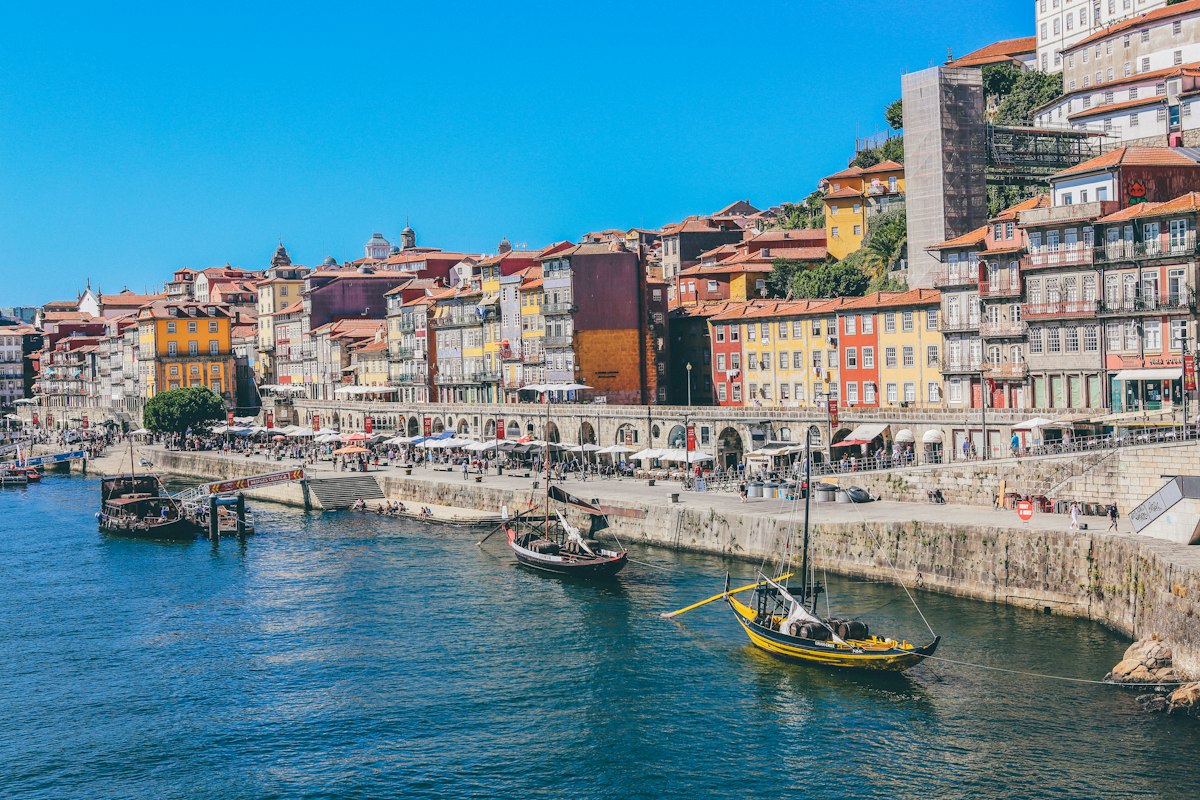
Most people give Lisbon two or three days. They ride Tram 28, photograph the azulejos, eat a pastel de nata, stand at a miradouro and take a picture of the Tagus. Then they leave, boxes ticked, expectations met, city barely begun. This guide is for people who suspect there’s more to it than that. There is.
Lisbon sits at the western edge of Europe, on seven hills above the widest river estuary in Western Europe, facing the Atlantic. The light here is different from Paris or Rome, saltier, more diffuse, with a luminosity in the late afternoon that painters and photographers have been trying to describe for decades. It’s been consistently ranked one of the most affordable capitals in Western Europe, one of the most walkable, and, by those who’ve spent time there, one of the most genuinely liveable. None of that is an accident. It’s a product of the city’s particular geometry, its pace, its relationship to food and music and the unhurried movement of evenings.
A week here is not an indulgence. It’s the minimum time needed to stop being a visitor.
why slow travel works and the philosophy behind staying longer
TL;DR: Lisbon is the strongest slow travel case in Western Europe right now, genuinely affordable, walkable, and under-touristed outside its small historic core. Portugal received 30.5 million international tourists in 2024 (Turismo de Portugal, 2025), but most of Lisbon’s neighbourhoods remain uncrowded. Five nights is the minimum; seven or eight lets the city properly open up.
Why Does Lisbon Reward Slow Travel?
Lisbon received 8.9 million overnight visitors in 2024 (Turismo de Lisboa, 2025), significant for a capital of 550,000 people, but still concentrated almost entirely in a corridor of perhaps four square kilometres around Baixa, Alfama, and the riverfront. Step into Mouraria, Príncipe Real, or the streets west of Largo do Rato and you enter a city that functions without you in it.
The city’s geography enforces a particular pace. Lisbon is built on seven hills, the colinas, with valleys and viewpoints and sudden staircases connecting them in ways that no map fully prepares you for. You cannot hurry these streets. You can attempt to, and they will defeat you. This is not a flaw. It’s the city’s primary mechanism for slowing visitors down to a speed at which they might actually see something.
What the tourism numbers don’t tell you: The visitor concentration in Lisbon is more extreme than the total figures suggest. Alfama, a neighbourhood of roughly 6,000 residents, receives hundreds of thousands of annual visitors along its main tourist streets. But the parallel streets thirty metres away are nearly empty. The tourist Lisbon and the inhabited Lisbon share the same hills but barely overlap. A slow traveller lives in the inhabited one.
The Tagus estuary is the other factor. Lisbon sits on 20 kilometres of riverfront, and the quality of light that comes off the water, particularly in the late afternoon, when the sun angles across the estuary from the west, is genuinely unlike anything else in Europe. It has a name in Portuguese: luz de Lisboa, the light of Lisbon. Painters have been coming here for it since the 18th century. It’s one of those things that sounds like a tourism cliché until you stand at a miradouro at 6pm and understand that the cliché was trying to describe something real.
How Do You Get to Lisbon Without Flying?
The most civilised way to arrive in Lisbon is by train from Madrid, a nine-hour journey that crosses the Iberian interior, with the fields shifting from the Castilian plateau to the Portuguese borderlands to the Tagus valley. The Lusitania Comboio Hotel night train departs Madrid Chamartín at 21:43 and arrives at Lisbon Santa Apolónia at 07:30, meaning you sleep your way across the peninsula and wake up at the river (Renfe / Comboios de Portugal, 2026). Fares start around €39 for a reclining seat.
From Porto, the other Portuguese city worth treating as a slow travel base, the Alfa Pendular service runs the 313-kilometre journey to Lisbon in approximately three hours, with departures roughly every hour throughout the day (Comboios de Portugal, 2026). Fares from €15 booked in advance. The journey down the Douro estuary and along the Atlantic coast is itself worth the ticket.
how to travel across Europe using trains, booking, passes, and night trains
Both arrivals deposit you at Santa Apolónia station, a ten-minute walk from the Alfama and a fifteen-minute metro ride from Príncipe Real. The airport, by contrast, deposits you at Oriente station, functional, efficient, and completely missing the point of arriving in a city this particular.
Which Neighbourhood Should You Stay In?
Where you sleep in Lisbon sets the tone for your entire visit. The difference between a hotel in Baixa-Chiado and an apartment in Mouraria or Príncipe Real is not simply geographical, it’s the difference between a city seen from outside and a city you briefly inhabit. Lisbon’s neighbourhood characters are distinct and worth choosing deliberately.
[IMAGE: Illustrated map of Lisbon’s main neighbourhoods, Alfama, Mouraria, Príncipe Real, Chiado, Belém, LX Factory area, with hills and the Tagus visible, search terms: Lisbon neighbourhood map illustrated]
Alfama: Beautiful, Historic, and Tourist-Heavy
Alfama is the oldest neighbourhood in Lisbon, a Moorish-origin tangle of lanes and stairways that survived the 1755 earthquake largely intact when the rest of the city did not. It is, by most measures, the most visually spectacular place to stay, and also the most touristed. The main street routes through Alfama are genuinely crowded from mid-morning; the noise from fado restaurants can carry until midnight.
That said: stay one street off the main tourist spine and you’re in a neighbourhood that still wakes up slowly. The morning before the tuk-tuks start, Alfama belongs to residents hanging washing, cats on doorsteps, old men drinking coffee at a counter the size of a wardrobe. It’s beautiful in a way that rewards early rising. Budget €80–€130 per night for a decent apartment.
Mouraria: More Local, Multicultural, Worth Knowing
Mouraria sits immediately west of Alfama, in the valley below the São Jorge Castle. Historically the neighbourhood where Lisbon’s Moorish population was concentrated after the Christian reconquest of 1147, it has been for centuries one of the city’s most multicultural quarters, and remains so, with significant Indian, Bangladeshi, Chinese, and Cape Verdean communities alongside its Portuguese residents. It’s also, according to local music historians, the birthplace of fado.
It’s noticeably less touristed than Alfama. The restaurants on the Largo do Intendente and the surrounding streets are genuine neighbourhood places, not tourist-facing fado houses. Accommodation prices are lower, €65–€100 per night for an apartment. For slow travellers who want daily life rather than spectacle, this is often the better choice.
Príncipe Real: Upscale, Quiet, Excellent Gardens
Príncipe Real occupies a ridge above the Bairro Alto, a neighbourhood of 19th-century palaces, independent bookshops, antique dealers, and the Jardim do Príncipe Real, a square shaded by a single enormous dragon tree, surrounded by café terraces and a weekend organic market. It’s the most expensive residential neighbourhood in the city and the quietest. There are no tram lines, no tour groups, no tuk-tuks. The streets are wide enough to breathe in.
For slow travellers who want Lisbon’s quality of light and food without the sensory intensity of Alfama, Príncipe Real is consistently the best recommendation. It’s a 20-minute walk downhill to the riverfront and a ten-minute walk to the Chiado. Apartments run €100–€160 per night.
LX Factory Area (Alcântara): Creative, Younger, River-Adjacent
The LX Factory area, built around a 19th-century textile complex on the Tagus riverfront in Alcântara, represents a different version of Lisbon, industrial heritage converted into creative studios, independent restaurants, a weekly market, and some of the better nightlife in the city. It’s not the Lisbon of azulejos and miradouros. It’s the Lisbon of the people who moved here from Berlin and Porto and São Paulo and decided to stay. Accommodation prices are moderate; the neighbourhood rewards extended exploration on foot along the riverfront towards Belém.
Citation Capsule: Lisbon’s 1755 earthquake killed an estimated 12,000–50,000 people and destroyed roughly 85% of the city’s buildings (History.com, 2024). The Alfama neighbourhood survived largely intact because its Moorish-era construction on bedrock proved more resilient than the lower city’s newer structures. This geological accident is why Alfama looks as it does today, the living fabric of a medieval city that the 18th century couldn’t reach.
How Do You Get Around Lisbon?
The honest advice about Lisbon’s transport is also the most useful: walk the hills, use the metro for longer distances, and treat Tram 28 as a heritage attraction rather than a practical route. Lisbon’s metro system covers the main areas of the city efficiently, with tickets at €1.61 per journey or an unlimited-travel day pass at €6.90 (Carris Metropolitana, 2026).
On Tram 28: The famous yellow tram is real, charming, and essentially a tourist vehicle at this point. Locals use the 28 line when they have no better option; mostly they take the bus or walk. A slow traveller should ride it once, early morning, uphill through Alfama in the low light, before the queues form, and then leave it to the tour groups. For everything else, the metro is faster and the buses are comprehensively useful.
Tuk-tuks, the motorised three-wheelers that have multiplied across Alfama and the riverfront in the past decade, charge €30–€60 for a 45-minute neighbourhood tour. They add nothing that walking doesn’t provide better, and they add congestion to streets built for pedestrians. Skip them entirely.
Walking the hills is the point. Lisbon’s elevadores, funicular lifts, help with the steepest climbs: the Elevador da Glória connects Restauradores to the Bairro Alto; the Elevador da Bica connects Rua de São Paulo to the Calçada do Combro. A carris day pass covers both. The lifts are worth riding as experiences in themselves and genuinely useful for saving your knees on the uphill sections.
What Is Worth Doing Properly in Lisbon?
Which miradouro is actually worth visiting?
Lisbon has 36 registered miradouros, official viewpoints, and the quality varies enormously. The Miradouro da Graça, on the highest hill in the city, is consistently the best: panoramic views across the entire roofscape to the Tagus, a modest kiosk selling beer and wine, and, crucially, a fraction of the visitors who pack the better-known Miradouro de Santa Luzia in Alfama. Go to Graça at dusk, when the light on the terracotta tiles turns amber. Bring something to drink. Sit for an hour. This costs nothing and is one of the finer pieces of urban slow travel available anywhere in Southern Europe.
The Miradouro da Senhora do Monte, five minutes’ walk from Graça, gives the highest viewpoint in the city and is even less visited. The Miradouro do Torel, in the valley between Príncipe Real and the Mouraria, has a swimming pool in summer and a resident cat population throughout the year. Each one has a different character. Visit several across a week, the same roofscape looks different at different hours.
Is fado worth seeking out as a slow traveller?
Yes, but not the fado you’ll find without looking. Lisbon has two parallel fado economies: the tourist-facing restaurant fado, performed in large rooms with fixed-price dinners and a set of songs calibrated to what visitors expect; and the casas de fado and informal sessions in Mouraria and Alfama that are smaller, more intimate, and closer to the music as its practitioners actually understand it.
The tourist version isn’t dishonest, but it’s designed for people who won’t return. Tasca do Chico in Mouraria is the most consistently recommended small venue, usually around 25 covers, no amplification, the kind of silence between songs that tells you the audience is actually listening (Time Out Lisboa, 2026). Book a week in advance. The music is rooted in saudade, the Portuguese concept of longing for something you’ve lost or never had, and it lands differently in a small room than it does in a dining hall built for 80.
[IMAGE: Interior of a small Lisbon fado house with dim warm lighting, a fadista singing to an intimate audience, search terms: Lisbon fado house intimate traditional performance]
LX Factory Sunday Market
The LX Factory Sunday market, running from 10am to 6pm each Sunday on the Rua Rodrigues de Faria, is the best market in Lisbon, not the most famous, but the most genuinely useful to a slow traveller. It occupies the interior courtyards and industrial spaces of the former textile factory, with about 120 stalls across vintage clothing, design objects, second-hand books (including a substantial English section), food trucks, and craft producers (LX Factory, 2026).
It gets crowded by noon. Arrive at 10:30, when it’s still navigable and the food trucks haven’t developed queues. The bookshop inside the main factory building, Ler Devagar, one of the finest independent bookshops in Portugal, is worth an hour regardless of the market.
Sintra: Go Early and Leave Before Noon
The Sintra day trip, 40 minutes by direct train from Rossio station, departures every 20 minutes, return fare around €4.60 (CP, 2026), is one of the best side trips from any European city. The Serra de Sintra ridge is blanketed with palaces, quintas, and gardens built by Portuguese royalty and aristocracy over five centuries. The Palácio da Pena, with its extraordinary Romantic-era confection of towers and coloured walls, sits above clouds on the highest point of the ridge. The Quinta da Regaleira has gardens built around Masonic and Rosicrucian symbolism, including a well you descend in a spiral staircase.
The problem is the crowds, acute from June through September and significant year-round by 11am. The solution is simple: catch the 8:40am train, arrive at the palace gates when they open, and leave for the town by noon. Two hours in a UNESCO World Heritage Site with no crowds, followed by a late lunch in Sintra village. The afternoon belongs to whoever arrives later and didn’t read this.
Belém and the Pastel de Belém
Belém sits six kilometres west of the city centre along the Tagus, accessible by tram or a pleasant 25-minute riverside walk from Alcântara. The Jerónimos Monastery, a 16th-century Manueline masterpiece built on profits from the spice trade, is the most architecturally significant building in Lisbon, and the Torre de Belém, standing in the river itself, is the image on every postcard. Both are worth visiting, preferably on a weekday morning before tour coaches arrive.
But the specific thing worth doing in Belém is queuing for a pastel de nata at the original bakery, the Fábrica dos Pastéis de Belém, which has operated on the same site since 1837 and claims the original recipe from the Jerónimos monks (Pastéis de Belém, 2026). The queue moves. The pastéis come straight from the oven, dusted with cinnamon and powdered sugar, eaten warm at the counter. They are meaningfully different from the versions available everywhere else in the city, a lighter, more complex custard, a pastry that shatters. The queue is worth it. Order two.
Azulejos: Read Them as the City’s Autobiography
Portugal’s ceramic tile tradition, the azulejo, from the Arabic az-zulayj, meaning polished stone, covers more surface area in Lisbon than any other decorative element: façades, church interiors, metro stations, park benches. The Museu Nacional do Azulejo, in a former convent in the Beato district, holds the most complete collection in the world, from 15th-century geometric Moorish tiles through the great 18th-century narrative panels to contemporary ceramic art (Museu Nacional do Azulejo, 2026). Entry is €8.
But the slow travel approach to azulejos isn’t the museum first. It’s reading the tiles in context, the 18th-century blue-and-white panels that still cover neighbourhood church façades in Alfama, telling biblical stories to a largely illiterate congregation; the Art Nouveau commercial tiles on pharmacy and grocery frontages in Chiado; the abstract geometric patterns that Vieira da Silva and her contemporaries introduced in the mid-20th century on the metro stations. Lisbon’s tiles are its autobiography. They tell you who made the city, what they believed, what they wanted to sell. A slow traveller spends a morning looking at them deliberately. The museum comes after.
What Should You Eat in Lisbon?
Lisbon’s food culture is one of the most specific and underrated in Europe, not a cuisine built on grand restaurant tradition, but one rooted in the daily life of a maritime city that fed itself on salt cod, olive oil, and the bread of a poor country that happened to have excellent wine. It rewards attention and punishes the tourist-restaurant approach.
the best food tours in Europe and how to choose one
Pastel de Nata: Eat at Manteigaria in Chiado
For a pastel de nata that isn’t a pilgrimage to Belém, the Manteigaria bakery on the Rua do Loreto in Chiado is the correct address. The pastéis come out of a glass-fronted oven visible from the counter every 20 minutes, warm, with a lacquer of caramelised custard across the top. Eat them at the counter with an um café, the Portuguese espresso, strong and served at 70°C, and powdered cinnamon applied at your own discretion. This is the slow travel breakfast: ten minutes, standing up, costs €1.40, and better than anything you’ll eat in a hotel dining room.
Bacalhau: 365 Recipes, Start with Pataniscas
Bacalhau, salt cod, desalinated over 24–48 hours in changing water, is Portugal’s national ingredient, with a claimed 365 recipes, one for each day of the year. This is an exaggeration that understates the point: the actual number of documented preparations runs into the hundreds (Instituto do Vinho, do Bordado e do Artesanato de Portugal, 2025). A slow traveller owes it to themselves to eat it in several forms across the week.
The most accessible starting point is pataniscas de bacalhau, shredded salt cod fried in a battered patty, served with arroz de feijão (rice and beans) and a salad. It’s the classic working lunch of Lisbon’s tascas, costs €7–€12 with wine, and appears on blackboards in every neighbourhood that hasn’t been entirely colonised by tourism. Bacalhau à brás, shredded cod with matchstick potatoes, eggs, olives, and parsley, is equally good and slightly easier to find in its best form.
Petiscos in Mouraria’s Tascas
Petiscos are the Portuguese equivalent of tapas, small plates, shared, eaten standing at a counter or at communal tables with whatever the kitchen is producing that day. The tascas in Mouraria and the streets around the Intendente square are the correct place to find them: rooms of ten to fifteen covers, handwritten menus, wine poured from unlabelled bottles, plates of alheira (a smoked sausage of chicken and bread, originally developed by Jewish communities during the Inquisition to mimic pork products), rissóis de camarão (prawn rissoles), and caldo verde (kale soup with a disc of chouriço). Budget €15–€20 per person including wine. No booking, arrive at 12:30 before the locals claim every table.
Ginjinha on Largo de São Domingos
The ginjinha is a Portuguese cherry liqueur made from ginja berries, sugar, and aguardente, served in a small shot glass, or, at certain traditional hole-in-the-wall establishments, in a chocolate cup that you eat afterwards. The correct place to drink it is from the hole-in-the-wall on the Largo de São Domingos, a square in the Baixa where one of several competing ginjinha vendors has occupied the same shopfront since 1840. The serving is €1.50. The ritual is: stand in the square, drink quickly while warm, eat the chocolate cup, say nothing for a moment. It’s one of those Lisbon experiences that is genuinely untranslatable.
Wine: Vinho Verde and Alentejo Reds
Portugal produces some of the most interesting and undervalued wine in Europe, and Lisbon is the correct place to explore it. Vinho Verde, literally “green wine,” named for its youth rather than its colour, is the crisp, low-alcohol white from the Minho in the northwest, with a slight natural effervescence. It costs €3–€5 a glass at neighbourhood restaurants and pairs with everything the sea produces. Alentejo reds, from the sun-baked plains east of Lisbon, made primarily from Aragonez, Alicante Bouschet, and Trincadeira grapes, are fuller, warmer, and excellent with slow-cooked meat dishes.
On wine prices: A bottle of mid-range Alentejo red in a Lisbon neighbourhood restaurant typically costs €12–€18. The same bottle in a comparable Paris or London restaurant would run €35–€50. This is one of several cost differentials that make Lisbon distinctly more affordable than its Western European counterparts, a factor that contributes directly to its attractiveness for longer stays. The food and drink budget that gets you two days in Paris gets you five in Lisbon.
What Does the Slow Travel Rhythm Look Like in Lisbon?
Lisbon has a daily rhythm that is best simply adopted rather than fought. The city operates on Atlantic time, or perhaps on its own time, which has never been entirely aligned with the rest of Europe.
Mornings belong to the pastelaria. Every neighbourhood has one, a room of six tables, a glass counter of pastries, an espresso machine operated with authority, newspapers on a metal rack. Find yours in the first two days and return to it each morning. Order a galão (espresso with foamed milk, served in a glass) and a torrada, thick white bread, toasted, with butter. This breakfast costs €2.50 and takes 20 minutes and is the most honest thing you can eat in the city.
Afternoons are for one neighbourhood, walked slowly. Lisbon rewards this approach because the city is small enough to cross on foot and layered enough to spend an afternoon in a single quarter without exhausting it. Pick one area per day: Monday in Alfama, Tuesday in Mouraria and Intendente, Wednesday out to Belém, Thursday up to Príncipe Real and the Jardim da Estrela, Friday to the LX Factory and the riverfront. By the end of the week you’ll have a city rather than a postcard.
Evenings in Lisbon start late, this is non-negotiable, and attempting to eat dinner at 7pm will result in restaurants that are not yet ready for you. The rhythm is: petiscos and wine between 6pm and 8pm at a tasca or a wine bar, then dinner at 9pm or later. This is not affectation. It’s the actual operating schedule of the city’s eating establishments, and it produces an evening that’s longer, more unhurried, and significantly more sociable than the Northern European version.
How Long Should You Stay in Lisbon?
Five nights is the absolute minimum for slow travel in Lisbon, enough to find your pastelaria, walk four or five neighbourhoods, make it to Sintra, and eat properly. Research on vacation wellbeing consistently shows that psychological detachment from home, the condition in which you stop running your daily anxieties and start actually perceiving where you are, takes three to four days to establish (Journal of Leisure Research, 2023). A five-night stay gives you one or two days of genuine presence after that adjustment. Seven or eight gives you four or five.
Seven nights is the honest recommendation. Long enough to stop consulting the map in your neighbourhoods. Long enough to have a second visit to the miradouro at a different time of day and notice what’s different. Long enough for the city to stop being a set of sights you’re moving between and start being, for a week, the place you happen to live.
Related Reading
- The Best Food Tours in Lisbon: Pastéis, Petiscos, and Ginjinha, The best food tours in Lisbon, from Mouraria to LX Factory, what to eat, which bakeries to trust, and how to…
- Eating Well in Portugal: A Slow Traveler’s Food Guide, Portugal food guide for slow travelers: bacalhau in Lisbon, francesinha in Porto, black pig in Alentejo, and…
- Lisbon to Porto by Train: The Complete Guide, Lisbon to Porto by Alfa Pendular takes 2h 45min from €15.
Frequently Asked Questions
Is Lisbon still affordable compared to other Western European capitals?
Yes, it remains one of the most affordable capitals in Western Europe, though prices have risen significantly in the past decade. Portugal’s tourism revenue reached €24.7 billion in 2024 (Turismo de Portugal, 2025), and Lisbon has absorbed much of that pressure. A neighbourhood tasca lunch with wine runs €12–€18. A glass of Vinho Verde in a bar not aimed at tourists is €3–€4. A week’s apartment rental in Mouraria or LX Factory costs €500–€800. By comparison with Paris, Amsterdam, or Zurich, these figures represent a significant cost advantage that extends the value of a longer stay.
What’s the best time of year to visit Lisbon slowly?
October through early December is the strongest combination of good light, mild weather, manageable crowds, and lower accommodation prices. Spring, March through May, has excellent wildflower blooming in the Serra de Sintra and sharp Atlantic light, but growing visitor numbers. July and August are hot (regularly 35°C+), crowded, and the most expensive months. The shoulder periods on either side of peak summer are the slow traveller’s window.
Is Lisbon walkable enough for a week on foot?
More than almost any comparable European capital, yes. The historic core, Alfama, Mouraria, Baixa, Chiado, Príncipe Real, and the riverfront, is compact enough to walk across in under an hour, though the hills make that hour significantly more aerobic than a map suggests. The elevadores and metro cover longer distances. For the slow traveller who plans one neighbourhood per day, Lisbon is essentially a walking city. Bring shoes with grip. The calçada portuguesa cobblestones are polished smooth and genuinely hazardous in wet weather.
Can I do a Sintra day trip and still have time in Lisbon?
Yes, easily, the 40-minute train journey from Rossio station means you can be at the palace gates when they open at 9:30am, spend three hours in Sintra, return by early afternoon, and have a full evening in the city. The key is leaving Sintra by 1pm before the day-trip crowds peak. If you want to extend it, stay for lunch in the village and return by 3pm. One day is sufficient for Sintra unless you’re specifically interested in spending several hours at a single palace.
Where should I eat to avoid tourist restaurants in Lisbon?
The reliable indicators of a non-tourist tasca: a handwritten or blackboard menu (rather than a laminated multi-language one), a wine list of two or three items rather than twenty, a lunch clientele of workers and older neighbourhood residents, and a price point where a main course with bread and wine is under €15. The streets around the Largo do Intendente and the Mouraria side of the Alfama hill have the highest density of these places. Go at 12:30 before the sitting fills.
How does Lisbon compare to Porto for slow travel?
Different character, equally valid. Lisbon is larger, more cosmopolitan, more varied in its neighbourhoods, with a wider food and cultural offer. Porto is smaller, more concentrated, with the Douro riverfront, the wine lodges of Vila Nova de Gaia, and a slightly rawer energy. Many slow travellers combine them: seven or eight nights in Lisbon, three to four nights in Porto, connected by the three-hour Alfa Pendular. They’re complementary rather than interchangeable.
planning a slow travel trip from scratch, the practical complete guide
The Argument, Simply
Lisbon has been discovered. The numbers confirm it, over 8 million overnight visitors in 2024 for a city of 550,000 people, a tourist economy that has transformed entire neighbourhoods and pushed residents further from the historic centre. It would be dishonest to pretend otherwise.
But Lisbon hasn’t been flattened by its own popularity in the way that some cities have. The geography prevents it, the hills are too awkward, the streets too narrow, the city too physically insistent on its own character. The tourist infrastructure and the actual city still coexist, separated by just a few streets’ distance or a few hours’ difference in timing. A slow traveller, choosing where to sleep and when to wake and which streets to follow, can still find the city that is not performing itself for visitors.
That city, the one that wakes up slowly over coffee and a torrada, that moves at the pace of cobblestones and hills, that eats at nine in the evening and drinks cherry liqueur from a chocolate cup on a baroque square, is still there. It requires a week to find, a willingness to walk without a destination, and enough time at a miradouro at dusk to understand what the light is doing.
That seems like a reasonable price of entry.
what slow travel means and the philosophy behind it
the best food tours in Europe, how to eat well without a guidebook
getting around Europe by train, the complete guide to routes, passes, and booking
All transport times, fares, and opening hours reflect March 2026 conditions. Verify current prices before booking, train fares, entry fees, and accommodation rates vary by season and booking window.