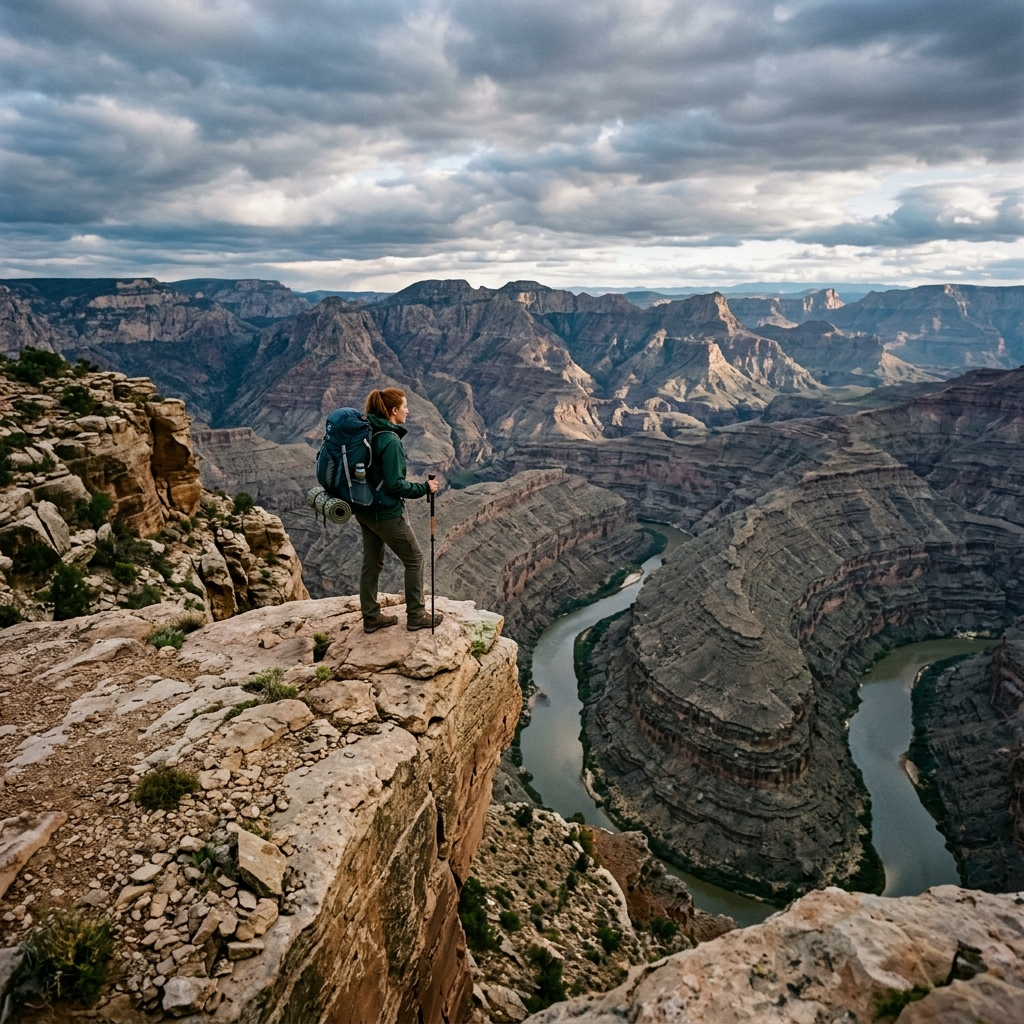
The adventure travel conversation has a repetitive quality. Every publication runs the same rotation: Patagonia, Iceland, New Zealand, Nepal. These places deserve their reputations. They also deserve the crowds those reputations attract — the $400-per-night lodges in Torres del Paine, the traffic jams on Iceland’s Ring Road, the permit lottery for the Milford Track.
This list goes in a different direction. It is the 2026-access version of the same idea — nine places where infrastructure, visas, or new air links just caught up — not the twelve-spot empty-trail list that opens in Albania’s Accursed Mountains. Keep both pages; one is about quiet trails, the other is about destinations that became independently bookable this year.
These are destinations where the adventure is genuine, the infrastructure supports independent travel, and the visitor numbers remain low enough that you will remember encounters with other travelers because they were rare. Some of these places are on the verge of broader discovery. Others have structural barriers — visa complexity, limited flights, or simple unfamiliarity — that will keep them quiet for years.
All of them reward the effort of getting there.
1. Durmitor National Park, Montenegro
Montenegro receives a fraction of neighboring Croatia’s visitors, and most of those head straight for the coast. Durmitor, in the north, is where the mountains begin — a limestone massif with 48 peaks above 2,000 meters, 18 glacial lakes, and the Tara River Canyon, the deepest in Europe.
The hiking is serious without being technical. The Bobotov Kuk summit (2,523m) is a full-day scramble with exposure in places, but the route is marked and manageable for fit hikers. The Ice Cave trail and the circuit around Black Lake are gentler options that still deliver dramatic scenery.
Rafting the Tara River is the other signature experience — an 82-kilometer stretch of Class III-IV rapids through canyon walls that reach 1,300 meters deep. Multi-day rafting trips cost €150 to €300 per person, a fraction of comparable experiences in the American West.
Base yourself in Zabljak. Accommodation runs €30 to €60 per night for a private apartment. Restaurant meals cost €8 to €15. The Balkans by train route passes through Montenegro and connects well with Durmitor via bus from Podgorica.
2. AlUla, Saudi Arabia
Saudi Arabia opened to tourism in 2019, and most travelers still have not caught up with what that means. AlUla, a desert valley in the northwest, contains Hegra — a Nabataean city carved into sandstone that rivals Petra in scale and craftsmanship but receives roughly one percent of Petra’s visitors.
Beyond the archaeology, the desert landscape is extraordinary. Sandstone formations tower above the valley floor in shapes that look sculpted. Guided adventure options include rock climbing on natural sandstone walls, canyon hiking through slot canyons, and overnight desert camping with Bedouin operators.
The infrastructure is new and well-executed. The Royal Commission for AlUla has invested heavily in sustainable tourism without the mass-market approach that has diluted other Middle Eastern destinations. Expect to pay $100 to $200 per night for accommodation, with guided experiences running $50 to $150.
Best time to visit: October through March, when daytime temperatures are comfortable for outdoor activity.
3. Kyrgyzstan’s Tian Shan Mountains
Central Asia remains one of the last major blank spots on most travelers’ maps, and Kyrgyzstan is the most accessible entry point. The Tian Shan range offers trekking that rivals Nepal’s at a tenth of the cost — alpine meadows, glacial lakes, and passes above 4,000 meters with no permit requirements and no crowds.
The community-based tourism network (CBT Kyrgyzstan) connects travelers with local families who offer homestays, horse treks, and guided hikes. A homestay with three meals costs $20 to $30 per night. A guided horse trek through the Jyrgalan Valley or to Song Kol Lake runs $40 to $60 per day including horse, guide, and meals.
The multi-day trek from Karakol to Jyrgalan over the Telety Pass is a standout — four days through terrain that shifts from birch forest to alpine tundra, with yurt camps along the route. No permits, no quotas, no $500 trekking fees.
Getting there: Turkish Airlines flies Istanbul to Bishkek. Internal transport is a mix of shared taxis and marshrutkas (minibuses) that are cheap, frequent, and part of the experience.
4. Colombia’s Lost City Trek
The Lost City (Ciudad Perdida) trek is South America’s best multi-day hike that most people have never heard of. A four- to five-day trek through the Sierra Nevada de Santa Marta jungle to a 1,200-year-old city built by the Tairona civilization — 650 years older than Machu Picchu.
The trail crosses rivers, climbs through cloud forest, passes through indigenous Kogi and Wiwa communities, and culminates at a stone staircase of 1,200 steps emerging from the jungle canopy. Daily visitor numbers are capped, and only licensed operators run the trek, which keeps the experience intimate and the trail in reasonable condition.
The trek costs $250 to $350 per person for four days, all-inclusive with food, guides, and hammock accommodation at jungle camps. That price for a comparable guided trek in Peru or Nepal would be $800 to $1,500.
Combine it with: Tayrona National Park on the coast, where jungle meets Caribbean beach with no development in sight. If you are planning a budget international trip, Colombia offers exceptional value across the board.
5. Madagascar
Madagascar is unlike anywhere else on earth — literally. Ninety percent of its wildlife exists nowhere else. The landscape ranges from limestone karst formations (Tsingy de Bemaraha) to baobab-lined avenues to rainforest reserves with lemurs that land on your shoulder.
Adventure here is not manicured. Roads are rough, internal flights are limited, and logistics require patience. But the payoff is proportional. Trekking through Isalo National Park feels like walking through the American Southwest transplanted to the tropics. Diving off Nosy Be offers pristine coral with whale shark encounters from September to December.
Daily budgets run $40 to $80 for mid-range travel — private rooms in guesthouses, guided park visits, and local food. A two-week trip covering Antananarivo, Andasibe (lemur reserve), the Route Nationale 7 to Isalo, and a coastal extension to Ifaty costs roughly $1,500 to $2,500 excluding international flights.
When to go: April through October is dry season and the best window for trekking and wildlife.
6. Slovenia’s Julian Alps
Slovenia sits between Austria and Italy, shares their Alpine scenery, and costs half as much. The Julian Alps center on Triglav National Park, where the highest peak in Slovenia (2,864m) anchors a network of mountain huts connected by marked trails.
The Juliana Trail is a 270-kilometer circuit around the park, passable in 16 stages, with mountain hut accommodation along the route. Individual stages work as day hikes from Bled or Bohinj. The Soča Valley, running through the southern Julian Alps, offers kayaking and canyoning in water so turquoise it looks digitally enhanced.
A mountain hut bed costs €20 to €35 per night. Restaurant meals in the valleys run €10 to €18. The entire country is smaller than New Jersey, so nothing is far from anything else. You can hike a 2,000-meter peak in the morning and swim in Lake Bohinj by afternoon.
Getting there: Ljubljana is a two-hour train ride from Vienna or Venice. The Europe by train guide covers connections through the region.
7. Oman’s Musandam Peninsula
While the main Oman article focuses on Jebel Akhdar and the Empty Quarter, the Musandam Peninsula in the north deserves its own mention. Separated from the rest of Oman by a strip of UAE territory, Musandam is often called the “Norway of Arabia” for its deep fjords (khors) cutting into limestone cliffs.
Dhow boat cruises through the fjords offer dolphin watching, snorkeling in isolated coves, and overnight anchoring in bays accessible only by water. Sea kayaking through the khor system is world-class — calm water, dramatic vertical walls, and virtually no other boats.
On land, the drive from Khasab to Jebel Harim (2,087m) traverses a mountain road that rivals anything in the Alps for drama, with abandoned stone villages clinging to terraces along the way.
Budget: Dhow cruises cost $80 to $150 per person for a full day. Accommodation in Khasab runs $60 to $120 per night. The peninsula is a two-hour drive from Dubai, making it a viable side trip for anyone transiting through the UAE.
8. Taiwan’s East Coast
Taiwan’s west coast has the cities. The east coast has the adventure. The Taroko Gorge is the headliner — a marble canyon with trails cut into cliff faces above a turquoise river — but the entire eastern seaboard from Hualien to Taitung offers hiking, cycling, and surfing that rival anything in Southeast Asia.
The Zhuilu Old Trail in Taroko is the most dramatic day hike in East Asia: a path carved 500 meters above the gorge floor, requiring a permit and a head for heights. The Walami Trail in Yushan National Park is a gentler multi-day option through old-growth forest to a mountain hut at the base of Taiwan’s highest peak.
Cycling the East Rift Valley between Hualien and Taitung is a two- to three-day ride through rice paddies, hot spring towns, and indigenous Amis villages. Bike rental is cheap and the route is well-supported.
Taiwan is absurdly affordable for its infrastructure quality. Guesthouses cost $25 to $50 per night. A full meal at a local restaurant is $3 to $6. The carry-on packing list works perfectly for a Taiwan trip given the mild climate and compact distances.
9. The Azores, Portugal
The Azores sit in the middle of the Atlantic, belong to Portugal, and feel like neither Europe nor anywhere else. Nine volcanic islands with crater lakes, hot springs, whale watching, and hiking trails through landscapes that look like Ireland merged with Hawaii.
Sao Miguel is the most accessible island and has enough for a full week: hike the rim of Sete Cidades (twin crater lakes, one blue, one green), soak in the thermal pools at Furnas, and whale watch with operators who have a 98% sighting rate from April through October.
Faial and Pico offer wilder experiences — climbing Pico (2,351m, Portugal’s highest peak), diving with manta rays, and walking the volcanic landscape of Capelinhos, which last erupted in 1958.
Flights from Lisbon take 2.5 hours and cost €50 to €150 on SATA or Ryanair. Accommodation runs €40 to €80 per night for a private apartment. The Azores are part of the EU, so no visa complications for European travelers, and the infrastructure is solid without being touristy.
Connect it with: A slow travel stop in Lisbon before or after your island time.
How to Choose Your Destination
The right underrated destination depends on what kind of adventure you want and how much logistical friction you are willing to absorb.
Lowest friction, highest reward: Slovenia and Montenegro. European infrastructure, budget-friendly, easy to reach from major hubs. Good for a first adventure trip or families.
Best value for serious trekking: Kyrgyzstan and Colombia. Multi-day treks at a fraction of the cost of Nepal or Patagonia, with comparable scenery and far fewer people on the trail.
Most unique experiences: Madagascar and Saudi Arabia’s AlUla. These require more planning and higher budgets but deliver experiences you genuinely cannot replicate elsewhere.
Best for combining with a longer trip: The Azores (add to a Portugal trip), Taiwan’s East Coast (add to a broader Asia itinerary), Oman’s Musandam (add to a UAE or Oman trip).
Gear That Matters for Off-the-Beaten-Path Travel
When you leave the well-trodden tourist circuits, a few pieces of gear become non-negotiable:
- Trail shoes: The Salomon X Ultra 4 handles everything from Kyrgyz mountain passes to Montenegrin limestone without the weight of a full boot.
- Water purification: A Grayl GeoPress purifier bottle is essential in places where tap water is not reliable. Filters viruses, bacteria, and particulates in 8 seconds.
- Packable daypack: The Osprey Daylite compresses into its own pocket and weighs almost nothing for summit days and side trips.
- Headlamp: A Petzl Actik Core is rechargeable via USB, bright enough for predawn trailheads, and weighs 75 grams.
The Bottom Line
The best adventure travel in 2026 is not happening where everyone else is going. It is happening in the places that have the scenery, the trails, the culture, and the infrastructure — but have not yet been absorbed into the Instagram feedback loop that turns genuine destinations into curated backdrops.
These nine places are at different points on that trajectory. Some will be on every list within two years. Others have structural barriers that will keep them quiet for longer. Either way, the window for experiencing them without the crowds is now.