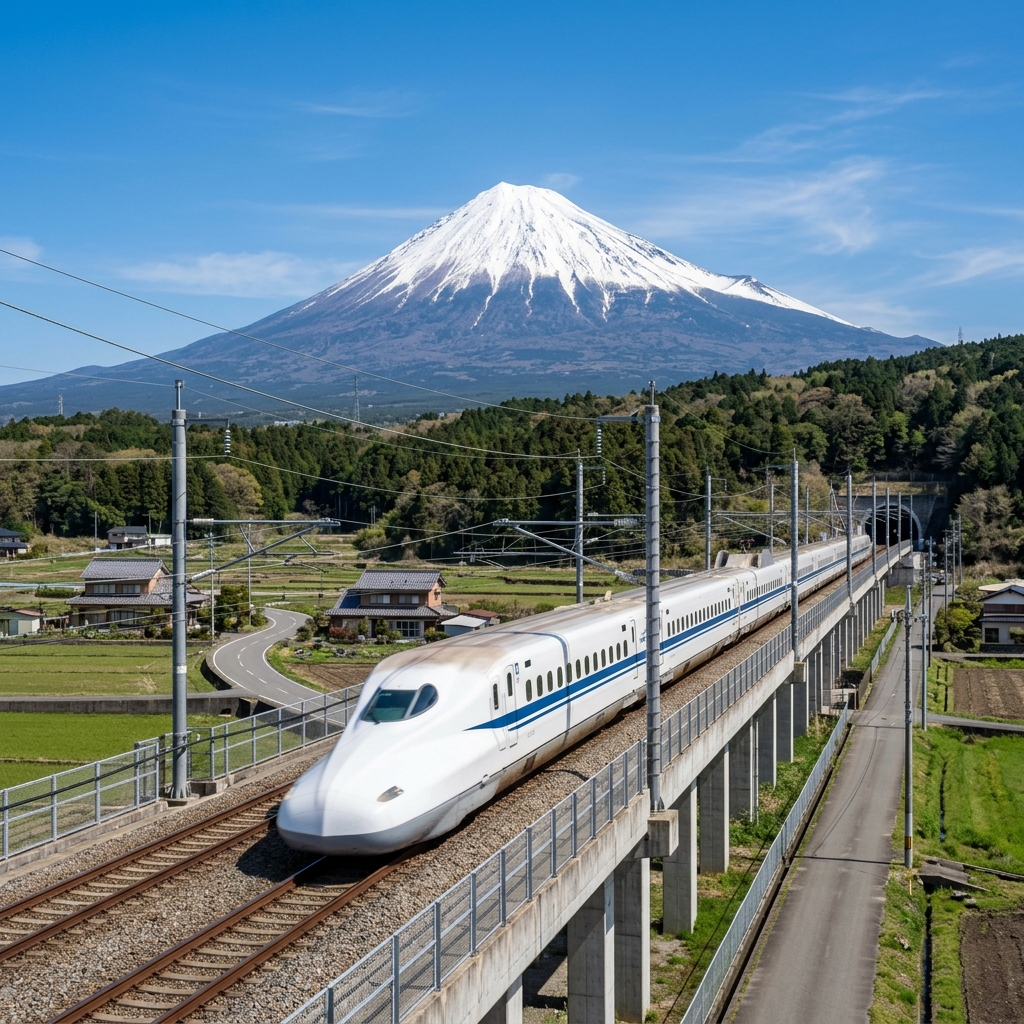
Japan’s rail system does something that most countries’ rail systems do not: it makes you trust it completely. Trains arrive to the second. When a Shinkansen is listed at 14:33, it departs at 14:33. The carriage cleaning crews — who board at terminals and turn the seats and restore the carriages to pristine condition in seven minutes flat — have been filmed so many times they have become a symbol of a particular Japanese philosophy about precision and care.
This is not merely a travel convenience. It changes the quality of a journey. You stop the low-level anxiety of whether the connection will work, whether the platform information is accurate, whether the train will actually leave. You can just travel.
This guide covers everything needed to move through Japan by rail in 2026 — the pass question, the network, the practical tools, and a complete 14-day itinerary built around the best of what the rail system can reach.
Why Japan Has the World’s Best Train System
Several factors combine to produce what Japan’s railways have become.
Punctuality is the obvious one. The average Shinkansen delay is under one minute annually. This is not marketing; it is the operating standard. When a train is delayed by five minutes, an announcement is made and the driver formally apologises.
Coverage extends to places that are not obvious targets for investment: the Kinosaki Onsen hot spring town, served by a direct limited express from Kyoto; the ceramic town of Arita in Kyushu; remote mountain stations in Hokkaido. The network assumes that people want to go to places that are not major cities.
Comfort varies by train class but is uniformly higher than in most countries. Shinkansen seats are wider than economy airline seats, fully reclining, with genuine legroom. The Green Car (business class equivalent) is exceptional. Even regional trains on rural lines are clean and have working toilets.
Food on and around trains deserves its own point. The bento culture of Japanese rail — ekiben, station bento boxes, each region producing its own specialities — is a serious culinary tradition. At Tokyo Station alone, you can choose from hundreds of ekiben representing prefectures across the country. This is not airport food. Sōka senbei, Kyoto’s obanzai, crab bento from Kanazawa: these are things worth being on a train to eat.
The JR Pass: When It Makes Sense in 2026
The Japan Rail Pass underwent significant price increases in October 2023. Current prices (USD, purchased outside Japan):
| Pass | Duration | Ordinary Class | Green Car |
|---|---|---|---|
| 7-day | 7 consecutive days | ~$560 | ~$750 |
| 14-day | 14 consecutive days | ~$890 | ~$1,200 |
| 21-day | 21 consecutive days | ~$1,120 | ~$1,510 |
These prices are meaningfully higher than pre-2023 levels. The pass is no longer an automatic purchase — it requires calculation.
The pass makes financial sense if:
- You are doing Tokyo–Kyoto–Osaka–Hiroshima–Fukuoka (or similar long-distance Tokaido/Sanyo routing) with additional regional trips
- You plan several round-trip Shinkansen journeys
- Your itinerary covers multiple regions in a short time window
The pass may not make sense if:
- You are spending most of your time in Tokyo or Osaka and doing day trips
- You are traveling slowly and staying in each place for several nights
- Your long-distance trips are limited to one or two routes
As a rough check: a round-trip Nozomi (not pass-covered) or Hikari (pass-covered) between Tokyo and Kyoto costs approximately ¥27,000 (~$180 USD) one way in reserved class. If your 14-day itinerary involves two or more such long-distance round trips plus regional connections, the $890 pass covers itself.
Point-to-point tickets can be purchased at any JR ticket office or from English-language ticket machines. The system is well-designed for non-Japanese readers.
Buying and Activating the JR Pass
Purchase from an authorized overseas sales office before departure. You receive an exchange order. On arrival in Japan, take it to a JR ticket office (look for the green-windowed みどりの窓口 counters) at major stations — Tokyo, Narita Airport, Haneda Airport, Shin-Osaka, Kyoto. Show your passport, select your activation start date, and receive the physical pass.
You do not have to activate the pass on arrival day. If you are staying in Tokyo for the first two days and do not need the Shinkansen yet, activate it on the day you first use it for long-distance travel.
The Shinkansen Network
The Shinkansen (bullet train) network connects most of Japan’s major cities. Key lines:
Tokaido Line: Tokyo to Osaka
The original Shinkansen line, opened in 1964. Tokyo Station to Shin-Osaka takes 2h 15m on the Nozomi (fastest, not pass-covered) or 2h 40m on the Hikari (pass-covered). Intermediate stops of note: Shin-Yokohama, Nagoya, Shin-Kobe.
Mount Fuji is visible from this line on clear days. Sit on the right side facing west (towards Osaka), in car 15 or 16, positioned from Tokyo. The best view is between Shin-Fuji and Shin-Yokohama stations. Winter mornings with clear skies give the sharpest view; summer haze often obscures it.
Sanyo Line: Osaka to Fukuoka
The Tokaido line continues as the Sanyo line from Shin-Osaka westward. Key stops: Himeji (20 minutes from Shin-Kobe, for Japan’s finest castle), Hiroshima (1h 25m from Shin-Osaka), Kokura and Hakata/Fukuoka (2h 20m from Shin-Osaka). The Nozomi runs this entire corridor; the Hikari and Sakura trains are pass-covered for most of the route.
Tohoku Line: Tokyo to Aomori
Running north from Tokyo through Sendai to Aomori at the tip of Honshu, the Tohoku Shinkansen reaches Shin-Aomori in around 3h 15m. Key stops: Sendai (1h 40m, gateway to Matsushima), Ichinoseki (for Hiraizumi, a UNESCO World Heritage Buddhist complex), Morioka (for Tono folklore country). The further north you go on this line, the fewer foreign tourists you encounter.
Hokuriku Line: Tokyo to Kanazawa
The Hokuriku Shinkansen opened the Tokyo–Kanazawa route in 2015, cutting the journey to 2h 30m. Kanazawa had been difficult to reach before; now it is an easy day trip from Tokyo or natural stop on a Tokyo–Kyoto journey. The line runs through the Japanese Alps; the Joetsu and Toyama sections offer mountain views that the Tokaido line does not.
Kyushu Line: Hakata to Kagoshima
The Kyushu Shinkansen runs from Hakata (Fukuoka) south to Kagoshima-Chuo in about 1h 20m. Key stops: Kumamoto (45m, for the rebuilt castle and ramen), Shin-Yatsushiro, Kagoshima-Chuo (gateway to Yakushima ferry). This line opened in 2011 and is among the newer additions to the network.
Regional Rail Treasures
The Shinkansen gets you between cities. The real discoveries of Japanese rail travel are on the regional lines.
Kyoto to Kinosaki Onsen (2h 30m)
The Kinosaki Onsen hot spring town on the Sea of Japan coast is reached by the Kinosaki limited express from Kyoto Station. The town itself is compact, beautiful, and built around its seven public bathhouses — the traditional experience is to wear a yukata from your ryokan and walk between the baths in the evening. Book a ryokan with onsen included. Arrive late afternoon, bathe in multiple baths, sleep heavily, take the morning train back. This is one of the finest single-night excursions in Japan.
Tokyo to Nikko (2h from Asakusa, 1h 45m from Shinjuku)
Nikko is home to the Toshogu Shrine, an outrageously ornate mausoleum for the Tokugawa shoguns, buried in a cedar forest that was old when the shrine was built in the 17th century. The Tobu Nikko line from Asakusa is the most economical option; the Spacia limited express is faster and more comfortable. The shrine complex, Lake Chuzenji above it, and the surrounding national park make this an easy but genuinely impressive day trip.
Hiroshima to Miyajima
After visiting the Peace Memorial Museum in Hiroshima — which you should do, without softening or rushing it — take the JR San’yo line to Miyajimaguchi, then the JR ferry to Miyajima Island. The ferry is covered by the JR Pass. The floating torii gate of Itsukushima Shrine, standing in the sea, is genuinely as beautiful as its photographs suggest, particularly at high tide. Return to Hiroshima for the night; oysters (Hiroshima’s specialty) at dinner.
Kagoshima to Yakushima
Yakushima is a UNESCO World Heritage island of ancient cedar forests, some trees more than 2,000 years old, that reportedly inspired the forest in Studio Ghibli’s Princess Mononoke. Getting there involves the Shinkansen to Kagoshima-Chuo, then a high-speed hydrofoil ferry (Toppy or Rocket) to Yakushima, roughly 1h 45m. Not a day trip; allow at least two nights. The hike to Jōmon Sugi, the oldest cedar, is 10 hours round trip and requires preparation.
Practical Rail Tools
IC Cards: Suica and Pasmo
Buy a Suica (JR East) or Pasmo (Tokyo Metro) IC card on arrival at the airport or any major station. Load it with ¥2,000–3,000 initially. Use it for:
- All city metro and subway rides
- City buses
- Short regional JR train journeys
- Convenience store purchases (7-Eleven, Lawson, FamilyMart — and these are excellent food options in Japan)
- Lockers at stations
The Suica card is the single most useful object in your bag in Japan. You can now also load it onto an iPhone or Android via Apple Wallet or Google Wallet, which eliminates the physical card and allows you to top up without finding an ATM.
Seat Reservations
JR Pass holders can make seat reservations for free at JR ticket offices or at ticket machines. For Shinkansen travel during peak periods:
- Golden Week (late April to early May): Reserve seats weeks in advance if possible
- Obon (mid-August): Same urgency
- New Year (late December to early January): Same
- Regular travel: Reservations are usually available the same day; for popular evening trains, a few days ahead is wise
The unreserved (jiyūseki) sections on most Shinkansen trains allow standing if the reserved section is full. During peak periods, this means standing the entire Tokyo–Osaka journey. Reserve.
English Language Navigation
The JR and major private railway apps (Hyperdia, Google Maps, and the JR East’s own app) all provide English-language routing. Google Maps Japan is highly accurate for train routing and shows the platform numbers. IC card tap-in tap-out is automatic; for Shinkansen travel with a pass, show the pass at the manned gate.
A 14-Day Japan Rail Itinerary
This itinerary covers the main Honshu and Kyushu corridor with key detours. It assumes a 14-day JR Pass, activated on Day 3.
Days 1–2: Tokyo Arrive, recover from jet lag, orient. Use the Suica card only — no Shinkansen yet. Explore Shinjuku, Shibuya, Harajuku, and Yanaka (the most preserved old neighbourhood). Eat ramen at a serious ramen-ya; the counters where you order from a ticket machine and eat alone, separated by wooden partitions, are the real ones.
Day 3: Tokyo → Nikko → back to Tokyo Activate JR Pass. Day trip to Nikko on the Spacia Nikko limited express from Asakusa. The Toshogu Shrine complex in the morning, Shinkyo bridge and cedar forest in the afternoon. Return to Tokyo for the night.
Day 4: Tokyo → Hakone Take the JR Odoriko limited express towards Izu or the Romance Car on the Odakyu line to Hakone. Not Shinkansen — this is a mountain hot spring resort southwest of Tokyo, with views of Fuji. Spend the afternoon on the Hakone Ropeway over volcanic Owakudani. Stay one night at a mid-range ryokan.
Day 5: Hakone → Kyoto (via Shinkansen from Odawara) The Shinkansen from Odawara (accessible from Hakone by bus or Hakone Tozan train) to Kyoto takes about 1h 45m on the Hikari. Check into accommodation near Gion or the central area. Evening walk through the Gion lantern-lit streets.
Days 6–7: Kyoto base Two full days: Fushimi Inari (the tunnel of orange gates — go early, before 08:00, to have the lower gates to yourself), Arashiyama bamboo grove (same logic), Kinkaku-ji, the Philosopher’s Path in autumn foliage if you’re there in late November. Day 7: day trip to Nara (45 minutes by Kintetsu express or 50 minutes by JR) — the free-roaming deer are not a myth; they will bow at you for senbei crackers, which vendors sell at the park entrance.
Day 8: Kyoto → Kinosaki Onsen Take the 09:00-ish Kinosaki limited express from Kyoto. Arrive mid-morning. Walk the town, choose your bathhouses, check into your ryokan. Dinner included (kaiseki in better ryokans). This is the best one-night detour in Japan for anyone who wants to understand what Japanese hospitality actually means.
Day 9: Kinosaki → Kanazawa (via Kyoto) Return to Kyoto in the morning, then connect to Kanazawa on the Thunderbird limited express via Osaka or, faster, the Shinkansen to Maibara and then a connection. Kanazawa has the finest preserved samurai and geisha districts outside Kyoto, with roughly one-tenth the tourists. The Kenroku-en garden is genuinely one of Japan’s three finest. Dinner: fresh seafood from the Omicho market — Kanazawa’s proximity to the Sea of Japan gives it exceptional fish.
Day 10: Kanazawa → Hiroshima This is the longest transit day: Kanazawa to Shin-Osaka on the Shinkansen, then Shin-Osaka to Hiroshima on the Sanyo Shinkansen. Hiroshima arrival by early afternoon. Go directly to the Peace Memorial Park and Museum. Allow three hours; do not rush it.
Day 11: Hiroshima → Miyajima → Hiroshima Morning at Miyajima. Return to Hiroshima by afternoon. Oyster lunch (raw, grilled, or in okonomiyaki, Hiroshima’s signature layered savoury pancake). Afternoon rest or castle visit.
Day 12: Hiroshima → Fukuoka (Hakata) 1h 10m on the Sakura Shinkansen. Fukuoka is Japan’s fastest-growing city, young, food-obsessed, and compact. The Tenjin and Daimyo neighbourhoods are excellent for independent restaurants and bars. Dinner obligation: Hakata tonkotsu ramen from one of the yatai (street food stalls) along the Naka River. This is not a tourist experience; it is the city’s actual evening culture.
Day 13: Fukuoka → Beppu → Kagoshima (or stay in Fukuoka) Option A: Day trip to Beppu (1h 15m on the Sonic limited express), the hot spring resort city on Kyushu’s east coast, famous for its “hells” — boiling, violently coloured geothermal pools used for display rather than bathing. Return to Fukuoka for the night. Option B: Head south to Kagoshima (1h 20m on the Kyushu Shinkansen) for Sakurajima volcano views and excellent black pork shabu-shabu.
Day 14: Return to Tokyo Fukuoka (Hakata) to Tokyo on the Nozomi is 5h, but the Nozomi is not pass-covered — either purchase a separate ticket (~¥23,000) or use the Hikari (6h, pass-covered). Either is viable; the Nozomi saves an hour. Fly home from Tokyo, or extend.
Before You Go: Key Booking Notes
- JR Pass: Purchase before departure from your home country. Delivery takes a few days if ordered online.
- Ryokan bookings: The best ryokans in Kinosaki Onsen and comparable destinations book out weeks in advance, especially for weekends and autumn foliage season (mid-October to mid-November).
- Golden Week and Obon: If your dates coincide with these national holidays, book accommodation and Shinkansen reservations as early as possible. Internal Japan travel becomes competitive during these windows.
- Japan Rail Pass terms: The pass covers JR trains only, not private railways (Kintetsu, Hankyu, Odakyu etc.). In Kyoto and Osaka, some useful routes are on private lines. Factor in additional IC card costs.
- Cash: Japan remains significantly cash-oriented despite improving card acceptance. Keep ¥10,000–15,000 on hand at all times. ATMs at Japan Post offices and 7-Eleven accept international cards reliably.
For the specific Tokyo to Kyoto Shinkansen journey, the dedicated guide at Tokyo to Kyoto by Shinkansen covers booking, seating, and what to eat on the train. If you are researching the JR Pass in detail, see Is the Japan Rail Pass Worth It?.
Related Reading
- Athens by Train: Arriving, Exploring, and Day Trips by Rail — Athens by train is easier than you think: suburban rail from the airport in 40min, direct services from…
- The Balkans by Train: A Complete Rail Route Guide — Balkans by train: key routes, times, and prices — Budapest to Belgrade, the legendary Belgrade-Bar overnight, Zagreb…
- The Best Scenic Train Routes in the USA: A Guide to America’s Great Rail Journeys — Amtrak’s long-distance trains are slow by European standards, frequently delayed, and entirely worth taking.