Every serious traveler has a private ranking — the cities you return to not for the architecture or the museums but for what happens at the table. Food cities are different from cities with good food. The distinction is not subtle. A food city is a place where eating well is a collective project, where the quality of the local market is a civic matter, where the way a grandmother makes a particular pasta shape has been contested and debated for generations. You feel it when you arrive.
What follows is a ranking that has been arrived at empirically, through repeated visits over many years. It is not a guide to Michelin stars (though several cities on this list have many). It is a ranking of places where eating is the point — where the food tells you something about the people, the landscape, and the particular deal they have struck with pleasure.
1. San Sebastián (Donostia), Spain
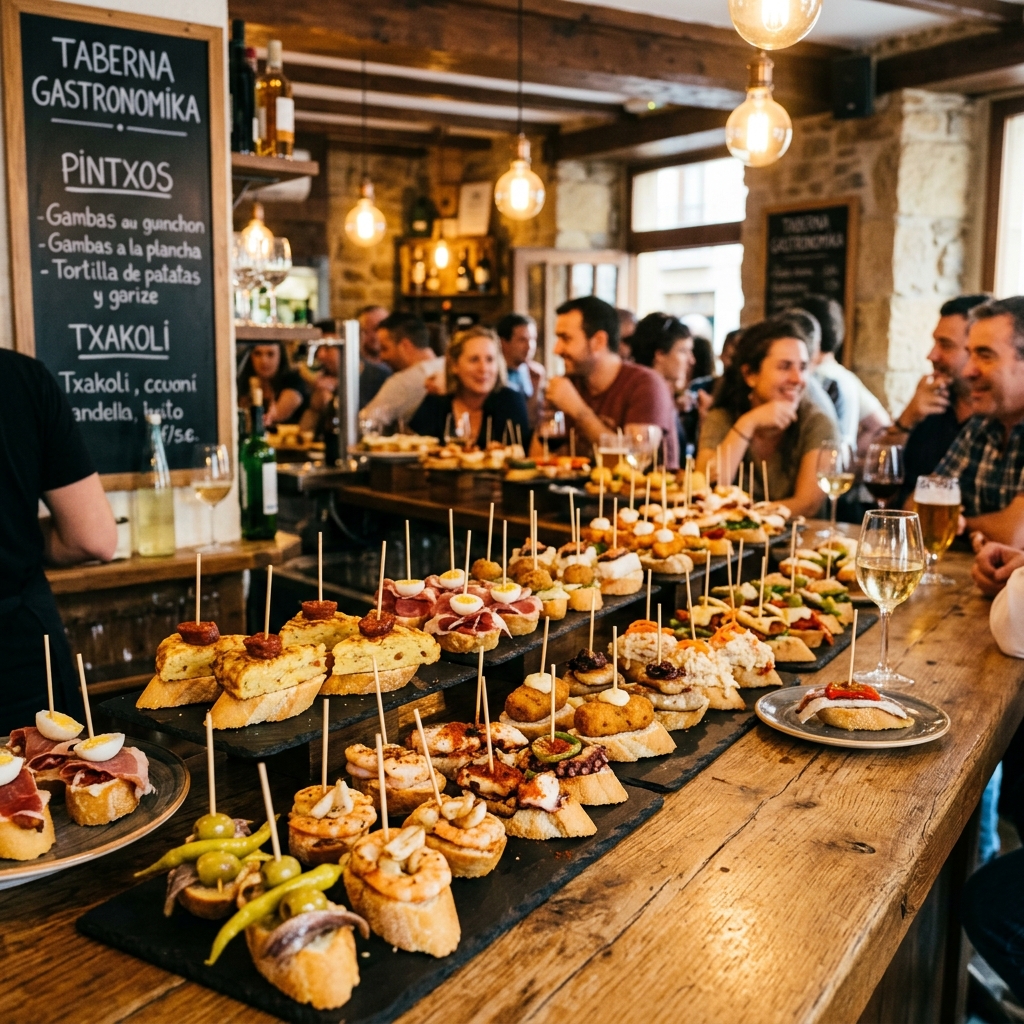
San Sebastián has more Michelin stars per capita than any other city on Earth, which is a useful statistic, but it misses the real argument for the place: the pintxo bars. These are the snack bars that line the streets of the Parte Vieja (Old Town), each with its own glass counter of small constructions on bread — anchovies and peppers, braised cheek, cured tuna belly — priced at €2–3 each, available to anyone who walks in and points.
The dynamic this creates is unique in European food culture: the finest culinary city on the continent is also one where you can eat exceptionally well for €20, standing at a counter, with a glass of txakoli (the local slightly sparkling white wine). Three-star restaurants like Arzak, Mugaritz, and Akelarre set the tone; the pintxo culture democratises it entirely.
What to eat: Gilda (the original pintxo — olive, anchovy, pickle on a skewer), bacalao al pil-pil, kokotxas, idiazabal cheese, and whatever has just been placed on the bar counter at La Cuchara de San Telmo.
Getting there by train: San Sebastián is 5–6 hours from Paris via a TGV to Hendaye and the EuskoTren local line across the border. From Madrid, Renfe operates direct high-speed trains (4 hours). The Basque Country rail network connects the city to Bilbao (1 hour) and is worth using to eat your way along the coast.
2. Bologna, Italy
Bologna has been called La Grassa — the fat one — since the Middle Ages, and the Bolognesi wear this with pride. This is the city that invented tortellini, tagliatelle, mortadella, and ragù. The food is unapologetically rich, deeply traditional, and executed with an orthodoxy that borders on the religious: tagliatelle al ragù must be made with egg pasta, the ribbon must be a specific width (the official width is registered with the Bologna Chamber of Commerce), and a cook who uses spaghetti bolognese has committed a culinary crime.
The Quadrilatero — the old market district between the main square and Via Rizzoli — is still a working food market after eight centuries. Go on a Tuesday or Friday morning when the stalls are fullest.
What to eat: Tagliatelle al ragù (bolognese), tortellini in brodo (in broth, not with cream sauce — the cream version is a tourist adaptation), mortadella, tigelle (small flatbreads eaten with cured meat), and crescentine fritte.
Getting there by train: Bologna’s position makes it one of the easiest cities in Italy to reach. It is 2 hours from Florence, 35 minutes from Parma, 2 hours from Milan, and a stop on many Rome to Venice services. See our full guide to travelling Italy by train.
3. Lyon, France
Lyon’s claim is different from Bologna’s or San Sebastián’s: it is the city that codified French gastronomy as a tradition accessible to the working class, not just the bourgeoisie. The bouchons — small, convivial restaurants serving Lyonnaise cuisine built around offal, pork, and cream — are a protected cultural institution. Many are certified by the Les Bouchons Lyonnais association, which verifies authenticity.
Paul Bocuse spent most of his life cooking here. The market Les Halles de Lyon Paul Bocuse, a covered food market on the Cours Lafayette, is his enduring monument — and one of the finest food markets in Europe, with the region’s cheesemakers, charcutiers, and pastry shops under one roof.
What to eat: Quenelles de brochet (pike dumplings in cream sauce), tablier de sapeur (breaded tripe), Cervelas (pork sausage), Saint-Félicien and Saint-Marcellin cheeses, rosette de Lyon sausage, and the tarte aux pralines (rose praline tart).
Getting there by train: Lyon is 2 hours from Paris on the TGV, 2 hours from Marseille, and 2 hours from Geneva. It is an easy addition to a Paris-to-Barcelona or Paris-to-Rome rail itinerary.
4. Naples, Italy
Naples operates on a different frequency from the rest of Italy. The food is louder, faster, cheaper, and — when it comes to pizza — without any credible rival on the planet. The Neapolitan pizza tradition (listed as UNESCO Intangible Cultural Heritage since 2017) is not a style among styles; it is the original, and the standard against which all others are measured. A margherita at Sorbillo or Di Matteo, eaten standing at the counter, costs €5 and tastes like an argument you have been making without knowing it.
Beyond pizza: the fried food culture is extraordinary (frittura, cuoppo, pizza fritta), the fish is exceptional along the waterfront at Mergellina, and the pastry tradition — sfogliatelle, babà al rum, pastiera napoletana — is one of the great dessert cultures in Europe.
What to eat: Pizza margherita and marinara, ragù napoletano (slow-cooked Sunday meat sauce), sartù di riso (stuffed rice timbale), parmigiana di melanzane, and sfogliatelle for breakfast.
Getting there by train: Naples is 1 hour 10 minutes from Rome on the Frecciarossa — one of the fastest and most convenient train hops in Europe. See our guide to Italy’s high-speed rail network for context. From Milan it’s just under 5 hours.
5. Istanbul, Turkey
Istanbul is not a European city in the conventional sense, but no honest list of European food cities can exclude it. The city’s food culture draws on eight centuries of Ottoman court cuisine, combined with Anatolian, Greek, Armenian, and Levantine traditions, producing a table unlike anywhere else on the continent.
The balık ekmek (fish sandwich) from the boats moored at Eminönü, eaten on the Galata Bridge, costs a few lira and involves the freshest fish you will eat in any city. The covered Grand Bazaar spice market contains saffron, sumac, and dried fruit of extraordinary quality. The meyhane — traditional taverns, typically in the Beyoğlu neighbourhood — serve meze and rakı in the way a Lyonnais bouchon serves offal and Beaujolais.
What to eat: Lahmacun (flatbread with minced meat, eaten with herbs and pomegranate), İskender kebab, midye dolma (mussels stuffed with spiced rice), baklava from Karaköy Güllüoğlu, börek (flaky pastry with cheese or meat), and breakfast — the Turkish hotel breakfast tradition of eggs, cheese, olives, and bread is one of the most civilised morning meals in the world.
Getting there by train: Istanbul is served by overnight sleeper trains from Sofia (approximately 10 hours) and Thessaloniki. The overnight from Sofia is the classic slow-travel approach. From the rest of Europe, the journey typically involves flying to Sofia or Thessaloniki and continuing by rail.
6. Copenhagen, Denmark
Copenhagen’s food reputation is well-documented by now — Noma, the New Nordic movement, the cascade of restaurants that followed. But the city has matured into something more interesting than a destination for €300-per-head tasting menus. The natural wine bar scene, the smørrebrød (open sandwich) tradition, the street food market at Reffen in summer — Copenhagen is an excellent food city at every price point.
The most important thing to understand: smørrebrød is not a snack. A traditional Copenhagen smørrebrød lunch — at Aamanns or Schønnemann — is a full meal, with several open-faced rye-bread sandwiches served sequentially, the order and combination of toppings governed by tradition. It is one of the most underrated culinary experiences in Europe.
What to eat: Smørrebrød (herring, roast beef with remoulade, smoked eel), frikadeller (pork meatballs), pastry from any of the city’s excellent bakeries, and the ris à l’amande (Christmas rice pudding with cherry sauce) if visiting in December.
Getting there by train: Copenhagen is 4.5 hours from Hamburg on the new Fehmarn Belt Link (opening fully in the late 2020s, with connections already good), 5 hours from Amsterdam via Hamburg, and connected to Oslo and Stockholm by overnight trains.
7. Lisbon, Portugal
Lisbon’s food scene has been transformed in the past decade — though the traditional foundations (grilled fish, piri piri chicken, bacalhau in its 365 alleged recipes, pastéis de nata) were always exceptional. The city now combines that tradition with a serious natural wine movement and an influx of chefs returning from time in London and New York to open restaurants in the city’s transformed neighbourhoods.
The Time Out Market in Cais do Sodré is a useful orientation point — a covered food hall with stalls from some of the city’s best restaurants, priced accessibly — but the better meals are found in Mouraria, Intendente, and the Mouraria alley restaurants that are not yet in any guidebook.
What to eat: Pastéis de nata (custard tarts, from Pastéis de Belém for history, from your local neighbourhood bakery for authenticity), bacalhau à Brás (scrambled salt cod with potato sticks and egg), caldo verde (kale soup with chouriço), grilled sardines from June to September, and ginjinha (cherry liqueur, served in a chocolate cup from a street kiosk).
Getting there by train: Lisbon and Porto are connected by frequent IC trains (2h 45m, from €15) and the Alfa Pendular (2h 40m, faster and more comfortable). International connections are limited — the high-speed link to Madrid (Badajoz corridor) has been in planning for years. For now, Madrid to Lisbon is best done by bus or overnight train.
8. Palermo, Sicily
Palermo’s street food culture is one of the most intense in the Mediterranean. The Vucciria market — chaotic, loud, slightly overwhelming — is more authentically market-like than any other covered market in Italy. The city’s food reflects its history: Arab, Norman, Spanish, and North African influences stratified over centuries into something entirely its own.
The arancina (rice ball, stuffed with ragù or butter and ham) is the canonical Palermo street food, and the version available at the city’s fry shops is better than any you will find elsewhere. The pane ca’ meusa (spleen sandwich, with ricotta or caciocavallo) is the city’s most confronting and most interesting street food — a medieval survival, eaten from a cart.
What to eat: Arancina, pane ca’ meusa, caponata (sweet-sour aubergine), pasta con le sarde (sardines, fennel, raisins, pine nuts — the Arab influence made visible), cannoli (the filling from fresh ricotta, not from a tube), and granita for breakfast with brioche col tuppo.
Getting there by train: Palermo is reachable from Rome’s Termini via ferry connection at Villa San Giovanni (the Palermo-Rome train actually loads onto a ferry for the Messina crossing — one of the more extraordinary rail experiences in Europe), total journey around 11 hours. By air is significantly faster; the train is for the journey as experience.
9. Vienna, Austria
Vienna’s food culture is a study in the preservation of refinement. The coffee house tradition — Viennese cafés where you can sit for an afternoon over a single Melange (coffee with steamed milk) and nobody will hurry you — is a UNESCO Intangible Cultural Heritage. The Naschmarkt — the city’s main open food market, running for 1.5 km along the Wienzeile — is one of the great central European markets, with stalls selling Austrian, Turkish, and Balkan food side by side.
The Wirtshäuser — Viennese neighbourhood taverns — serve Wiener Schnitzel, Tafelspitz (boiled beef), Beuschel (offal ragout), and the light white wines of the Viennese vineyards (the Wiener Gemischter Satz, a field blend, available in wine taverns at the edge of the city).
What to eat: Wiener Schnitzel (from a dedicated Schnitzel restaurant, not a tourist café), Tafelspitz with chive sauce and horseradish, Kaiserschmarrn (shredded pancake with plum jam), Apfelstrudel, Sachertorte from the Café Sacher or Hotel Bristol, and a Kleiner Brauner (small brown coffee) in a proper Kaffeehaus.
Getting there by train: Vienna is one of the great European rail hubs — 2h 40m from Munich, 2h 30m from Salzburg, 2h 45m from Prague, 2h 45m from Budapest. It is a natural stop on almost any central European rail itinerary, which is convenient because it is also a city worth stopping in. See our guide to Krakow by train for the Vienna–Krakow overnight option.
10. Porto, Portugal
Porto is often mentioned alongside Lisbon but deserves its own argument. The food is more local, less affected by the recent restaurant boom that has reshaped the capital, and somehow more rooted in a specific sense of place. The city clings to the granite hillsides above the Douro River; its food clings equally to tradition.
The francesinha — Porto’s famous sandwich, filled with cured meats and steak, smothered in a spiced beer-and-tomato sauce, topped with a fried egg — is perhaps the most polarising dish in Portugal: visitors either find it overwhelming or eat it three times in a weekend. It deserves at least one attempt. The tascas (informal neighbourhood restaurants) around the Bonfim district serve the most honest food at the most honest prices.
What to eat: Francesinha (from Café Santiago or Regaleira, the long-established specialists), tripas à moda do Porto (tripe stew — Portuenses are called tripeiros, tripe-eaters, a name worn with pride), bacalhau com natas (salt cod with cream), and tawny port at a cave (wine cellar) in Vila Nova de Gaia across the river.
Getting there by train: Porto’s São Bento station is one of the most beautiful railway stations in the world — azulejo tile panels depicting scenes of Portuguese history cover the hall’s walls. Trains from Lisbon (2h 40–45m on Alfa Pendular, 3h on IC), Vigo in Spain (2h 30m), and regional services throughout northern Portugal all arrive here.
How to Build a Food-Focused Rail Itinerary
The cities on this list are connected more naturally than a world map might suggest. A rail itinerary that takes you from Paris to Lyon (2 hours TGV) to Bologna (2h Frecciarossa from Milan, which is 3h from Lyon) to Naples (1h from Rome) can be done in a week while eating at a standard no comparable flight itinerary can achieve. The train gives you arrival at the centre; the train gives you time in the dining car; the train gives you the correct pace.
For a western Europe food loop: Porto → Lisbon → San Sebastián → Lyon → Turin → Bologna → Naples — roughly two weeks, all achievable by train, covering the full range of European food traditions. Our guide to booking European trains has the practical booking advice you’ll need.
The one constant across all these cities: the best meals are rarely in the places that appear first on any algorithm’s recommendation. They are found by walking further, by asking the person at the next table, and by arriving somewhere slow enough to notice.
Related Reading
- Eating Well in Portugal: A Slow Traveler’s Food Guide — Portugal food guide for slow travelers: bacalhau in Lisbon, francesinha in Porto, black pig in Alentejo, and…
- The Best Food Tours in Europe: 12 Cities Worth Eating Your Way Through — From Barcelona’s Boqueria to Istanbul’s Grand Bazaar, these are the food tours that go beyond the tourist trail —…
- Eating on European Trains: Dining Cars, Platform Food, and What to Pack — The truth about food on European trains — which routes have decent dining cars, where to eat on the platform, and…