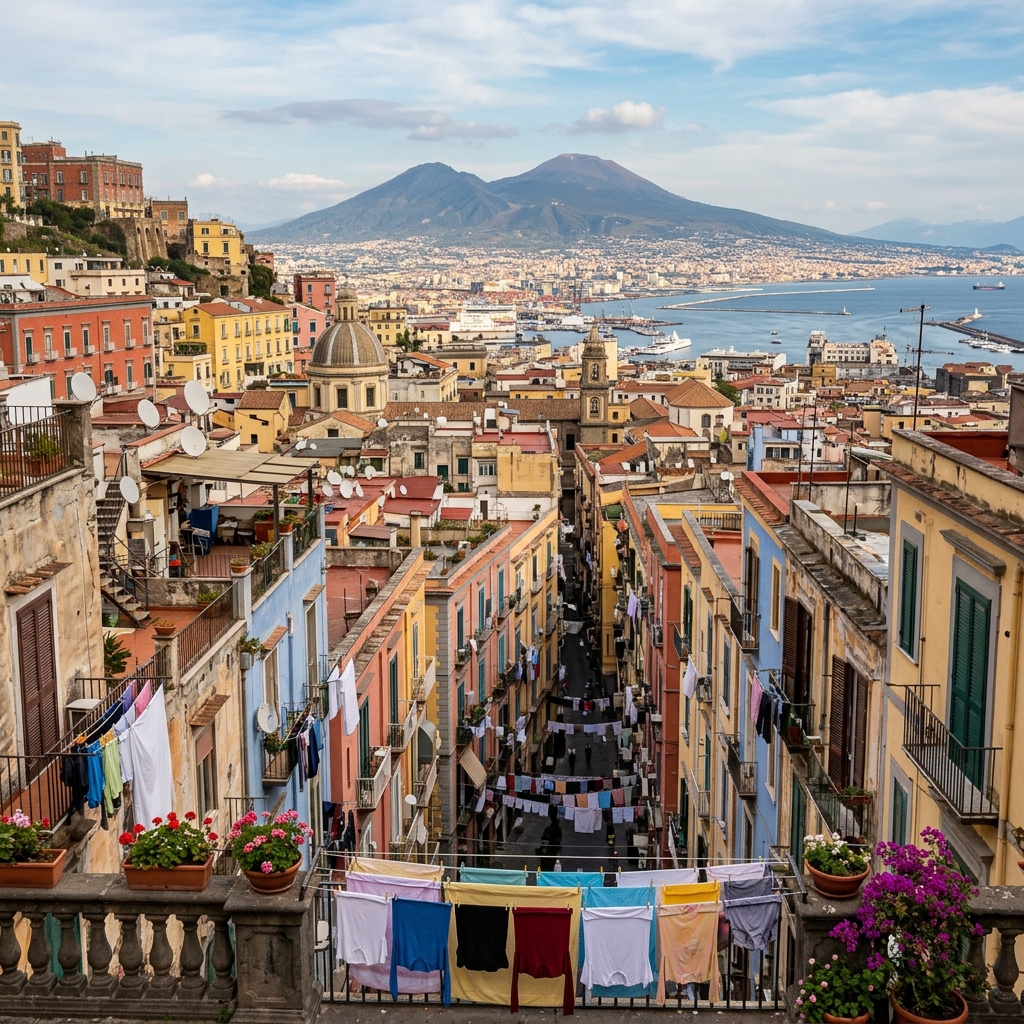
Naples has a reputation problem, and the reputation is wrong in most of the ways that matter. Visitors arrive primed for chaos and petty crime, determined to spend as little time here as possible before escaping to the Amalfi Coast. They miss one of the greatest cities in Europe.
The archaeological museum alone — holding the contents of Pompeii and Herculaneum — would be a destination in any other country. The historic centre, a UNESCO World Heritage Site, is a living medieval city that has never been cleared and rebuilt into photogenic tidiness. The pizza is a genuine cultural achievement, not a marketing claim. And the Circumvesuviana railway, slow and chaotic and €2.80 each way, connects Naples to Pompeii in 35 minutes — the best-value day trip on the Italian peninsula.
This guide assumes you’re arriving by train and staying long enough to understand the city rather than survive it.
the full context of Italian rail travel
TL;DR: Rome to Naples by Frecciarossa takes 1 hour 10 minutes and costs from €20–25 advance. Milan to Naples takes 4 hours 30 minutes (Frecciarossa, direct). Arrive at Napoli Centrale, take the Circumvesuviana to Pompeii Scavi (35 min, €2.80). Spend at least two full days; three is better.
Getting to Naples by Train
From Rome (1h 10min)
The Rome–Naples high-speed corridor is the fastest city pair in Italy: 1 hour 10 minutes on Trenitalia’s Frecciarossa, covering 220km from Roma Termini to Napoli Centrale. Departures run roughly every 30–45 minutes through the day, from early morning until late evening. Italo also runs on this corridor with slightly different scheduling and competitive prices.
Advance fares:
| Operator | Fare Class | Price (advance) | Notes |
|---|---|---|---|
| Trenitalia Frecciarossa | Super Economy | €20–25 | Non-refundable |
| Trenitalia Frecciarossa | Economy | €28–40 | One free exchange |
| Trenitalia Frecciarossa | Base | €45–65 | Flexible |
| Italo | Low Cost | €15–22 | Non-refundable |
| Italo | Economy | €22–35 | Some flexibility |
Book at trenitalia.com (English interface available) or italotreno.it. The Trenitalia booking window opens 120 days in advance. Italo opens 90 days out. For the cheapest Super Economy or Low Cost fares, check at these opening windows — they go fast on busy summer routes.
From Milan (4h 30min)
The Milan–Naples journey requires no connection: direct Frecciarossa services run the length of Italy in approximately 4 hours 30 minutes, stopping at Bologna, Florence, and Rome. Advance fares from €35–55 in Super Economy. The journey is long enough to make a comfortable overnight (if a night train existed — one doesn’t on this route; an overnight from Milan would require booking separately to Rome and then onward) but perfectly manageable as a daytime journey with a meal in the dining car and the Italian landscape filling the windows.
Napoli Centrale: Arriving in the City
Napoli Centrale is not a beautiful station, but it is a useful one. It sits at Piazza Garibaldi, the main transit hub of the city, and connects to the Metro (lines 1 and 2), buses, and the Circumvesuviana commuter rail (which departs from the lower concourse — follow signs to Circumvesuviana, as it’s a separate operation from Trenitalia).
A note on the immediate area: Piazza Garibaldi and the surroundings of Napoli Centrale are Naples at its most chaotic and most tourist-targeted. Keep your bags close, use your phone carefully, and don’t linger unnecessarily. This is not where you’ll understand Naples — it’s just where you arrive. The historic centre and its UNESCO streets are 15 minutes on foot or one Metro stop.
Getting from the station to the historic centre:
- On foot: 15–20 minutes west along Via Tribunali or Via San Biagio dei Librai (which become Spaccanapoli)
- Metro Line 1 to Dante or Museo — 5 minutes, €1.30
- Taxi: €8–12 to the Piazza del Gesù Nuovo area; agree a fare or use the meter
[IMAGE: Spaccanapoli street view, Naples historic centre — search terms: Spaccanapoli Via dei Tribunali Naples street medieval city UNESCO]
Naples: The City Itself
Spaccanapoli
Spaccanapoli — literally “splits Naples” — is the straight Roman road that bisects the historic centre, visible from the hills above as a line slicing through the urban mass. Walking its length (Via San Biagio dei Librai becomes Via Benedetto Croce becomes Via Pasquale Scura) takes you through the living anatomy of the city: churches, bakeries, street altars, schools, laundry overhead, motorcycles threading through pedestrians, vendors selling sfogliatelle and friarielli from carts.
This is not a street designed for tourism, which is precisely what makes it worth the full walk.
Piazza del Gesù Nuovo
The large piazza at the heart of the historic centre, with the unusual diamond-rusticated facade of the Gesù Nuovo church on one side and the Gothic Santa Chiara complex on the other. The obelisk in the centre (guglia dell’Immacolata) is a baroque confection worth examining up close. The square functions as a natural gathering point — come in the early evening when the students from the nearby university have colonised the steps.
Cappella Sansevero: The Cristo Velato
This small family chapel on Via Francesco De Sanctis contains what is arguably the most technically astonishing sculpture in Italy: Giuseppe Sanmartino’s Cristo Velato (Veiled Christ), carved in 1753 from a single block of marble. The veil over the recumbent Christ’s face is rendered in stone with a translucency so precise that generations of visitors refused to believe it was marble — a 19th-century hoax held that the sculptor had covered a real cloth veil with a solution that calcified it. This story is false; the veil is carved. But you will understand why people believed it.
Book tickets in advance at museosansevero.it — the chapel is small, timed entry is essential in high season, and it sells out. €8 admission. (Cappella Sansevero, 2025)
Museo Archeologico Nazionale (MANN)
The National Archaeological Museum of Naples holds the most important collection of Roman antiquities in the world — the contents of Pompeii and Herculaneum, removed over centuries of excavation, including the Alexander Mosaic (a 20,000-tesserae floor mosaic from the House of the Faun depicting the Battle of Issus), the Farnese Hercules, and the Gabinetto Segreto (Secret Cabinet), containing the erotic art from Pompeii’s brothels and private homes.
Plan two to three hours minimum. The museum is large, under-signed, and currently partially in renovation — but the core Pompeii collection is always accessible. Tickets approximately €15, available at the entrance or at coopculture.it. (MANN, 2025)
The Pizza Question
Naples invented pizza. Not in the metaphorical way that cities claim ownership of foods — the modern pizza margherita was created here, named after Queen Margherita of Savoy in 1889, and the specific Neapolitan technique (00 flour, San Marzano tomatoes, buffalo mozzarella, 485°C wood-fired oven, 60–90 seconds cooking time) is so precisely defined that it now carries EU Traditional Speciality Guaranteed status.
The three names everyone mentions:
L’Antica Pizzeria da Michele
Via Cesare Sersale 1. Open since 1870. The purist’s choice: only two options — marinara (tomato, garlic, oregano, no cheese) and margherita. No variations. No extras. The queue is long (arrive before 11am or after 3pm to reduce the wait). The pizza, when it arrives, is excellent — thin-centred, slightly charred at the crust, the tomato sauce bright and uncomplicated. Cash only. (Da Michele, 2025)
Sorbillo
Via dei Tribunali 32. The most famous address on the Via dei Tribunali pizza strip — a long stretch where several excellent pizzerias cluster. Sorbillo is larger than da Michele, serves a wider menu, and has been run by the Sorbillo family since 1935. The queue is also long, but the multiple-floor seating means it moves faster. Gino Sorbillo has become something of a celebrity chef and ambassador for Neapolitan pizza globally, which adds context but doesn’t affect the pizza.
Di Matteo
Via dei Tribunali 94. The advantage of Di Matteo is partly its relative obscurity compared to its neighbours: it’s excellent pizza with somewhat shorter queues, particularly midweek. The frittura (fried street snacks — cuoppo, pizza fritta) from the window on the street is also worth a detour.
Queue strategy: All three are best visited at opening (11am–noon) or mid-afternoon (3–5pm). Saturday lunch at any of them will involve a serious wait. For a pressure-free introduction to Neapolitan pizza, try the neighbourhood pizzerias away from Via dei Tribunali entirely — virtually every block in the historic centre has one.
[IMAGE: Neapolitan pizza margherita fresh from wood-fired oven — search terms: Neapolitan pizza margherita wood fired Naples authentic]
The Circumvesuviana: Day Trips on the €2.80 Train
The Circumvesuviana is the regional commuter railway that circles the base of Mount Vesuvius, connecting Naples to the towns of the Campania coast and bay. It is old, often crowded, reliably slow, and entirely essential — because it goes where no other affordable transport does.
The key point: buy tickets at the Circumvesuviana ticket windows in Napoli Centrale’s lower concourse, not at the main Trenitalia ticket office. They are completely separate systems. The ticket for Pompeii Scavi is €2.80 each way.
Pompeii (35 minutes, €2.80)
The stop you want is Pompeii Scavi–Villa dei Misteri — the station immediately adjacent to the site entrance. Not Pompeii city centre (a different, less useful stop). The excavations cover about 44 of the original 66 hectares of the buried Roman city, and a thorough visit takes four to six hours minimum.
Go early (gates open at 9am; arrive before 10am to see the main streets before the group tours) or in the final two hours before closing when crowds thin. The Villa of the Mysteries (a 10-minute walk from the main entrance, in the direction the station name suggests) is the most extraordinary single site: 1st-century BC frescoes depicting what is believed to be Dionysian initiation rites, covering three walls of a triclinium in colours that have somehow survived 2,000 years. (Pompeii sites, 2025)
Entrance approximately €18. Book timed entry at pompeiisites.org in advance in summer.
Herculaneum (20 minutes, €2.80)
Herculaneum (station: Ercolano Scavi) is smaller than Pompeii — about 4.5 hectares currently excavated — but in many ways more intimate and better preserved. The pyroclastic surge that buried Herculaneum was faster and hotter than the ash that fell on Pompeii; it carbonised organic material (wooden furniture, foodstuffs, documents) rather than simply burying it under lapilli, meaning far more original material survived.
The detail at Herculaneum is extraordinary: painted walls, wooden doors still on their hinges, a carbonised wooden boat found on the beach where inhabitants tried to escape. Two to three hours is enough for a thorough visit. (Herculaneum, 2025)
Sorrento (1h 10min, end of line)
Sorrento sits at the end of the Circumvesuviana’s Sorrento line, on the cliff above the bay, and it’s best understood as the gateway to the Amalfi Coast rather than a destination in its own right. From Sorrento, SITA buses run along the Amalfi Coast road (spectacular but slow in summer); the ferry service connects to Capri, Positano, and Amalfi. The town itself is pleasant enough — lemon groves, limoncello, cliffside hotels — but it’s the logistical hub rather than the reason to come.
The Circumvesuviana to Sorrento takes 1 hour 10 minutes from Naples. The €2.80 fare covers the full line to the end. (EAV Circumvesuviana, 2025)
Naples as a Base: Campania Region
The argument for using Naples as a base for a week rather than a transit point for a day:
- Pompeii and Herculaneum — two full days, both by Circumvesuviana
- Sorrento and the Amalfi Coast — a full day minimum, more comfortably two
- Capri — ferry from Naples Molo Beverello (50 min, €15–20); or from Sorrento (20 min)
- Paestum — three Doric Greek temples, better preserved than most things in Athens, two hours south of Naples by regional train or bus
- Caserta — the Royal Palace of Caserta (Reggia di Caserta), built by the Bourbons as a rival to Versailles, is 40 minutes from Napoli Centrale by regional Trenitalia train (€4 each way)
Naples is cheaper than Rome, Florence, or the Amalfi Coast towns: good hotels in the historic centre start at €80–100 per night; a dinner at a real trattoria (not a tourist-menu place) costs €20–30 per person including wine. A week here, with day trips radiating out on the Circumvesuviana, is one of the most rewarding slow travel configurations in Italy.
full context for Italian itinerary planning
A Note on Safety
The honest version: Naples requires more vigilance than Florence or Verona. Phone snatching and pickpocketing are real risks in crowded areas — the Piazza Garibaldi area around the station, the Spaccanapoli strip, and the waterfront promenade are the most common locations. Keep phones in front pockets or bags, carry only a copy of your passport in the historic centre, and pay the small extra for accommodation in the UNESCO historic center rather than the Piazza Garibaldi area.
Walking at night is fine in the historic centre; it’s a city where people are out late and streets are rarely deserted. Solo women travellers experience the same practical precautions as elsewhere in southern Italy.
The reputation for danger dates substantially from a period of Camorra activity in peripheral neighbourhoods that tourists don’t visit. The UNESCO historic centre is not a dangerous place. It is a disorganised, loud, beautiful, occasionally exasperating place where you need to pay attention — which is different.
Related Reading
- The Adriatic Coast by Train and Ferry: Italy to Croatia Slow — Travel the Adriatic slow: Italy’s coastal rail line from Bologna to Bari, then overnight ferry to Split and…
- Italy by Train in 3 Weeks: A Slow Travel Itinerary Worth Taking — Three weeks, one country, no rental car.
- Italy by Ferry: Crossing to the Islands and Beyond — Sicily, Sardinia, the Aeolians, Greece, Croatia — Italy’s ferry network connects it all.
Frequently Asked Questions
How do I get to Naples by train from Rome?
Trenitalia’s Frecciarossa covers Roma Termini to Napoli Centrale in 1 hour 10 minutes, with roughly 20–25 departures daily. Advance Super Economy fares start from €20–25. Italo also runs on this corridor from approximately €15–22 (Low Cost). Book at trenitalia.com or italotreno.it; Trenitalia’s booking window opens 120 days out.
How do I get to Pompeii from Naples by train?
Take the Circumvesuviana from Napoli Centrale’s lower concourse — a separate system from Trenitalia — to the Pompeii Scavi–Villa dei Misteri stop. Journey time is approximately 35 minutes; cost is €2.80 each way. Buy tickets at the Circumvesuviana windows, not the main Trenitalia office. Trains run roughly every 30 minutes. The site entrance is directly adjacent to the station exit.
Is Naples safe for tourists?
Naples is safe for attentive travellers. Petty theft is a real risk around Napoli Centrale and in crowded historic centre streets — keep phones in front pockets, don’t display expensive equipment, and be alert in crowds. The UNESCO historic centre is visited by millions annually without incident. Violent crime against tourists is rare. Naples requires more vigilance than northern Italian cities, not avoidance.
Which pizza restaurant should I go to in Naples?
L’Antica Pizzeria da Michele is the purist choice (only margherita and marinara, cash only, long queues, worth it). Sorbillo on Via dei Tribunali is larger, has more menu options, and is slightly easier to access. Di Matteo, also on Via dei Tribunali, is excellent with somewhat shorter queues. All three are genuinely outstanding. Visiting before noon or mid-afternoon reduces queue times at all three.
How many days do I need in Naples?
Two full days covers the main highlights — Spaccanapoli, the National Archaeological Museum, Cappella Sansevero (Cristo Velato), and good pizza. Three days adds a Pompeii or Herculaneum day trip by Circumvesuviana. Travellers using Naples as a base for Campania — Pompeii, Herculaneum, Sorrento, Capri, the Amalfi Coast — will find a week rewarding and economical.
Why Naples Rewards Patience
There’s a specific quality to Naples that patient travellers discover and rushed ones miss: the city is not trying to be liked. It doesn’t smooth its edges for tourism or apologise for being complicated. The pizza is extraordinary but the street outside the restaurant is chaotic. The Cappella Sansevero contains a sculpture that stops you mid-breath but the signage to find it is nearly nonexistent.
This is the texture of a city that has been continuously inhabited for 2,800 years and has had other things to worry about than visitor experience. Alain de Botton observed in The Art of Travel that the most educationally valuable journeys are often the most uncomfortable — that difficulty is sometimes the point, the mechanism by which a place opens itself to you. Naples tests that idea more directly than most Italian cities.
The reward for patience is significant. The Roman artifacts in the Museo Nazionale will rearrange your sense of scale. The pizza from Da Michele on a Tuesday morning with a coffee will lodge permanently in your memory of food. The Cristo Velato in its small chapel will make you stand very still and wonder what your hands are capable of.
Come by Frecciarossa from Rome. It takes 70 minutes. Give the city at least three days.
For the wider Italian rail network, read our Italy by train guide. For the Rome end of this journey, the Rome slow travel guide covers the city in the same depth. And if you’re approaching from the north, the Milan to Rome train guide has the full picture on fares and booking.