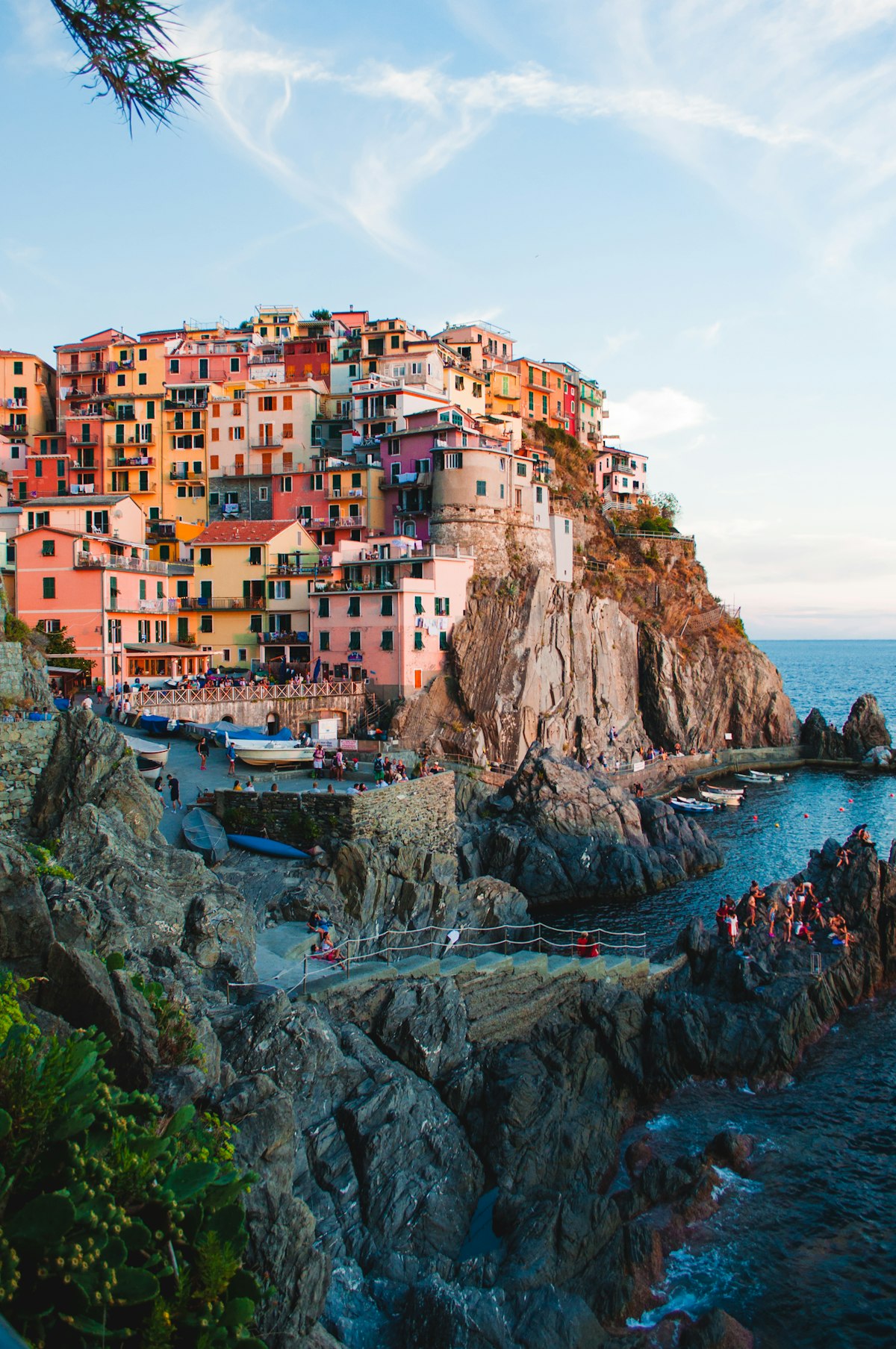
Italy by train is one of the great pleasures of European travel. The country’s high-speed network covers 1,467 km as of 2024 (Rete Ferroviaria Italiana, 2024), connecting Rome, Florence, Venice, Milan, and Naples with frequent, fast, and genuinely affordable services. No car hire, no airport queues, no motorway tolls, just the field rolling past your window, a proper espresso from the bistro car, and arrival directly into the heart of each city.
This guide covers everything: the two competing high-speed operators, every major route with journey times and prices, how to book, whether a rail pass makes sense, and the practical details that determine whether your trip runs smoothly or not. Italy’s rail system rewards those who understand it, and this is how to understand it.
TL;DR: Italy’s high-speed trains (Frecciarossa and Italo) connect its major cities at up to 300 km/h, with advance fares starting from €9. Competition between the two operators keeps prices low, Milan to Rome can cost as little as €19 booked ahead. Regional trains fill the gaps for smaller towns, but require ticket validation before boarding (Trenitalia, 2026).
Why Is Italy Perfect for Train Travel?
Italy’s geography makes it almost designed for rail. The country runs 1,300 km from the Alps to Sicily, a long, narrow shape that suits a single high-speed spine far better than a hub-and-spoke road network. The top five cities tourists visit (Rome, Florence, Venice, Milan, Naples) all sit on or near that spine, connected by trains running every 30 to 60 minutes from early morning to late evening.
The practical advantages pile up quickly. Italian city centres are dense, historic, and often hostile to cars, parking in Florence or Venice ranges from expensive to simply impossible. Train stations, by contrast, sit at the heart of every major city. You arrive in Rome and step out at Termini, 10 minutes’ walk from the Colosseum. You arrive in Venice and the Grand Canal is right there, outside the station doors.
There’s also the question of cost. Advance fares on Italy’s high-speed network regularly undercut budget airline prices, without the bag fees, airport transfers, or 45-minute check-in window. A Milan–Rome ticket for €19 bought six weeks in advance is genuinely good value for a journey of under three hours.
Italy’s rail network has one structural quirk that rewards the prepared traveller: two separate high-speed operators compete on exactly the same tracks, often within minutes of each other. That competition produces prices that don’t exist anywhere else in Europe. Checking both Trenitalia and Italo before booking is one of the simplest ways to save €15–€30 on any intercity journey.
[IMAGE: Map of Italy showing high-speed rail lines connecting Milan, Venice, Florence, Rome, and Naples, search terms: Italy train map high speed rail network]
Trenitalia vs Italo, Italy’s Two Operators Explained
Italy is the only country in Europe where two private high-speed operators compete on the same infrastructure, and that competition is one of the best things to happen to the Italian traveller. Trenitalia (state-owned) runs the Frecciarossa trains; Italo (privately owned by Global Infrastructure Partners since 2018) runs the AGV and EVO trains. Both hit 300 km/h in service on Italy’s AV/AC network (European Railway Agency, 2024).
Trenitalia / Frecciarossa has the larger network, more departures, and access to regional and international routes. The Frecciarossa 1000 (ETR 400) holds the wheeled train speed record at 393 km/h in testing, comfortably the fastest ever tested. Its Executive class is arguably the finest domestic train interior in Europe. Crucially, Eurail passes are valid on Frecciarossa (with a seat reservation fee of around €10–€13).
Italo launched on 28 April 2012 as Europe’s first fully open-access high-speed operator at commercial scale (Railway Gazette International, 2012). By 2024 it was carrying over 15 million passengers annually, holding roughly 30% of the Italian high-speed market (NTV press release, 2024). Italo’s Smart fares can drop to €9 on quiet departures. The catch: Eurail passes are not valid on Italo trains.
Italo’s entry into the Italian high-speed market in 2012 broke Trenitalia’s monopoly on the country’s main corridors. By 2024, the resulting fare competition had driven Milan–Rome advance tickets as low as €19, a price point that was simply unavailable before a second operator existed (NTV press release, 2024).
| Frecciarossa | Italo | |
|---|---|---|
| Owner | Trenitalia (state) | NTV / Global Infrastructure Partners |
| Trains | ETR 400, ETR 500 | AGV, EVO (ETR 675) |
| Top speed (service) | 300 km/h | 300 km/h |
| Fares from | ~€9 | ~€9 |
| Eurail valid? | Yes (+ reservation fee) | No |
| Network | Nationwide + international | Main corridors only |
| Loyalty | CartaFRECCIA | italopiù |
For a deep dive into whether Italo is worth choosing over Frecciarossa on specific routes, see our full Italo train review.
What Are the Main Italian Train Routes?
Italy’s high-speed network covers roughly a dozen key city pairs, with the Rome–Florence–Milan spine carrying the heaviest traffic. The routes below cover the journeys most travellers take, with current journey times and typical advance fare ranges for 2026. All high-speed services run from early morning to late evening, typically every 30 to 60 minutes.
Milan to Venice
The Milan to Venice train takes around 2 hours 29 minutes on the fastest Frecciarossa services, running via Brescia, Desenzano del Garda, and Verona. It’s one of the great city-pair journeys in northern Italy, the industrial north giving way to the Veneto plain, then that extraordinary causeway entry into Venice across the lagoon. Fares start from around €9–€14 booked in advance.
Full route details, booking strategy, and seat tips: Milan to Venice train guide.
Milan to Florence
Milan to Florence by high-speed train takes 1 hour 39 minutes on the fastest Frecciarossa and Italo services, one of the quickest intercity connections in Italy and genuinely faster than driving even without traffic. The route passes through the Apennine tunnels, emerging into Tuscany with a quality that feels almost theatrical. Advance fares from around €9.
Full route details: Milan to Florence train guide.
Florence to Venice
Florence to Venice takes around 2 hours 5 minutes on Frecciarossa, making it one of the most rewarding short rail journeys in Europe. The route travels northeast through Tuscany and the Veneto before crossing the Venetian Lagoon causeway, four kilometres of open water that deliver you directly to Venice Santa Lucia station. Tickets from €15 in advance.
Full route details, lagoon crossing tips, and seat advice: Florence to Venice train guide.
Rome to Florence
Rome to Florence is one of the busiest routes in Italy, with trains running approximately every 30 minutes throughout the day. The fastest Frecciarossa services cover the 277 km in 1 hour 35 minutes, faster than travelling by road even in good conditions. Volume means competition is fierce; advance fares from €9, though this route commands slightly higher typical prices than some others.
Full route details: Rome to Florence train guide.
Venice to Rome
Venice to Rome by train takes around 3 hours 45 minutes on the fastest direct services, covering the full length of Italy’s northeastern corridor. It’s a longer journey, but one that passes through remarkable countryside, the Venetian Lagoon at the start, the flatlands and hills of central Italy, the approach to Rome’s outskirts. Direct Frecciarossa services run several times daily.
Full route details: Venice to Rome train guide.
Milan to Rome
Milan to Rome is Italy’s premier intercity corridor, nearly 600 km covered in 2 hours 55 minutes at best on Frecciarossa and Italo. This is where the fare competition between the two operators is most visible: advance tickets on quiet departures can drop to €19 on either operator, making it one of the cheapest intercity journeys per kilometre in Europe. Both operators run a combined total of 20+ daily departures.
, Trainline shows both Trenitalia and Italo side-by-side for this route, which saves opening two separate tabs and missing the cheaper option.
The Milan–Rome corridor is where you see the direct financial benefit of Italy’s duopoly. No other European country has two full-service high-speed operators competing on the same route. A Milan–Rome return for €38 (two advance fares at €19 each) is an extraordinary price for a journey of nearly 600 km. That price simply doesn’t exist on monopoly corridors like Paris–Lyon or London–Manchester.
Rome to Naples
Rome to Naples is the shortest major intercity connection in Italy, 1 hour 10 minutes on the fastest Frecciarossa and Italo services. The route is popular with day-trippers, business travellers, and anyone combining Pompeii with a Rome base. It’s also the southern end of Italo’s network, meaning genuine fare competition applies here too. Advance fares from around €9.
Rome to Venice train full guide
Understanding Italian Train Classes
Italian high-speed trains use a multi-tier class system that’s more granular than most European operators. Frecciarossa and Italo have different names for broadly equivalent products, knowing what you’re buying avoids overpaying for features you don’t need.
Frecciarossa classes (Trenitalia):
- Base, the entry-level seat, 2+2 configuration, standard legroom, power sockets. Perfectly comfortable for journeys under three hours.
- Economy, slightly more space, 2+1 or improved 2+2 configuration on newer trains.
- Business, wider seats, more legroom, often reclining, dedicated luggage. Good for longer overnight-adjacent journeys.
- Executive, the premium product, 1+1 seating, table meals at seat, leather finishes. The finest domestic train product in Europe by most measures.
- Prima (Sala Panoramica), a dedicated premium lounge car on some Frecciarossa services, with panoramic windows.
Italo classes (NTV):
- Smart, standard class, comfortable, equivalent to Frecciarossa Base/Economy.
- Comfort, more space, similar to Frecciarossa Business.
- Prima, Italo’s first class, equivalent to Frecciarossa Executive, with table service.
- Club Executive, top-tier Italo product on AGV trains, with lounge access.
For most travellers on journeys under three hours, Base/Smart is entirely adequate. The €10–€20 upgrade to Business/Comfort makes a real difference on Milan–Rome (2h 55m) or Venice–Rome (3h 45m), a full reclining seat changes how you arrive.
[IMAGE: Interior of a Frecciarossa Business class cabin showing wide seats and table service, search terms: Frecciarossa interior business class Italy train seats]
How Do You Book Italian Train Tickets?
Booking Italian train tickets is straightforward once you know which platforms to use and what the booking window looks like. Trenitalia opens bookings 120 days in advance (around 4 months); Italo opens at a similar window. The cheapest advance fares are released first and in limited quantities, early booking matters most on busy summer routes.
Step-by-step booking process:
- Check both operators. Open Trenitalia.com and Italotreno.it. The cheapest fare often differs by €10–€20 between them on the same route, and neither appears on the other’s site by default.
- Use an aggregator for comparison. , Trainline shows Trenitalia and some regional options side-by-side; useful for multi-leg journeys across Europe. Note that Italo fares don’t always appear on third-party aggregators, so checking Italo’s own site directly is worth the extra step.
- Select your seat. Both operators allow seat selection at booking. For Florence–Venice, choose window seats on the left side (direction of travel) for the lagoon crossing. For morning departures, the east-facing side catches better light.
- Choose your fare type. Non-refundable advance fares (Super Economy / Smart) offer the best prices. Flexible fares cost 50–100% more. Unless your travel plans are genuinely uncertain, advance fares are the right choice.
- Download your ticket. Both operators issue e-tickets by email and via their apps. Screenshot it, train Wi-Fi can be unreliable, and having the QR code saved offline avoids problems at the barrier.
Trenitalia’s booking window opens 120 days ahead of travel, with the cheapest non-refundable fares released at or near that point. On high-volume summer routes, particularly Rome–Florence and Milan–Venice, the lowest Super Economy fares sell out weeks before the cheapest flexible fares appear. Booking at the 120-day mark consistently yields savings of 40–60% compared to booking within two weeks of travel (Trenitalia, 2026).
Booking platforms compared:
| Platform | Best for | Italo included? |
|---|---|---|
| Trenitalia.com | Frecciarossa, regional, international | No |
| Italotreno.it | Italo services | Yes |
| Trainline | Multi-country Europe trips | Partial |
| RailEurope | Pass + ticket combo booking | Partial |
Should You Get a Rail Pass for Italy?
The Eurail Italy Pass is often not worth buying for point-to-point Italian travel, and that’s a deliberate, data-backed statement rather than a general caution. Italy’s advance fares are among the cheapest in Europe on a per-kilometre basis. A Milan–Rome single for €19 is hard to beat with any pass calculation. The pass only makes financial sense if you’re taking many journeys, travelling flexibly without any advance booking, or combining Italy with a broader European trip.
For a single-country Italy trip with a rough itinerary, point-to-point advance tickets almost always win. The Eurail Global Pass (which includes Italy) can make sense for a 3–4 country tour, where the combined point-to-point cost starts exceeding pass prices, but the Italy-only pass is a harder case to make.
Key pass caveats:
- Eurail passes require a reservation fee on Frecciarossa high-speed trains (around €10–€13 per journey). Add those up across a week and the “free” journeys start looking less free.
- Eurail passes are not valid on Italo trains, the private operator is outside the Eurail network. This effectively excludes you from Italy’s cheapest advance fares when using a pass.
- Regional trains (Regionale/Regionale Veloce) require no reservation with a Eurail pass and no additional fee, these are the routes where passes offer genuine no-friction convenience.
Our full analysis of when the pass pays and when it doesn’t: Is the Eurail pass worth it?.
The Eurail Italy Pass excludes Italo entirely, since Italo (NTV) is a private operator outside the Eurail interoperability agreements. Given that Italo holds approximately 30% of the Italian high-speed market and regularly offers the cheapest advance fares on the Rome–Milan corridor, a pass holder is systematically locked out of Italy’s lowest prices (NTV press release, 2024).
Regional Trains in Italy, The Slower, Cheaper Network
Beyond the high-speed spine, Italy has an extensive regional train network operated by Trenitalia under the Regionale and Regionale Veloce brands. These trains serve hundreds of towns and villages the Frecciarossa doesn’t touch, and they’re often the only way to reach coastal towns, hilltop villages, and the scenic routes that make Italy feel less like a tourist corridor and more like a country.
Regional fares are cheap: typically €3–€15 for most journeys. There are no advance booking requirements, you buy a ticket at the station or online and travel on any train of that type for that route on that day.
The validation rule, critical. Regional tickets must be validated (stamped) at the yellow machines on the platform before boarding. This is not optional, and it’s not obvious. High-speed tickets like Frecciarossa are seat-specific and don’t require validation, they’re already linked to a named passenger and specific train. Regional tickets are not seat-specific. Without validation, the ticket is technically invalid, and inspectors do fine passengers, typically €50 or more, sometimes rising to €200 for repeat offences. The machines are small, yellow, and found on platforms and in station entrances. Stamp before you board.
The validation trap catches a remarkable number of experienced European travellers who correctly assume that if they’ve bought a valid ticket, they’re fine to board. Italy’s regional system operates on a different logic, the stamp is what activates the ticket for that specific journey. The fine is real, the inspectors are unsympathetic to “I didn’t know,” and the machines are rarely labelled prominently. Validate every regional ticket, every time.
What Are the Essential Tips for Train Travel in Italy?
Train travel in Italy works smoothly for prepared travellers. The network is genuinely good, punctuality on high-speed services runs above 85% on most routes. But a few specifics are worth knowing before you board.
Validate Regional Tickets
As covered above: regional train tickets must be stamped in the yellow validation machines before boarding. High-speed tickets (Frecciarossa, Italo, InterCity) do not require validation. When in doubt about which type of train you’re on: if you have a seat number, you don’t need to validate.
Italian Rail Strikes (Sciopero)
Italy experiences rail strikes several times a year, more frequently than most western European countries. The word to know is sciopero (strike). Italian law requires strikes to be announced at least 10 days in advance and mandates that essential services must continue to run during strike periods, typically around 50% of trains during peak commuter hours (7–9 a.m. and 5–8 p.m.), with reduced services at other times (Ministero delle Infrastrutture e dei Trasporti, 2024).
Check scioperi.info before any Italian rail journey, particularly if travelling during autumn or late winter. The site lists upcoming strikes by operator and date. If a strike falls on your travel day, book an early-morning service, these are typically covered by the guaranteed essential service provisions.
Luggage on Italian Trains
Italian high-speed trains have overhead racks and a luggage area at the end of each carriage. There’s no formal luggage size limit on Frecciarossa or Italo, but the overhead racks won’t comfortably take a large 30 kg suitcase. For very large bags, use the end-of-carriage area and arrive early enough to store them before the carriage fills.
At Venice Santa Lucia specifically, note that once you leave the station, you’re handling cobblestones and bridges, rolling luggage is a genuine hardship. Luggage storage at the station (approximately €6–€8 per bag) is a worthwhile investment for day visits.
Milan Centrale, Worth Arriving Early
Milan Centrale is one of the great station buildings of Europe, a 1931 Fascist-era monumental railway cathedral with vaulted stone arches, 24-metre ceilings, and a grandeur that still impresses nearly a century later. Rome Termini handles 150 million passengers annually (Grandi Stazioni, 2024) and is more functional than beautiful, but Rome’s sheer centrality, the Colosseum is 1.5 km away, makes it worth knowing.
Booking for the Venice Simplon Orient Express
If Italy by train is the everyday choice, the Venice Simplon Orient Express is the extraordinary one, the 1920s private train running London–Paris–Lausanne–Venice and other routes through Italy. Bookings open 12 months ahead and sell out on popular dates within days. For everything you need to know about securing a cabin: Venice Simplon Orient Express guide.
[IMAGE: Venice’s Santa Lucia station entrance at dusk with the Grand Canal visible beyond, search terms: Venice Santa Lucia station Grand Canal evening]
, For hotels near Italian train stations, Booking.com’s “station area” filter works well. Proximity to a major station genuinely matters for multi-city trips.
Related Reading
- The Adriatic Coast by Train and Ferry: Italy to Croatia Slow, Travel the Adriatic slow: Italy’s coastal rail line from Bologna to Bari, then overnight ferry to Split and…
- Italy by Train in 3 Weeks: A Slow Travel Itinerary Worth Taking, Three weeks, one country, no rental car.
- Naples by Train: Italy’s Most Misunderstood City Done Right, Rome to Naples by Frecciarossa takes 1h 10min from €20.
Frequently Asked Questions
Do I need to book Italian train tickets in advance?
For high-speed trains (Frecciarossa and Italo), advance booking is strongly recommended, particularly in summer. The cheapest non-refundable fares are released around 120 days ahead and sell out on popular routes. For regional trains, advance booking isn’t required; tickets are valid for any departure of that service type on the travel date, but must be validated before boarding (Trenitalia, 2026).
Is Italy by train expensive?
Not on advance fares. The fare competition between Trenitalia and Italo keeps prices remarkably low, Milan to Rome costs as little as €19, Florence to Venice from €15. Flexible walk-up fares are expensive, running €50–€100+ on major routes. Booking 4–8 weeks ahead typically locks in fares 40–60% cheaper than last-minute prices (NTV press release, 2024).
Can I travel across all of Italy in one trip by train?
Yes, and it’s genuinely practical. A Milan–Florence–Rome–Naples loop or a Venice–Florence–Rome circuit is doable over 5–7 days without a car. The high-speed network covers every major tourist destination except Sicily (which requires a ferry or flight). Regional trains extend coverage to coastal towns, smaller cities, and off-the-beaten-path destinations across the country.
Do I need to speak Italian to use the trains?
No. Station information boards, ticket machines, and Trenitalia’s website all offer English. Train announcements are made in Italian and English on high-speed services. The main area where language helps: regional train ticket machines in smaller stations sometimes have limited English interfaces. Buying on the app or at staffed windows solves this.
What’s the difference between Frecciarossa, Frecciargento, and Frecciabianca?
All three are Trenitalia high-speed brands, but they use different infrastructure and speeds. Frecciarossa (red arrow) runs entirely on the dedicated high-speed AV/AC lines at up to 300 km/h, it’s the fastest and most frequent. Frecciargento (silver arrow) uses a mix of high-speed and conventional track, reaching cities like Reggio Calabria and Venice that don’t have full AV connections. Frecciabianca (white arrow) runs entirely on upgraded conventional lines at up to 200 km/h, connecting smaller cities not served by the AV network (Trenitalia, 2026).
Your Italian Rail Journey Starts Here
Italy by train rewards a particular kind of traveller, one who enjoys the journey as much as the destination. The 2 hours 5 minutes from Florence to Venice go past quickly, but they go past beautifully: Tuscany, the Veneto plain, and that irreplaceable approach across the lagoon. The nearly three hours from Milan to Rome are a kind of moving meditation through the length of a country that rewards looking at.
The practical case is just as strong. Italy’s rail infrastructure, its genuine price competition, and its central city-centre stations make train travel the logical choice for almost every intercity journey. Learn the validation rule, check both operators before booking, and buy early.
The single biggest shift in Italian rail travel over the past decade wasn’t a new train or a new route, it was Italo forcing Trenitalia to compete on price. Before 2012, Trenitalia’s advance fares were reasonable but not exceptional. The presence of a second operator on the main corridors pushed advance fares down to levels that now regularly undercut low-cost airline tickets, including baggage. That structural change benefits every traveller who books ahead.
Begin with the route guides for your specific journey:
And for the extraordinary end of the spectrum: Venice Simplon Orient Express.