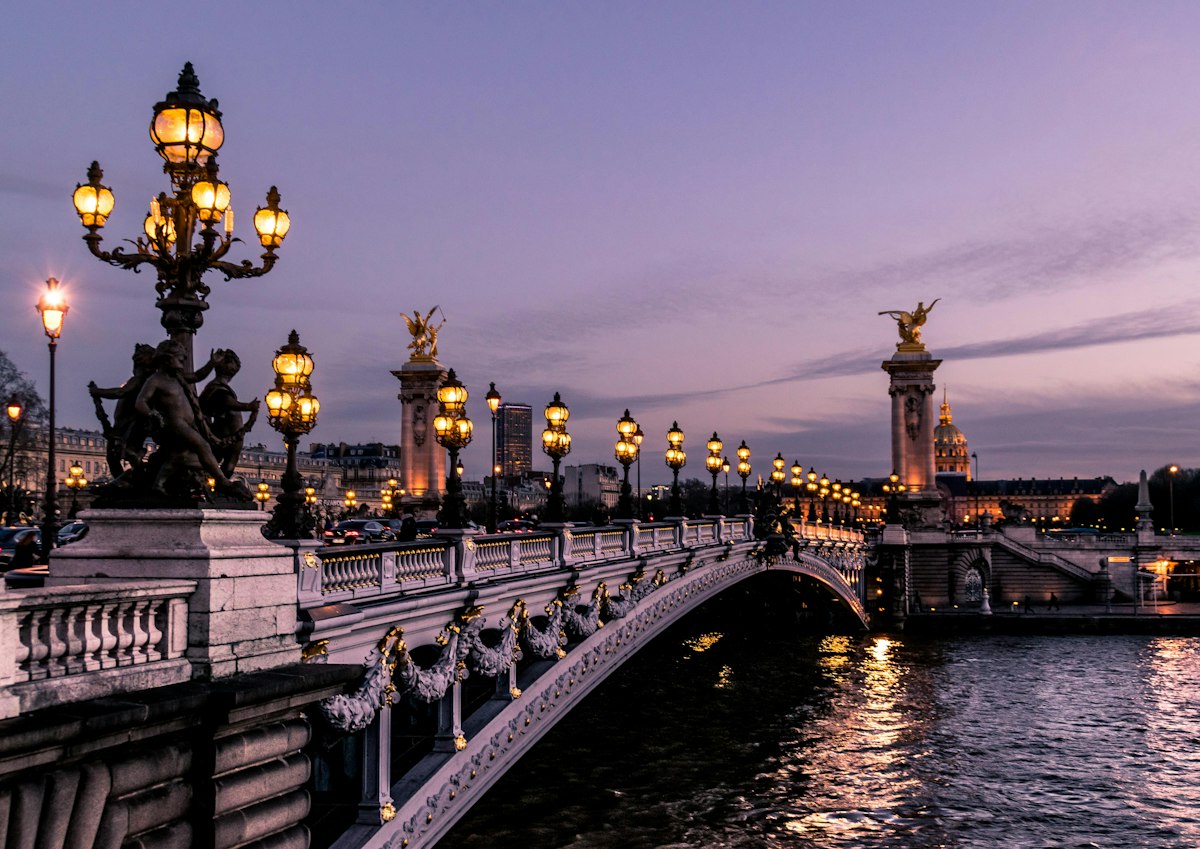
Everyone has been to Paris. That’s the problem. The city exists in such dense pre-formed imagery, the Eiffel Tower at dusk, the café au lait and croissant, the bookstalls along the Seine, that most people arrive with a version of Paris already assembled in their heads, spend three days confirming it, and leave satisfied. They’ve seen Paris. They haven’t been there.
The Paris that reveals itself to people who stay, who find a baker they return to, a table at a wine bar that starts to feel like theirs, a particular stretch of canal that looks different each morning, is a fundamentally different city from the one on the postcard. It is less scenic in some ways and more interesting in all of them. It requires time. Specifically, it requires more time than most travellers have ever given it.
the philosophy behind slow travel and why depth beats coverage
TL;DR: Paris is the most visited city on earth, nearly 40 million international arrivals in 2024 (Office du Tourisme et des Congrès de Paris, 2025), and also one of the most genuinely inhabitable. The version worth experiencing takes at least a week, a residential neighbourhood, and a willingness to abandon the monument circuit entirely. This is a guide to that Paris.
Why Does Paris Require More Time Than You Think?
Paris received nearly 40 million international visitors in 2024 (Office du Tourisme et des Congrès de Paris, 2025), which makes it the most visited city in the world by most measures. Almost none of those visitors encountered the city that Parisians actually inhabit. The tourist infrastructure is enormous, efficient, and almost entirely separate from neighbourhood life.
The administrative structure of Paris tells you something useful. The city is divided into 20 arrondissements, each numbered in a clockwise spiral from the 1st in the city centre. Each arrondissement contains several distinct quartiers, and each quartier has its own markets, bakeries, wine merchants, and regulars who have been eating at the same Tuesday lunch table for a decade. Paris is not one city. It’s twenty, compressed into 105 square kilometres.
What the density actually means: Paris has a population of approximately 2.1 million within the city limits (INSEE, 2024), concentrated into 105 square kilometres, a density of roughly 20,000 people per square kilometre. That’s more than three times the density of inner London and nearly twice that of Manhattan. In practice, this means that at almost any corner in Paris, daily life is happening at close range: bread being bought, arguments being had, dogs being consulted about things. You don’t have to seek it out. You simply have to stay long enough to stop treating it as background noise.
This density is also why repetition matters. The neighbourhood baker recognises you by the third visit. The zinc counter at your corner bistro stops feeling alien and starts feeling, by midweek, like somewhere you go. These small calibrations, the accumulation of tiny familiarity, are what transforms a city visit into a city stay. Three days doesn’t get you there. Seven starts to. Two weeks lets it happen properly.
The culture of neighbourhood loyalty compounds this. Parisians don’t shop at supermarkets if there’s a better option, and there almost always is. The boulangerie, the fromagerie, the cave à vin, the marché: each is a social institution as much as a commercial one. A slow traveller who buys bread at the same boulangerie each morning and wine at the same cave each evening isn’t performing local life. They’re participating in the actual mechanism that holds these places open.
Which Arrondissement Should You Stay In?
The most important practical decision about Paris is not which museum to prioritise or what to eat first. It’s where to sleep. Paris’s INSEE population figures show that the arrondissements vary enormously in character, density, and the ratio of residents to visitors, and that ratio determines almost everything about the quality of daily life you’ll experience.
[IMAGE: An illustrated map of Paris’s 20 arrondissements with the Seine, key neighbourhoods, and the spiral numbering visible, search terms: Paris arrondissement map illustrated vintage]
The 10th: Canal Saint-Martin and République
The 10th arrondissement runs from the Gare du Nord in the north down to République in the south, with the Canal Saint-Martin cutting through its centre. The canal, a 4.5-kilometre waterway built between 1805 and 1825 under Napoleon’s orders, lined with iron footbridges and lock gates, is the neighbourhood’s spine. The quays are where young Parisians sit with wine on warm evenings, where couples read on Sunday afternoons, where the city’s actual daily life is conducted at canal-side pace.
The food scene in the 10th is serious. There are natural wine bars, Vietnamese pho counters that have been feeding the neighbourhood for thirty years, and bakeries that appear on none of the tourist lists and sell better bread than most of what appears on them. The Metro connections are excellent, République is served by five lines. For a slow traveller who wants a neighbourhood that functions entirely without them, this is the strongest choice in the city.
The 11th: Oberkampf and Bastille
The 11th is the working arrondissement that gentrified slowly enough to keep most of its character. The area around Oberkampf and Parmentier has a density of neighbourhood bistros and natural wine bars that is arguably unmatched anywhere in Paris. These aren’t restaurants performing neighbourhood warmth for tourists, they’re places where the zinc counter is genuinely used, the plat du jour changes daily, and the wine list is written on a chalkboard because the selection changes when the cellar does.
The Marché Bastille on Thursday and Sunday mornings is one of the best markets in Paris: 120 stalls along the Boulevard Richard-Lenoir, mixing organic produce, fish, cheese, charcuterie, and flowers with the orderly intensity of a market that exists to supply a neighbourhood rather than photograph it. Stay in the 11th and your week will organise itself around this rhythm without any planning required.
The 3rd and 4th: Marais
The Marais is beautiful, genuinely, architecturally beautiful, with the Place des Vosges and the medieval street grid and the 17th-century hôtels particuliers, and it’s been comprehensively colonised by tourism and high-end retail. The streets around the Rue des Rosiers and the Place des Vosges are tourist-facing in the way that Alfama in Lisbon or the Jordaan on a summer weekend can feel tourist-facing: the infrastructure is there, the prices reflect it, and the neighbourhood life that once operated here has been largely displaced.
Stay in the Marais for a visit of one night, or as a base for someone who wants the architecture at dawn before the tour groups arrive. It’s a less convincing choice for a week.
The 18th: Montmartre
Montmartre rewards commitment. The hill, the Butte Montmartre, creates a genuine geographical isolation from the rest of the city, a village quality that has survived the Sacré-Coeur crowds on the southern slopes. The northern and eastern sides of the hill, around the Rue Lepic market and the Rue des Abbesses, are residential in a way that the lower tourist precincts are not. The view from the summit at 6am, before anyone is there, is one of the finer free things in Paris.
The issue is access. The 18th is not well-served by the Metro from the central arrondissements, and the hill itself is a commitment in both directions. For a slow traveller who wants to make one neighbourhood their world for two weeks, it works. For a first visit of seven nights, the connectivity of the 10th or 11th is more practical.
Avoid the 1st and 8th
The 1st arrondissement (Louvre, Palais Royal, Les Halles) and the 8th (Champs-Élysées, Madeleine) exist as tourist and business infrastructure. There are hotels, restaurants, and luxury shops. There is no neighbourhood life to speak of, the ratio of residents to visitors is simply too far tilted. Sleep elsewhere; visit these arrondissements for specific destinations.
Citation Capsule: Paris contains 2.1 million residents across 105 square kilometres, giving it a population density of approximately 20,000 per km² (INSEE, 2024), the highest of any major Western European capital. This density is unevenly distributed: the central arrondissements (1st–11th) average well above 25,000 per km², while the outer ring arrondissements (13th–20th) average closer to 15,000. This compression is what makes neighbourhood life so legible and so quickly familiar to a slow traveller willing to stay in one place.
What Is the Food Argument for Staying Longer?
The boulangerie operates twice daily. This is not a detail, it’s the organising principle of Paris’s relationship to bread and, by extension, to time. A baguette de tradition baked at 7am is a different object by 3pm: the crust has softened, the crumb has changed. The afternoon bake resets the clock. Understanding this, and adjusting your day around it, is one of the small recalibrations that marks the difference between visiting Paris and living in it briefly.
France baked approximately 6 billion baguettes in 2022, or roughly 320 per person (Observatoire du Pain, 2023). The price is regulated, the baguette de tradition at a good neighbourhood boulangerie costs €1.20–€1.40. The best baguette in the city, by the official competition that the city has run since 1994 (Le Grand Prix de la Baguette), goes to a different artisan baker each year and is usually a 20-minute Metro ride from wherever you’re staying.
what to eat in Europe and how to eat well on a slow travel trip
The plat du jour is the lunch institution that makes Paris affordable for longer stays. Every neighbourhood bistro writes one on a chalkboard: a starter, a main, and dessert or a glass of wine for €14–€18. The menu changes daily. The clientele is local. You’re eating what the kitchen wanted to cook today rather than a laminated document designed for visitors. The plat du jour is how Parisians eat lunch, and it’s genuinely one of the better midday meals you can have in Europe at that price.
On the plat du jour: The tell for a genuine neighbourhood bistro is whether the plat du jour is written in marker on a mirror, or laser-printed in a laminated sleeve. The former is a kitchen that decides each morning what’s good and what they feel like cooking. The latter is a kitchen that has decided in advance what you’re willing to accept. This distinction sounds minor. After a week of eating in both kinds of places, it doesn’t feel minor at all.
The market system in Paris is its own argument for staying. The Marché d’Aligre in the 12th (Tuesday through Sunday, mornings) is the most genuinely Parisian market in the city, cheap, dense with locals, with an open-air section selling produce and a covered hall, the Beauvau, selling cheese, charcuterie, and wine. The Marché Bastille (Thursday and Sunday) is the grandest of the outdoor markets. The Marché Raspail on the Boulevard Raspail (Wednesday regular, Sunday organic) serves the 6th arrondissement’s particular combination of intellectual prestige and excellent produce.
None of these is worth visiting once. Each one rewards a second and third visit, when the stall-holder who sold you the comte last week recognises you and steers you toward something better.
Natural Wine Bars: The Cave à Manger
Paris’s natural wine bar scene, the cave à manger, where you eat food from a small kitchen alongside wine from a curated cellar of natural and biodynamic producers, is one of the most distinctive food-and-drink experiences in Europe, and almost entirely invisible to anyone spending fewer than three or four nights in the city.
These are small rooms: typically 15–25 covers, no printed menu (the selection is verbal or chalked), the wine list organised by region and producer rather than by grape or price. The food is minimal and excellent, charcuterie, cheese, a daily dish, sometimes vegetables cooked seriously. The clientele is mixed: wine professionals, neighbourhood regulars, people who found the place and kept returning. Budget €25–€40 per person. No booking, or a booking system that exists but operates loosely.
The Zinc Counter and Eating Alone
The zinc counter is Paris’s solution to solitude at mealtimes. Every traditional bistro has one, the long metal-topped bar where you can eat standing or perched on a stool, ordering from the same menu as the seated tables, at a pace that is quicker and less ceremonious. Eating at the zinc is a Parisian daily practice that travellers almost universally overlook. It’s how to eat breakfast alone (a café crème and a tartine beurre, standing, before 9am), lunch alone (the plat du jour with a glass of rouge), or a quick dinner after an evening that ran long.
The zinc counter is not a compromise. It’s often the better seat in the room.
What Is Worth Doing Slowly in Paris?
The Palais Royal at 7am
The Palais Royal is one of the most significant architectural spaces in Paris, a 17th-century palace enclosing a formal garden, surrounded by arcaded galleries that have housed, at various times, a gambling den, a innovative pamphlet press, and the café where Napoleon reportedly drank before Waterloo. Today it contains antique galleries, the Comédie-Française, the Conseil d’État, and Daniel Buren’s striped columns in the courtyard that half of Paris finds outrageous and half considers a masterpiece.
At 7am, before the tourists find it, the Palais Royal garden is occupied by early-morning joggers, an older man exercising his terrier, and the peculiar quiet that formal French gardens achieve in low light. The arcades are locked; the chairs are stacked. The geometry of Le Nôtre’s layout is clearest at this hour. Come back at 11am and you’ll find it pleasant. Come at 7am and you’ll find it different.
Père Lachaise on a Tuesday
Père Lachaise is the largest cemetery in Paris, opened in 1804 and covering 44 hectares in the 20th arrondissement (Ville de Paris, 2025). It contains around 70,000 graves and, depending on the guidebook, anything from a pilgrimage site (Oscar Wilde’s tomb, Edith Piaf, Jim Morrison) to a genuine park where Parisians walk on lunch breaks. Both things are true simultaneously.
On a Tuesday morning in autumn, Père Lachaise is almost entirely empty. The stone lanes are wide enough to walk two abreast. The trees, enormous plane trees and chestnut trees that predate the cemetery’s most famous inhabitants, arch overhead. The older sections, away from the celebrity graves, contain the elaborate 19th-century bourgeois tombs that are the real architecture of the place: small stone houses with bronze doors and family names cut deep. Allow two hours. Walk without a map initially. The size is surprising enough that getting slightly lost is unavoidable and not unpleasant.
The 19th Arrondissement: Buttes-Chaumont and the Canal de l’Ourcq
The Parc des Buttes-Chaumont in the 19th is the best park in Paris that most visitors never reach. It was built between 1864 and 1867 under Haussmann’s urban transformation programme on the site of a former gypsum quarry and rubbish dump, and the artificial topography that resulted, a lake, an island, a cliff with a belvedere temple, steep grassed banks, is unlike anything in the formal parks of the city centre.
The Canal de l’Ourcq runs east from the Bassin de la Villette nearby, through the industrial periphery of the 19th into the outer suburbs. Walking or cycling along it for an hour or two is the slow travel version of seeing how Paris becomes the rest of France, the houseboats get older, the warehouses more functional, the field more provisional. Turn back when you’ve had enough. The 19th generally rewards a full afternoon.
The Musée de Cluny (Medieval Paris)
The Musée de Cluny, the National Museum of the Middle Ages, occupies a 15th-century abbey on the edge of the Latin Quarter that was itself built on the ruins of a 2nd-century Roman bathhouse. It holds the most important collection of medieval art in France, including the six tapestries of La Dame à la Licorne, woven in the late 15th century and still among the most mysteriously affecting objects in European art. Entry is €12 (Musée de Cluny, 2026).
It’s a small museum, two or three hours is enough, and it’s consistently overlooked by visitors following the standard Louvre-Orsay-Pompidou circuit. The Gothic sculptures, the stained glass fragments from Sainte-Chapelle, the 2nd-century Roman column heads: these are Paris before Paris was Paris, and they’re remarkable. The garden, a medieval-style planted courtyard, is good in any weather.
An Afternoon in the Covered Passages
Paris has 20 remaining passages couverts, covered arcades built between 1790 and 1860 as shopping streets protected from the rain, precursors of the modern shopping mall, though that description undersells them considerably. They’re glass-roofed corridors of shops: stamp dealers, antique print sellers, toy shops, tea rooms, theatrical costume suppliers, old bookshops. The Galerie Vivienne near the Palais Royal is the grandest, with mosaic floors and a small wine shop that has been there since 1826. The Passage des Panoramas in the 2nd is the oldest surviving passage in Paris and the most atmospheric, darker, more eclectic, with a cluster of stamp dealers that feel genuinely unchanged from the 19th century.
Allow an afternoon to move between three or four passages: Vivienne, Colbert, Panoramas, Jouffroy. They’re mostly within ten minutes’ walk of each other. Each one has a different character. Taken together, they represent a Paris that the Haussmann renovations didn’t flatten, the city as it was before the boulevards arrived.
Saint-Denis by RER
Saint-Denis is nine minutes north of Gare du Nord on the RER D, and almost no visitor to Paris goes there. That’s a failure of attention. The Basilica of Saint-Denis is the mother church of Gothic architecture, the place where Abbot Suger pioneered the structural innovations (pointed arches, ribbed vaults, flying buttresses) that would define European cathedrals for three centuries (Centre des monuments nationaux, 2026). It’s also the burial site of French kings: 43 monarchs, from Dagobert to Louis XVIII, are interred here, with elaborate stone effigies in an underground crypt that constitutes one of the most significant collections of medieval funerary sculpture anywhere in Europe.
The town around the basilica is one of the most genuinely multicultural in the Paris region, the Tuesday and Friday market around the Rue Gabriel Péri is known as the marché africain, reflecting the substantial West African and North African communities in the area. Entry to the basilica is €12. The round trip from central Paris is under an hour. Most visitors to the Île-de-France never consider it. They should.
[IMAGE: The Gothic nave of the Basilica of Saint-Denis with its ribbed vaults and tall clerestory windows in blue and gold light, search terms: Saint-Denis Basilica Gothic interior nave France]
How Do You Get to Paris by Train?
Gare du Nord deposits you in the city. This matters more than it sounds. Arriving at Gare du Nord from London, Brussels, or Amsterdam, you step off the train at a working Paris station, cafés, newspaper sellers, the Metro entrance fifty metres away, and the city begins immediately. There’s no airport transfer, no 45-minute liminal journey between where you arrived and where you’re actually going. The train arrival is its own slow travel argument.
The Eurostar from London St Pancras to Paris Gare du Nord takes 2 hours 16 minutes, with up to 18 daily departures and fares from £39 booked in advance (Eurostar, 2026). Border control is completed at St Pancras before departure, meaning you step off at Gare du Nord and walk straight out. Door-to-door from central London to central Paris takes around three hours. Flying the same route takes four and a half to five hours once you account for airports.
the complete guide to the London to Paris Eurostar, booking, classes, and tips
The Eurostar from Amsterdam Centraal takes 3 hours 17 minutes direct to Gare du Nord, calling at Rotterdam and Brussels, with fares from €29 (Eurostar, 2026). From Brussels-Midi, the TGV Inoui takes approximately 1 hour 22 minutes, a journey so short it barely constitutes travel. From Lyon Part-Dieu, the TGV reaches Paris Gare de Lyon in around 2 hours, with services running approximately every 30 minutes throughout the day (SNCF Connect, 2026).
Amsterdam to Paris by train, the full Eurostar guide with booking strategy
On arriving by train versus plane: The carbon footprint of the London–Paris Eurostar is approximately 97% lower than the equivalent flight per passenger (Our World in Data, 2024). But the slower case for the train isn’t environmental, it’s experiential. The train arrives where you’re going. The city starts at the platform. You have no jet lag and no luggage delay and no 50-minute taxi. You board in one city and step off in another. This is the correct way to arrive somewhere you intend to inhabit rather than merely visit.
Citation Capsule: The Eurostar service between London St Pancras and Paris Gare du Nord covers the 494-kilometre route in 2 hours 16 minutes, with up to 18 daily departures and advance fares from £39 (Eurostar, 2026). Emissions per passenger on this service average approximately 6 kg CO₂, compared with 103 kg CO₂ for the equivalent flight, a 94% reduction (Our World in Data, 2024). Door-to-door journey time from central London to central Paris is approximately 3 hours by Eurostar, versus 4.5–5 hours by air.
What Does the Slow Traveller’s Paris Week Look Like?
The wrong question to ask about a week in Paris is: what should I see? The right question is: what rhythm should I live by? The tourist week in Paris is exhausting because it treats the city as a delivery mechanism for experiences, queue for the Louvre, queue for the Eiffel Tower, queue for Sainte-Chapelle. The slow travel week is different in structure and entirely different in quality.
A week worth having has roughly this architecture. Mornings belong to the neighbourhood. Find your boulangerie on day one, walk three or four and pick the one where the bread is best and the person behind the counter isn’t performing charm. Return to it every morning. Buy a baguette and eat it walking, which is legal in Paris and essentially mandatory.
Midday belongs to the plat du jour. Select a bistro in your neighbourhood that has a handwritten menu on a mirror, a counter with regulars on stools, and no laminated menus visible from the street. Return to it twice. By the third visit, you’ll have a table preference and the rough outlines of a relationship with the kitchen.
Afternoons are for one thing, done slowly. Not three sights in five hours, one destination, two or three hours, with time before and after. The Musée de Cluny in the morning, the Luxembourg Gardens in the afternoon, the passage couverts as an evening amble: these are the structures of a day that doesn’t end in fatigue.
The Louvre, which holds approximately 35,000 works on display from a collection of 550,000 (Musée du Louvre, 2026), deserves a Tuesday morning at first opening (9am). The museum is at its most navigable on a Tuesday, when Sunday’s crowds have dispersed and Friday afternoon’s haven’t yet arrived. Do not attempt to see it comprehensively. Choose one wing, the Richelieu wing’s Northern European painting, or the Sully wing’s antiquities, and give it three hours. Leave before you’re tired of it. A second visit later in the week uses different rooms.
On not exhausting yourself by 3pm: Paris is one of the few cities in which the quality of the afternoon is directly proportional to the restraint of the morning. Over-scheduling in Paris produces a particular variety of cultural saturation, a grey, flattened feeling around the eyes, that ruins the evening. The evenings are where the city’s social life actually happens: the apéritif at a wine bar between 6pm and 8pm, the dinner that starts no earlier than 8pm, the conversation that goes where it goes. These require you to arrive at them unexhausted. Build your days accordingly.
The evening architecture is simple: an apéritif, then dinner, then whatever follows. Paris’s social rhythm is later than most Northern European visitors expect. Wine bars open at 5pm and fill by 7pm. Bistros take dinner bookings from 7:30pm but the room doesn’t fill until 8:30pm. This isn’t affectation, it’s the daily schedule of people who worked through the afternoon and ate a real lunch. Join it rather than fighting it.
Related Reading
- Paris to Barcelona by Train: TGV Guide, Prices & Tips, Paris to Barcelona by train takes 6h 25m on the direct TGV/AVE.
- Paris to Rome by Train: Routes, Times, Tickets and What to Expect, Paris to Rome by train takes 11 hours direct overnight or 6-7 hours with one change.
- Amsterdam for Slow Travellers: How to Actually Arrive in the City, Amsterdam rewards people who stay long enough to stop sightseeing.
Frequently Asked Questions
How long should you spend in Paris for slow travel?
Seven nights is the minimum at which Paris begins to feel inhabited rather than visited. Research on vacation wellbeing indicates that psychological detachment from home, the state in which you stop running your daily routine in your head and start perceiving your surroundings, takes three to four days to establish (Journal of Leisure Research, 2023). A five-night trip gives you one or two days of genuine presence. Seven gives you three or four. Ten to fourteen nights allows for genuine neighbourhood rhythm: returning to the same baker, discovering the market schedule, finding the café that feels like yours. Many long-term travellers find Paris opens up completely only in the third week, which is either an argument for two weeks or an explanation for why some people come back every year for thirty years.
Which arrondissement should I stay in for a slow travel experience?
The 11th (Oberkampf/Bastille) and the 10th (Canal Saint-Martin/République) offer the best balance of neighbourhood character, local-to-tourist ratio, and access to the rest of the city. Both are served by multiple Metro lines, both have dense concentrations of neighbourhood bistros and markets, and both have enough residential mass that daily life runs without reference to tourism. The Marais (3rd/4th) is beautiful but tourist-heavy, better for day visits than staying. Montmartre (18th) rewards a longer stay but requires commitment to the hill and accepts the connectivity trade-off. Avoid the 1st and 8th for anything longer than a night: the tourist infrastructure there has replaced neighbourhood life entirely.
how to plan a slow travel trip, including choosing where to stay
Is Paris expensive for slow travel?
Less than its reputation suggests, if you eat as Parisians eat. A plat du jour at a neighbourhood bistro runs €14–€18 including a glass of wine (Restaurant industry average, France, 2025). The best baguette in the city costs €1.20–€1.40. Weekly apartment rentals in the 10th or 11th range from €700–€1,200, comparable to Lisbon or Barcelona at equivalent quality levels. The expensive Paris is the tourist Paris of the grands boulevards and palace hotels. The neighbourhood Paris, the wine bar that doesn’t list its cellar online, the bistro that’s been in the same family for twenty years, is affordable in a way that surprises most first-time long-stay visitors.
What is worth doing in Paris that isn’t on the tourist map?
The Marché d’Aligre in the 12th (Tuesday through Sunday, mornings) is the most genuinely Parisian market in the city, cheap, crowded with locals, with a covered hall selling cheese and charcuterie alongside a street-level produce section. The Buttes-Chaumont park in the 19th is the best park in Paris that most visitors never reach, designed by Haussmann’s engineers on a former quarry, with a lake, cliffs, and a belvedere temple. The Palais Royal gardens are central and almost entirely uncrowded by 9am. The Basilica of Saint-Denis, nine minutes by RER from Gare du Nord, contains the finest Gothic architecture in France and the burial crypts of 43 French kings, and is visited by almost no one.
How do you get around Paris as a slow traveller?
Walk first, Metro second. The central arrondissements (1st–11th) are compact enough that most journeys are walkable, the distance from the 10th to the Marais is around 30 minutes on foot, and that walk passes through things worth noticing. When walking becomes impractical, the Metro is fast, frequent, and covers the city comprehensively. The Navigo Découverte card costs €29.90 per week and covers unlimited Metro, RER, and bus travel across all zones (Île-de-France Mobilités, 2026), the right choice for any stay longer than three days. You’ll need a passport photo and a small card holder. Avoid individual tickets; the maths resolves quickly in the Navigo’s favour.
The Argument, Simply
Paris is too famous. This is its primary problem as a slow travel destination, and it’s worth naming directly. The pre-formed image of the city, the postcard Paris, the film Paris, the Paris of childhood imagination, arrives with every visitor and sits between them and the actual place like a scrim. Moving through Paris looking for the images you already have is an experience that produces satisfaction but not knowledge.
The neighbourhood Paris, the 10th at 8am when the canal is still and the boulangerie has just opened, the 11th at 9pm when the wine bars are full and the bistros are hitting their stride, the covered passages on a grey Tuesday afternoon when the stamp dealers are the only customers, is not the postcard Paris. It’s something more complicated and considerably more interesting.
Seven nights, a residential arrondissement, a boulangerie you return to, and a wine bar that starts to feel like yours: this is the minimum specification for arriving in Paris rather than merely visiting it. The city has been receiving visitors for centuries and has developed excellent infrastructure for moving them through without disturbing anything important. A slow traveller’s task is to step sideways out of that infrastructure and into the city that runs quietly beside it.
That city is there. It just requires staying long enough to find it.
what slow travel means and why it changes how you experience a city
slow travel for seniors, how to structure a longer trip without over-scheduling
getting to Paris by Eurostar from London, booking guide and what to expect
All transport times, fares, and opening hours reflect March 2026 conditions. Verify current prices before booking, train fares, entry fees, and accommodation rates vary by season and booking window.