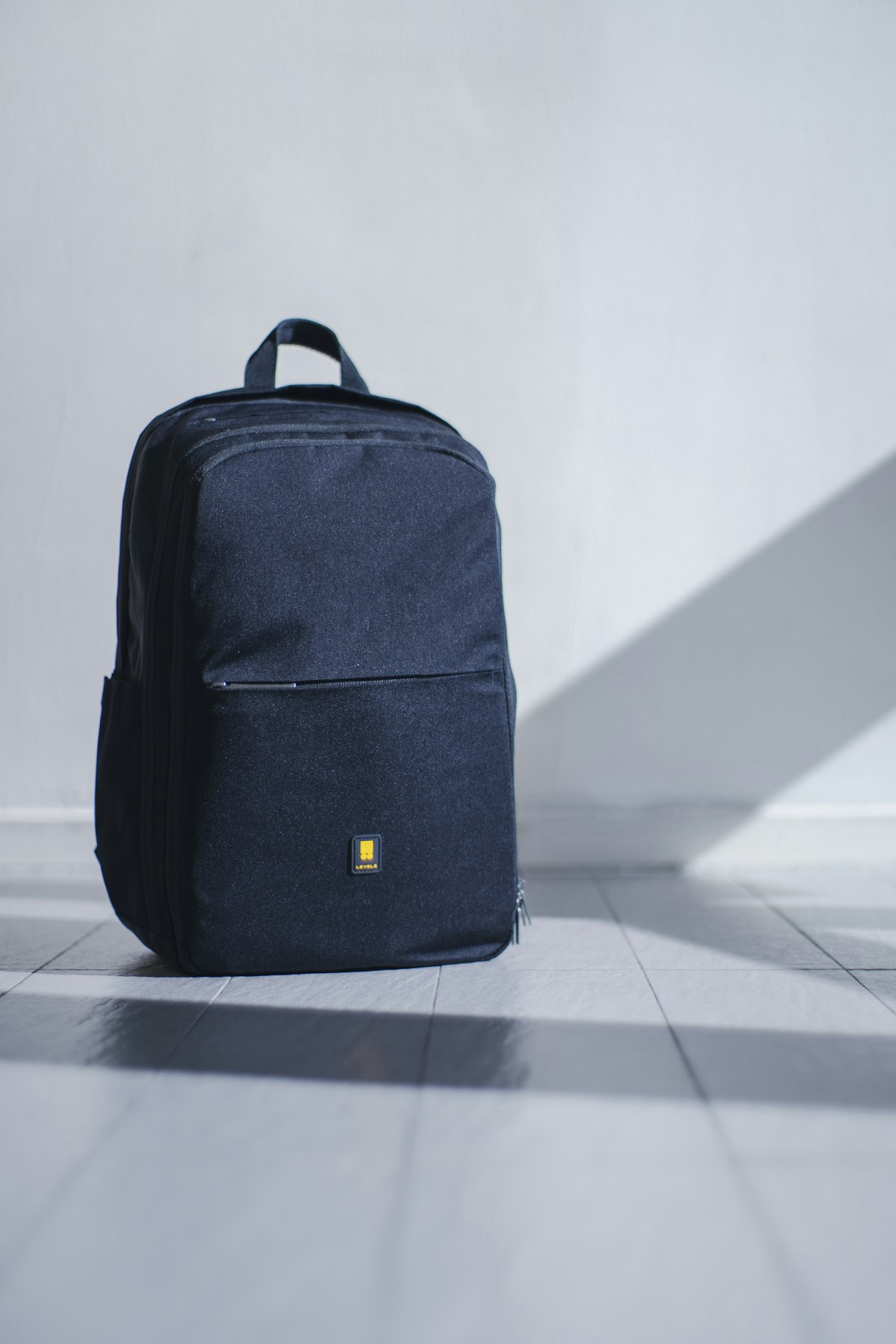
Train travel is more forgiving than flying. There are no 100ml liquid rules, no security theatre with your shoes, and no checked-baggage queues on most European services. But packing badly for a train is its own particular misery, heaving an oversized suitcase up a narrow stairwell at Stuttgart Hauptbahnhof, sweating through three carriage changes at 7am, watching the doors close. The bag you choose and what you put in it still matters enormously.
The key difference is this: on a plane, your bag goes away. On a train, it’s with you. Every awkward corner, every steep step, every tight overhead rack is yours to negotiate, alone, usually at speed, often with a coffee in one hand.
This is the rail kit: overhead-rack size, couchette extras, and what you can skip because there is no 100ml rule. The flight-shaped capsule list is The Carry-On Packing List for International Travel.
Desk listing check: Amazon links below are search URLs or known product pages. Confirm the current listing’s size against a European overhead rack (about 55×40×23 cm) before you buy — a US-max roller can fail the rack even when it clears a domestic sizer. Typical street prices in the gear table are research ranges, not a live quote.
Desk note: this desk does not run a private test fleet and did not weigh every pillow through a Nightjet. The list is a research synthesis of operator luggage notes, couchette geometry, and owner-review consensus. The unique filter here is trip type — day Intercity versus overnight couchette versus Alpine winter — not a generic “best travel gadgets” ranking. When a gadget only solves a problem you will not have, skip the buy.
This page is the rail kit. The flight-shaped capsule list is The Carry-On Packing List for International Travel. The 7 kg international sizer shortlist is Best Carry-On Luggage for International Travel (2026). Cheap-trip kit math lives on How to Travel Internationally on a Budget. Train wifi and public networks are the VPN guide. Quiet versus slap-happy entertainment is travel games for adults. Start from the journal hub or the tools hub if you want the live site map rather than another packing article.
slow travel philosophy and why it changes how you pack
complete guide to travelling Europe by train
TL;DR: For European train travel, one wheeled carry-on (55x40x20cm) plus a small daypack is the right combination for any trip length. Pack 5–7 days of clothing and plan to do laundry. Night trains need a handful of extra items: eye mask, earplugs, flip-flops, and a quality neck pillow — skip the pillow if you booked a proper sleeper bed. Overpacking is the usual first-trip complaint in slow-travel writeups; the bag that fails the overhead rack is the one that ruins the connection.
Trip type, climate, and pack weight — the filter Amazon listicles skip
A generic “best travel gadgets” page ranks a neck pillow, a 20,000mAh bank, and noise-cancelling headphones as if every journey is a long-haul flight. Rail packing is a different geometry.
Day Intercity or high-speed (2–5 hours). Overhead-rack size is the constraint. Skip the neck pillow if you are sitting up for a single afternoon. A 10,000mAh bank is enough if the train has sockets; confirm that on the operator page for your specific set, not from a lifestyle photo. Climate: a packable rain layer in the daypack, not a winter coat in the roller.
Overnight couchette. Pack weight moves to the daypack you keep at the bunk. Eye mask and earplugs earn their grams; a memory-foam travel pillow only earns them if you are in a seat or a couchette sitting up. Skip it on a proper sleeper with a real mattress. Flip-flops beat a second pair of walking shoes. Alpine winter: one thin merino layer in the daypack — compartment temperature swings, the station platform is colder than the carriage.
Scenic all-day routes (Glacier, Bernina, coastal slow lines). Window time is the entertainment. Skip buying a new game box for a solo seat; the travel games guide is for shared tables and road trips, not a dome window. A flask and a station picnic beat a bar-car meal more often than a new gadget will.
When to skip the buy, honestly: you already own a Type C/E/F adapter from a previous Europe trip — do not buy a “universal” brick that adds USB ports you will not use. You booked only hotel nights with towels — skip the microfiber sheet. You are on refundable, flexible bookings inside the EU with an EHIC or GHIC — do not let a packing list upsell you a travel pillow as if it were insurance. Insurance itself is a separate decision on Travel Insurance for Europe.
What Size Bag Should You Bring on a Train?
The standard European train overhead rack fits luggage up to roughly 55x40x23cm, broadly equivalent to a standard cabin-size roller bag, on most Intercity and high-speed services (Rail Europe, 2025). That’s your hard constraint. Go bigger and you’re gambling on whether the rack fits and whether you can muscle it up there alone.
The right combination for most train travel is simple: one wheeled carry-on roller (55x40x20cm) and one small daypack or personal item around 20–25 litres. The roller goes in the overhead rack or on the luggage shelf at the carriage end. The daypack stays with you at your seat, passport, phone, book, snacks, anything you want for the journey.
For longer slow-travel trips (two weeks or more), this same formula still holds. The temptation is to bring more because you have more time. Don’t. You’ll be moving more often, not less. The roll-aboard plus daypack combination works whether you’re on a three-day sprint through Italy or a month-long journey to Istanbul.
A large suitcase usually becomes a ceiling within the first two station changes. It limits where you can stay, makes early-morning connections stressful, and marks you out at smaller stations where there’s no lift and four flights of stairs. That is a geometry problem, not a field-test trophy.
One practical note on night trains: there’s no checked luggage system on most European overnight services. Your bags travel in the same compartment as you, under the lower berth, in the overhead rack, or in the end-of-carriage storage area. A 20-litre daypack and a cabin-size roller is the comfortable limit for a couchette berth. More than that and you’re encroaching on your compartment-mates’ space.
everything about European night trains, routes, costs, and booking
[IMAGE: A cabin-size roller suitcase and small backpack side by side at a European train station platform, search terms: luggage train europe platform carry-on backpack]
Citation capsule: Most European high-speed and intercity train overhead racks accommodate bags up to approximately 55x40x23cm, standard cabin-size, according to Rail Europe’s luggage guidelines (Rail Europe, 2025). No checked-baggage service exists on most European train services; passengers manage their own bags throughout the journey.
How Should You Pack Clothing for Train Travel?
Pack for your destination, not for the train. European trains are well heated in winter and air-conditioned in summer. You won’t need a heavy coat inside the carriage; you’ll want it when you step off. The clothing strategy for train travel is layers, not bulk.
The right number of clothes is 5–7 days’ worth, regardless of trip length. This is the sustainable travel principle: laundry is part of the journey, not a logistical defeat. Most European cities have laundromats (a wash cycle costs €3–6 in most places), and many guesthouses and hotels have laundry facilities. A week of clothes plus laundry every five to seven days covers any trip length in a cabin-size roller.
The Core Clothing List
- Tops: 3–4 lightweight, quick-dry tops. Merino wool is worth the price, it doesn’t hold odours and can go two or three wears between washes without complaint
- Bottoms: 2 pairs of trousers or jeans plus one pair of smarter options if you’re dining anywhere that deserves them
- Mid-layer: One fleece or packable down jacket. Trains are warm, but platforms, early mornings, and mountain towns are not
- Waterproof outer layer: One packable rain jacket. Not a heavy waterproof, something that folds to nothing and lives in your daypack
- Underwear and socks: 5–7 pairs. Merino wool socks last longer between washes than cotton
- Shoes: Two pairs maximum. One walking pair (worn on travel days). One versatile pair that works for dinner and casual sightseeing. Never three
The shoes rule is the one most people break and most regret. Shoes are heavy, awkward to pack, and rarely worth the redundancy. One solid pair of walking shoes or leather sneakers and one pair of smart-casual does everything most trips require.
[IMAGE: A flat-lay of a week’s worth of travel clothing, merino tops, one pair of dark jeans, a packable jacket, search terms: minimalist travel packing clothes lay flat week wardrobe]
What Do You Need Specifically for Night Trains?
Night trains require a small but specific kit that has nothing to do with your destination and everything to do with sleeping on a moving train. Get this right and a couchette is a genuinely comfortable night. Get it wrong and you arrive in Paris at 8am having slept two hours with a crick in your neck.
First-time couchette passengers usually sleep worse than they expected. Corridor lights stay on at low level, and the carriage is never silent. Both problems are solvable with small items — and both are reasons to skip a bulky inflatable pillow that will not stay on a bunk.
The Night Train Sleep Kit
- Eye mask: Corridor lights on Nightjet and most couchette carriages stay on at low level through the night. A good eye mask is non-negotiable, not a luxury item
- Earplugs: The train itself is quieter than a plane, but couchette compartments have snoring, announcements at border crossings, and the clatter of other passengers. Foam earplugs cost almost nothing and make a material difference
- Neck pillow: Not the inflatable kind. An inflatable neck pillow is a compromise that feels like a compromise. A good compressible memory foam or microbead pillow, the Trtl, the Cabeau Evolution S3, or similar, is worth having for any journey where you’ll sleep sitting up
- Lightweight extra layer: Compartment temperature fluctuates, especially through Alpine passes in winter. A lightweight fleece or thin merino layer in your daypack handles temperature swings without needing to dig into your main bag at midnight
- Flip-flops or slip-on shoes: You’ll take your shoes off to sleep. You will want to find them at 3am when you need the bathroom. Flip-flops weigh nothing and solve this entirely
- Small toiletries bag: This is where train travel’s freedom from airline rules becomes tangible. No 100ml restrictions. Bring your full-size cleanser, a proper tube of toothpaste, and whatever else you use. Keep it in a small pouch for easy access without unpacking your whole bag
ÖBB Nightjet provides bedding, a pillow, blanket, and sheet, in all couchette and sleeper bookings. You don’t need to bring a sleeping bag. The provided bedding is sufficient for the temperatures inside a Nightjet carriage.
everything about European night trains, routes, costs, and booking
Citation capsule: ÖBB Nightjet couchette and sleeper bookings include a pillow, blanket, and sheet. Corridor lighting and neighbour noise are the usual complaints in owner writeups; an eye mask and foam earplugs address those without adding a sleeping-bag-sized item to the daypack (ÖBB Nightjet, 2026).
What Food and Drink Should You Pack for the Train?
An insulated water bottle is the single most important item you’re probably not thinking about. Train carriages, particularly in summer, are drier than you expect, and the bar car is at the other end of several coaches. Staying hydrated without making six trips in each direction is a basic comfort matter.
For long journeys (anything over three hours), bring food. Even when a dining car exists, having your own backup matters. You might not want the bar car’s reheated pasta at 1pm on a full stomach. You might arrive at the bar car on a busy route and find it overwhelmed. Your own snacks are insurance.
what to eat on European trains, dining cars, platform food, train picnics
What to Pack and What to Buy at Stations
The best pre-journey food comes from stations, not convenience stores near your hotel. Bologna Centrale, Paris Gare de Lyon, and Vienna Hauptbahnhof all have proper food options worth 15 minutes of your time before boarding. The worst comes from airport-style grab-and-go chains that charge twice the price for half the quality.
Good train snacks to bring:
- Nuts and dark chocolate, lightweight, calorie-dense, no smell
- Fruit: apples, clementines, grapes. Peaches in season if you have napkins
- Hard cheese and good bread (for longer journeys)
- A flask of decent coffee, this outperforms every bar car in Europe on quality per euro
What to avoid: anything reheated, anything with a strong smell, hard-boiled eggs. The social contract on trains is real. You’re sharing a closed carriage with strangers for hours. Cold, neutral-smelling food is always acceptable. Reheated fish is remembered for years.
Buy at stations rather than bringing from home:
- Fresh sandwiches and pastries (buy at departure station, eat within 2 hours in summer)
- Local food: a mortadella roll from Bologna, a baguette-and-Comté from any Paris boulangerie
- Water: supermarkets inside major stations sell 1.5L bottles for a fraction of train bar car prices
What Tech and Power Gear Do You Actually Need?
European trains have power outlets, but inconsistently. High-speed services (Frecciarossa, Eurostar, ICE, Nightjet sleepers) reliably have USB and/or Type C/E/F sockets at seats. Regional and older rolling stock often have nothing. Pack as if there are no outlets and treat any you find as a bonus.
The essential tech list for European train travel is short. A power bank earns its grams on regional stock with no sockets; it is dead weight on a three-day ICE and Frecciarossa sprint where every seat has power. Match capacity to the trip, not to a gadget ranking.
The Train Tech Checklist
- Portable power bank (20,000mAh): Charges a phone three to four times. Non-negotiable on multi-day trips or any journey with night trains
- European plug adapter (Type C/E/F): Required for the UK and US. A compact two-pin adapter covers the entire European continent
- Noise-cancelling headphones: Not strictly necessary, but nothing else changes the quality of a long journey as dramatically. Over-ear (Sony WH-1000XM5 or Bose QuietComfort 45) for serious journeys; earbuds (AirPods Pro) if you’re packing light
- Offline maps downloaded before you leave: Google Maps offline or Maps.me. Mobile data is inconsistent through Alpine tunnels, rural France, and large portions of the Trans-Siberian. Download the regions you need while on hotel wifi
- Downloaded content: Films, podcasts, playlists. Streaming on a moving train is possible but unreliable. Download before you board, not from the platform
- A universal cable: One USB-C cable that charges everything. Every new device is USB-C. If you still have a device that isn’t, consider it the reason to upgrade before this trip
What not to bring: a full laptop, unless your work requires it. A tablet is lighter, the battery lasts longer, and it’s less stressful to have in an overhead rack. If you’re writing, a compact keyboard pairs with an iPad or Android tablet for a fraction of a laptop’s weight.
[IMAGE: A travel tech flatlay on a train seat, power bank, adapter, noise-cancelling headphones, downloaded phone, search terms: travel tech flatlay portable charger headphones adapter minimalist]
What Documents Do You Need for Train Travel?
Rail travel is dramatically less bureaucratic than flying, but not document-free. The specific requirements depend on the type of journey and whether you’re crossing borders.
For standard point-to-point European train tickets (booked via Trainline, SNCF, Trenitalia, ÖBB), a QR code on your phone is sufficient for most routes. Many operators have moved fully to digital tickets. Keep a screenshot saved offline.
Eurail and Interrail Pass Users
Eurail pass holders need to be especially careful. A pass is not a ticket, it’s a permission to travel that still requires a separate seat reservation on most high-speed and night train services. Reservations must be made in advance and presented alongside the pass. Showing up at the barrier with only a pass on a Frecciarossa or a TGV doesn’t work.
The pass also needs to be activated before your first journey, online or at a staffed station counter. An unactivated pass is invalid and inspectors have seen every excuse. Don’t try.
Night Trains and Border Crossings
Night trains crossing international borders require a passport, not just an ID card. EU citizens using a national ID card for travel will be asked for a passport at some borders, specifically entering or leaving non-Schengen countries (Switzerland, the UK, and in some contexts, specific Eastern European routes). Keep your passport somewhere accessible, in the top pocket of your daypack, not in the main compartment of your roller under the berth.
Passport control on Nightjet routes happens while you sleep. An officer will knock on the compartment door, take your passport, scan it, and return it. This typically takes under two minutes. It happens more frequently on routes through Switzerland (which is non-Schengen) and less frequently within the Schengen zone, though it’s not unheard of.
[IMAGE: A passport and printed train reservation on a wooden surface, search terms: passport train ticket europe border travel documents]
What Comfort Items Make a Long Journey Better?
A good book is the classic answer and it’s still right. Long train journeys, four hours through Tuscany, eight hours across France, twelve hours on the Caledonian Sleeper, have a quality of time that’s different from everything else in travel. The field moves, you stay still, and there’s no obligation to do anything. A book suits this better than a screen. But bring the screen too.
The items that make a real difference on long journeys tend to be the ones that weigh almost nothing:
- A proper travel journal: Not your phone notes app. An actual notebook. The train is the best place to write. The rhythm of the track, the passing field, the enforced idleness, all of it is conducive to reflection that evaporates the moment you’re back on the platform
- A small daypack for your first hours: This is the bag you carry off the train when you arrive somewhere before your accommodation is ready. A 15–20 litre pack that fits everything you need for a half-day of city walking, camera, water, snacks, a jacket, is worth having as your in-journey bag rather than digging into your roller every time you need something
- Compression bags for the roller: Not required, but useful for keeping your clothes organised in a bag you’re opening and closing repeatedly over days or weeks
The daypack-as-arrival-bag deserves emphasis. If you arrive in Florence at 9am and your apartment doesn’t open until 2pm, you want to leave your roller at the station’s baggage storage and walk the city freely. That’s exactly what the Firenze Santa Maria Novella luggage storage room is for, it costs roughly €6 per bag for a half-day, and your daypack carries everything you actually need.
What Should You Leave Behind?
The packing list for train travel is mostly about subtraction. Most people overpack by a ratio of roughly 2:1 on their first multi-city trip, they bring everything they might conceivably need and use half of it. The items that do most of the damage to bag weight and utility are predictable.
Heavy suitcases: Any hard-shell or large-format checked bag that extends above cabin size creates constant friction. Stairs, racks, connection windows, they all work against you. The frustration compounds across a multi-city trip. Leave it at home.
More than two pairs of shoes: Shoes are heavy, they compress nothing, and they’re the item most likely to have remained unworn at the end of your trip. Two pairs covers everything. Three is almost always one too many.
Full-size personal care items: You’re not flying, so there are no liquid restrictions, but the weight still matters. A 250ml full-size shampoo bottle weighs what it weighs whether it’s in a hold or an overhead rack. Decant into 100ml travel bottles or buy at your destination. Most of Europe has pharmacies and supermarkets.
Your “just in case” outfit: Every experienced traveller has packed the smart outfit for the fancy dinner that didn’t happen, the hiking boots for the day walk that got rained off, the extra layer for the cold that never came. These items are almost never used. They are always regretted. Pack for what you’ve actually planned, not for the trip you might take in a different version of reality.
The backup tech: That spare cable for the device you might buy in a different country. The foreign currency adapter for the destination two trips from now. The emergency backup camera. Leave them.
Our Recommended Train Travel Gear
Affiliate links use the Amazon Associates tag artoftravel06-20. We earn a small commission at no extra cost to you. See how we make money and the affiliate disclosure. Prices below are research ranges, not live offers.
| Item | Why it matters — and when to skip | Link |
|---|---|---|
| Trtl Travel Pillow | Seat or couchette support. Skip if you booked a sleeper bed — Nightjet already provides a pillow. Typical research range around $40–60. Confirm it is the wrap-style pillow, not a generic “Trtl-style” marketplace clone. | Amazon |
| Sony WH-1000XM5 | Long day trains and open coaches. Skip if you already have decent earbuds and pack weight is tight — over-ears are the first item people abandon on stairs. Typical research range around $250–350. Confirm the current generation. | Amazon |
| Anker PowerCore 20000mAh | Regional stock, night trains, dead station wifi days. Skip on a three-day high-speed sprint with sockets at every seat — a 10,000mAh bank is enough. Cabin only. Typical research range around $35–50. Confirm capacity on the current listing. | Amazon |
| European plug adapter (Type C/E/F) | UK/US travellers on continental sockets. Skip if you already own a two-pin adapter from a previous trip. Typical research range around $10–20. Confirm it is Type C/E/F, not a single-country plug with a lifestyle photo. | Amazon |
| Eagle Creek Pack-It cubes | Useful if you open the roller every night. Skip if you live out of the daypack and the roller stays zipped. Typical research range $15–25 per cube. Confirm the ultralight line vs a heavier Pack-It SKU. | Amazon |
| Osprey Farpoint 40 | Stairs, cobbles, no lift. Skip if you already have a 40 L pack that fits a 55×40×23 cm rack — do not buy a second bag because a listicle named this one. Typical research range around $160–180. Confirm liters and packed dimensions. | Amazon |
The Day Train Checklist
Everything you need for a long daytime journey, in one place.
Bag setup:
- Wheeled cabin-size roller (max 55x40x23cm)
- Daypack or personal item (20–25L) kept at your seat
Clothing:
- 5–7 days of clothes (merino preferred)
- One packable rain jacket in your daypack
- Max 2 pairs of shoes (worn + packed)
Food and drink:
- Insulated water bottle (filled at station before boarding)
- Snacks for the journey: nuts, fruit, chocolate, hard cheese and bread for long trips
- Flask of coffee for journeys over 4 hours (optional but rewarding)
Tech:
- Power bank (20,000mAh recommended)
- European plug adapter (Type C/E/F)
- Noise-cancelling headphones
- Phone with offline maps downloaded for all regions
- Tablet or laptop with content downloaded
Documents:
- Train tickets (screenshot saved offline)
- Passport (for any border-crossing route)
- Eurail/Interrail pass + seat reservations if applicable
- Accommodation confirmations
Comfort:
- Good book
- Travel journal
- Daypack for arrival day exploring
The Night Train Checklist
Everything specific to an overnight journey. Add to the day train list above, don’t replace it.
Sleep:
- Quality eye mask (not a free airline one)
- Earplugs (foam, pack 2 pairs in case one falls out)
- Compressible neck pillow (Trtl, Cabeau, or similar, not inflatable)
- Lightweight extra layer (thin fleece or merino long-sleeve)
- Flip-flops or slip-ons for the corridor
Toiletries (no liquid restrictions on trains):
- Full-size (or travel-size) cleanser and moisturiser
- Full-size toothpaste and toothbrush
- Deodorant
- Any medications you take in the morning, keep accessible, not buried
Documents:
- Passport accessible (not buried in roller), border control happens at night
- Night train reservation printed or screenshotted
- Seat/couchette/sleeper booking confirmation
Note: ÖBB Nightjet provides a pillow, blanket, and sheet in couchette and sleeper bookings. You do not need to bring a sleeping bag.
Related Reading
- How to Travel Europe with Carry-On Only (Train Traveler’s Guide) — overhead racks and cobblestones
- Best Carry-On Luggage for International Travel (2026) — 7 kg sizer shortlist, not this rail kit
- How to Travel Internationally on a Budget — when a gadget is false economy
- Do You Need a VPN When Travelling? — train wifi vs hotel vs skip on mobile data
- The Best Travel Games for Adults — what belongs in a daypack, and what does not
- The Journal and Plan Smarter. Play More. — live hubs, not new directories
Frequently Asked Questions
Can you bring a full-size suitcase on European trains?
Technically, many European trains don’t have a formal luggage size limit, unlike airlines. But practically, a large hard-shell suitcase creates real problems: narrow train doorways, steep steps at smaller stations, limited overhead rack space, and no assistance from staff. The effective limit on most Intercity and high-speed services is a bag that fits a standard overhead rack (approximately 55x40x23cm). Anything significantly larger is manageable but inconvenient, particularly on older rolling stock (Rail Europe, 2025).
Do you need an adapter for European train power outlets?
Yes, if you’re coming from the UK or North America. European trains use Type C, E, or F two-pin sockets (the same as wall outlets throughout continental Europe). A compact travel adapter covers all three. Some newer high-speed trains also have USB-A and USB-C ports at seats, but these are inconsistent between operators and even between train sets on the same route. A power bank removes any dependency on what outlets the train has.
Is a Eurail pass better for slow travel than point-to-point tickets?
It depends on how many countries you’re crossing and how flexible your dates are. For a single-country trip or a tight itinerary with fixed dates booked far in advance, point-to-point tickets are almost always cheaper. Eurail passes become competitive when you’re crossing three or more countries, making spontaneous connections, or doing multiple overnight journeys where the reservation fees are low. According to Eurail’s own analysis, pass users who make 5+ journeys in 15 days typically break even or save compared to individual booking (Eurail.com, 2026). is a Eurail pass worth buying, the honest breakdown
What’s the best bag brand for European train travel?
Brand matters less than dimensions and durability. The 55x40x20cm roller category is competitive: Rimowa’s Cabin Plus, the Away Carry-On, and Travelpro Maxlite all fit correctly and hold up to daily use. For a backpack-only approach, the Osprey Farpoint 40 and the Tortuga Setout 45 are common choices, both within airline and train constraints. Whatever you choose, verify the exact dimensions before buying. Manufacturers sometimes round up. A bag that’s 2cm too deep in any dimension causes real problems on older rolling stock with tighter racks.
How do you keep valuables safe on a night train?
Couchette compartments lock from inside with a sliding bolt that can’t be opened from the corridor without force. Sleeper compartments have individual electronic locks. Neither is impenetrable, but both are secure enough that serious theft is rare on European night trains. The practical risk is opportunistic, leaving a phone on the fold-down table while you sleep. Keep your passport under your pillow or in a small pouch you sleep with. Keep your phone in a jacket pocket you’re using as a pillow. A small padlock on your daypack zip adds peace of mind without solving a problem that rarely materialises. Standard travel awareness is sufficient; European night trains are not high-risk environments (ÖBB Nightjet, 2026).
Packing for train travel is really an exercise in honesty about what you actually use. Most people know before they leave which items are aspirational and which are necessary. The bag that fits overhead, that you can carry up stairs without help, that doesn’t slow down a connection, that bag makes the whole journey lighter in every sense.
Slow travel is partly a philosophy and partly a practice. The practice starts with what you put in your bag. A carry-on roller and a daypack is not a constraint. It’s a position: you’re here to move through the world easily, not to haul evidence of your options.
Pack light. Board early. Get a window seat. The rest sorts itself out.
how to plan a slow travel trip, the complete guide Europe by train, the complete planning guide night trains in Europe, routes, costs, and booking guide eating on European trains, what to pack and where to buy