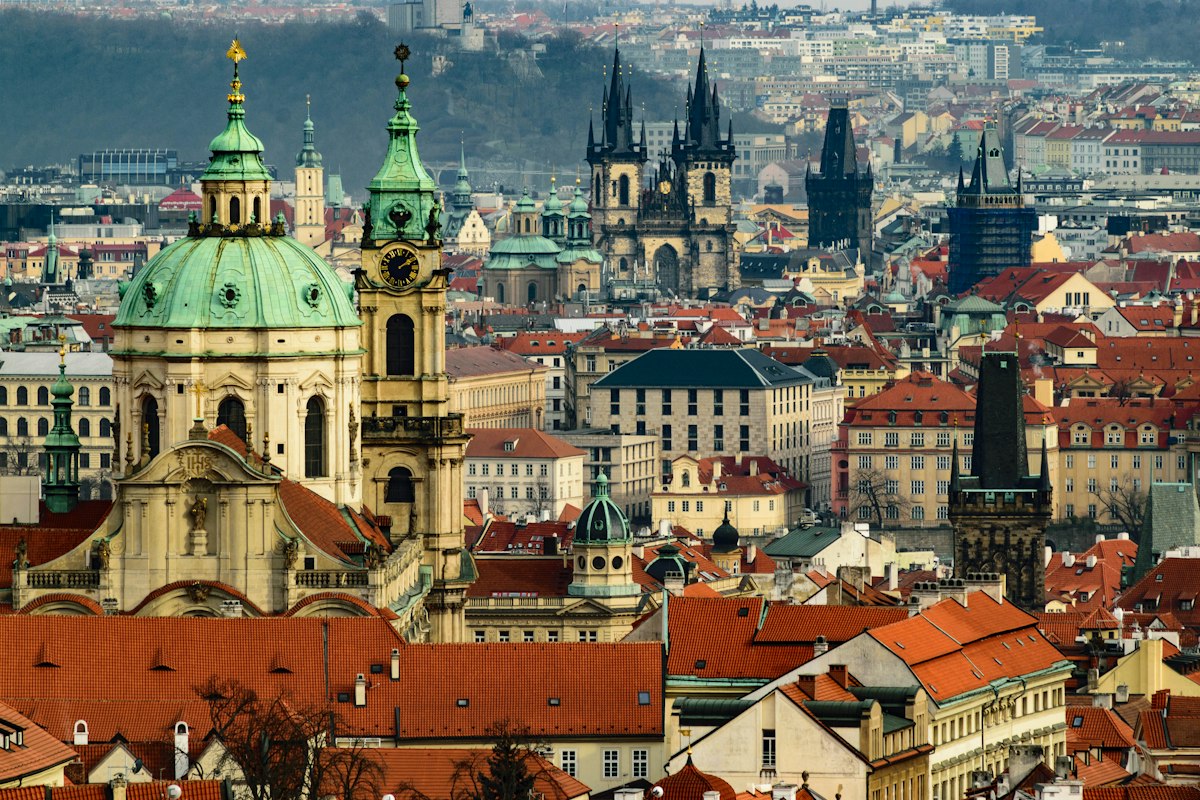
Budapest became a single city on 17 January 1873, when the imperial decree unifying Buda, Pest, and the smaller district of Óbuda was signed. Before that date, they were three separate municipalities, separated by the Danube and by temperament. The river is not decorative here. It’s the city’s actual argument: Buda on the western bank is hills, palaces, Turkish baths, and a certain Habsburg seriousness; Pest on the eastern bank is flat, commercial, Jewish Quarter, ruin bars, and all the city’s actual energy. Merge them on a map and you have Budapest. Understand them separately, which requires staying long enough to cross the river repeatedly in different moods, and you have something more interesting.
Most visitors don’t cross the river at all, or they cross it once, for a photograph. They concentrate in the 5th and 7th districts of Pest, do the Parliament tour and the Széchenyi Baths, eat goulash near the Great Market Hall, and leave after three days satisfied with a city they haven’t really met. This guide is for the other kind of visitor, the one who finds, by day four, that they’re not ready to go.
the philosophy behind slow travel and why staying longer changes everything
TL;DR: Budapest is two cities in one, Buda’s hillside palaces and Ottoman baths on the west bank, Pest’s Jewish Quarter, ruin bars, and market culture on the east. The city has 38 operational thermal baths (more than anywhere else in Europe), 4.2 million overnight visitors concentrated into a fraction of its 23 districts (Hungarian Tourism Agency, 2025), and a food scene that’s become genuinely worth the journey. Five nights is the minimum. Seven is better. The city opens properly around day four.
Why Does Budapest Reward Staying Longer?
Budapest’s 1.7 million residents live across 23 districts, but 4.2 million overnight visitors in 2024 concentrated almost entirely in two of them (Hungarian Tourism Agency, 2025, KSH Hungarian Central Statistical Office, 2025). The tourist city and the inhabited city barely overlap. Step outside the 5th and 7th districts and you’re largely alone in a place that’s running its own life without reference to you.
The thermal bath argument alone justifies a week. Budapest has 38 operational thermal baths fed by over 100 natural springs, more than any other capital city in Europe (Budapest Spas and Hot Springs Tourism Office, 2024). These are not hotel spas or wellness centres, they’re municipal institutions, some Ottoman, some Art Nouveau, some Baroque, each with its own character and its own regulars. A week gives you time to understand the difference between them, which matters considerably.
The food argument is quieter but equally compelling. Budapest’s food scene has shifted dramatically since 2015. Natural wine bars have opened across the 7th district. Hungarian fine dining, informed by the country’s genuinely deep culinary tradition, now operates at prices roughly 60 to 70% lower than equivalent restaurants in Vienna or Amsterdam. The city has become one of the more interesting places in Europe to eat seriously without paying a serious price.
What the numbers miss: Budapest receives 4.2 million overnight visitors annually but only a fraction penetrate beyond the tourist core. The 13th district, Újlipótváros, a residential neighbourhood of 1930s apartment buildings, espresso bars, and Saturday farmers’ markets, is 15 minutes by tram from the Parliament and essentially invisible to most visitors. That gap between what exists and what most people find is where slow travel operates.
The Two Sides: Understanding Buda and Pest
The Chain Bridge, the Széchenyi Lánchíd, completed in 1849, was the first permanent bridge between Buda and Pest and remains the physical argument for the city’s unity. Before it opened, the crossing was by boat in summer and on ice in winter. The two banks were genuinely separate in almost every practical sense. The bridge created the possibility of a unified city; it took another twenty-four years for the politics to follow.
[IMAGE: The Chain Bridge seen from the Danube at dusk, with Buda’s Castle Hill rising behind it, search terms: Budapest Chain Bridge Danube dusk Buda Castle Hill]
Buda: Hills, Palaces, and Ottoman Time
Buda is the quieter bank. Castle Hill, Várnegyed, rises 170 metres above the Danube and contains the Hungarian National Gallery, the Budapest History Museum, the old Royal Palace, and the Fisherman’s Bastion: a decorative neo-Romanesque terrace built between 1895 and 1902 that offers one of the great unobstructed views of the Parliament across the river. The hill’s streets are cobbled and well-preserved, occasionally tourist-facing in the way that fortified old towns can be, but quiet enough before 10am to feel like walking through a working city.
The Turkish legacy is more visible in Buda than Pest. The Ottomans occupied the city from 1541 to 1686, long enough to build baths that are still in use today. The Rudas Baths, opened in 1566, retain their original octagonal domed pool with coloured glass oculi. The Király Baths, from 1570, are smaller and less visited. Both are on the Buda bank, a short walk from the river.
Gellért Hill, south of Castle Hill, rises to 235 metres and carries a citadel built by the Habsburgs in 1854. The view from the top is the broadest in the city. The hill is worth the 30-minute climb on a clear morning, less for any specific monument than for the sense of the city’s geography that it provides.
Pest: Flat, Commercial, and Alive
Pest has the energy. The eastern bank is flat, a 19th-century grid of boulevards and apartment blocks built on the boom of the 1880s and 1890s, when Budapest was one of the fastest-growing cities in Europe. The Parliament, completed in 1904, sits on the Pest bank: its Gothic Revival towers reflected in the Danube to a degree that seems calculated. The Great Market Hall, the Hungarian State Opera, the Jewish Quarter, the ruin bars, they’re all Pest.
The 7th district, Erzsébetváros, contains most of what visitors come to Budapest to find. It was the Jewish Quarter before the Second World War; the area around Klauzál Square and the Dohány Street Synagogue still carries that history in its street patterns and architecture. The ruin bars that opened here in the early 2000s, occupying empty lots and crumbling pre-war buildings, turned the district into the city’s nightlife centre. The restaurants that followed have made it the best place to eat in Budapest.
Slow travellers should base in Pest, the logistics make it necessary, and plan days in Buda. The daily crossing of the Chain Bridge or the Elizabeth Bridge becomes its own small ritual, the moment when the city’s geography makes itself felt.
The Thermal Baths: A Practical Guide
Budapest’s 38 thermal baths are fed by springs with water temperatures ranging from 21°C to 76°C, a geological gift from the volcanic activity beneath the Pannonian Plain (Budapest Spas and Hot Springs Tourism Office, 2024). They’re not interchangeable. Each bath has its own architecture, its own temperature profile, its own social atmosphere, and its own relationship to the tourist trade. Understanding the differences is the first practical act of slow travel in Budapest.
[IMAGE: The interior dome of Rudas Baths with its octagonal pool and coloured glass oculi casting patterns on the water, search terms: Rudas Baths Budapest interior dome pool Ottoman]
Széchenyi: The Introduction
The Széchenyi Baths in City Park, opened in 1913, are the largest thermal bath complex in Europe by some measures, three outdoor pools, fifteen indoor pools, water temperatures between 27°C and 38°C (Széchenyi Baths official site, 2026). The Neo-Baroque building is remarkable. The outdoor pools, where men play chess on floating boards in winter steam, are genuinely unlike anything else in Europe.
They’re also the busiest baths in the city, which matters if you’re visiting in high season. Go on a weekday morning, before 10am, and the atmosphere is closer to what it used to be. Arrive on a Saturday afternoon in July and you’re in a theme park. Book online to avoid the queue.
Gellért: The Most Beautiful Interior
The Gellért Baths, attached to the Gellért Hotel on the Buda bank, opened in 1918 in an Art Nouveau building that’s one of the most beautiful in the city. The main indoor pool, vaulted ceiling, Roman columns, mosaic-tiled walls, is the best-designed interior of any bath in Budapest. Entry runs approximately 7,500–8,500 HUF (€19–22) depending on the service package (Gellért Baths official site, 2026).
The waves pool is an unusual feature, a mechanised outdoor pool that generates artificial waves every hour. It’s worth seeing. Go for the architecture rather than the thermal experience per se; the water here is less characterful than Rudas.
Rudas: The Correct Introduction
On arriving at Rudas on a Tuesday at 8am: The taxi drops you at a plain entrance on the Buda bank. There’s no queue. You pay at a counter where the attendant doesn’t particularly acknowledge you. You change, you cross the cold stone floor to the octagonal pool, and you lower yourself into 36°C water under a 16th-century dome with coloured light coming through the oculi above. There are perhaps eight other people in the pool. Two of them are regulars, here every Tuesday. The silence is total. This is what the baths are supposed to be, not tourism but practice, a daily institution that happens to be open to visitors.
The Rudas Baths were built in 1566 under the Ottoman governor Sokollu Mustafa Pasha. The original domed section is still the centrepiece: an octagonal pool surrounded by four smaller pools of different temperatures, covered by a Turkish dome with star-shaped coloured glass oculi. Entry to the thermal section costs approximately 5,500 HUF (€14) on weekdays (Rudas Baths official site, 2026).
Rudas is walk-in only, no advance booking for the thermal section. Go on a weekday morning. Bring your own towel and flip-flops, or rent them. Expect to stay for two hours.
Király: The Quiet One
The Király Baths, opened in 1570 and the smallest of the major Ottoman baths, are the least visited of the four main complexes. The architecture is similar to Rudas, domed, intimate, genuinely Turkish in atmosphere, but the facilities are more modest and the closing times earlier. For the slow traveller who has already done Rudas, Király offers a useful comparison: the same Ottoman bones, a different neighbourhood setting in Buda’s Víziváros district.
Citation Capsule: Budapest sits above over 100 natural thermal springs producing water at temperatures between 21°C and 76°C, supporting 38 operational thermal baths, more than any other capital city in Europe (Budapest Spas and Hot Springs Tourism Office, 2024). The oldest still-operational baths, Rudas (1566) and Király (1570), were built during the Ottoman occupation of Buda and retain their original domed architecture. Entry to Budapest’s thermal baths ranges from approximately 5,500 HUF (€14) at Rudas to 8,500 HUF (€22) at Gellért for a standard weekday session.
The Food Argument
Hungarian food has an international reputation problem. Goulash, gulyás in Hungarian, actually a soup rather than a stew, is the entry point and, for many visitors, the exit point too. This is a failure of attention. Hungarian cuisine is a serious and largely underexplored culinary tradition with real depth: paprika-based braises, the fishermen’s soup halászlé, pörkölt (the stew that goulash approximates), stuffed peppers, the entire pastry tradition built around chimney cake, rétes (strudel), and túrós táska. A week in Budapest spent eating only in tourist restaurants will confirm every cliché. A week spent eating correctly will not.
how to eat well on a slow travel trip across Europe
The menü lunch is the slow traveller’s most important discovery. Most Hungarian restaurants, not tourist-facing establishments, but the neighbourhood étterem serving the people who work nearby, offer a set lunch of two courses, usually including a soup, for 2,500–4,000 HUF (€6–10) on weekdays (Hungarian Restaurant Association data via KSH, 2025). This is how Hungarians eat lunch. The soup is the point, Hungary has one of the most sophisticated soup traditions in Central Europe, and the daily soup at a neighbourhood restaurant will be better than anything on the evening à la carte.
Lángos: The Street Food Argument
Lángos is fried flatbread, slightly yeasted, topped with sour cream and grated cheese. It exists at the intersection of comforting and impossible to stop eating. The best versions are sold at the Great Market Hall on the ground floor and at the few remaining street stalls in the outer markets. The tourist versions are larger and more elaborate, they add garlic butter, ham, various toppings. The correct version is sour cream and cheese and nothing else. Price: 600–900 HUF (€1.50–2.30).
The Jewish Quarter Food Scene
The area around Klauzál Square in the 7th district has become the best restaurant neighbourhood in Budapest over the past decade. It’s not traditional Hungarian, the restaurants here are more international in orientation, informed by the natural wine scene and by chefs who have trained in Western Europe and come back. The prices remain substantially lower than equivalent establishments in Vienna or Prague: a serious dinner for two with wine runs 15,000–25,000 HUF (€38–64) at a good 7th district restaurant.
Hungarian Wine: The Serious Case
Hungary is one of the most interesting wine countries in Eastern Europe and one of the least understood internationally. Tokaj produces the great sweet wines, aszú, the noble rot wine that was served at the courts of Versailles, but the dry Furmint from Tokaj has become, over the past decade, one of the more compelling dry white wines in Europe. Eger (Egri Bikavér, Bull’s Blood) and Villány (red wines from Kadarka and international varieties) complete a wine country of real ambition.
The natural wine bars of the 7th district are the best place to explore it. These are small rooms with short lists, mostly Hungarian producers, and staff who are genuinely interested in what they’re pouring. A glass of good Furmint costs 900–1,500 HUF (€2.30–4). A bottle to take away runs 2,500–6,000 HUF (€6–15).
On the menü and what it tells you: The daily lunch menu at a Hungarian neighbourhood étterem is a more accurate guide to the city’s cooking than any guidebook listing. If the soup on the menü board is written by hand each morning and changes daily, the kitchen is cooking from what arrived at the market. If it’s laminated with a fixed selection, the kitchen isn’t. In practice: avoid anywhere with a laminated English menu in the window. The ETterem three doors down with the handwritten board and no translation is the one worth entering.
What to Do Properly
The Hungarian Parliament: Arrive by Boat
The Hungarian Parliament, built between 1885 and 1904, is the largest building in Hungary and one of the largest parliament buildings in the world by floor area, 268 metres long, with 691 rooms and 19 kilometres of stairs (Hungarian Parliament official site, 2026). The architect Imre Steindl based the Gothic Revival design on the Palace of Westminster; the result is simultaneously familiar and entirely Hungarian in its scale and ornamentation.
Guided tours are the only public access to the interior, and they’re worth booking in advance. The Crown of Saint Stephen, the medieval coronation crown of Hungarian kings, is on display in the central hall. Arrive for the tour at the Kossuth Lajos tér entrance; but before the tour, cross the river to the Buda bank at dusk and look back. The Parliament reflected in the Danube is one of the genuinely great city views in Europe. No photograph prepares you for the scale.
The Great Market Hall (Nagyvásárcsarnok)
Budapest’s Great Market Hall was built in 1897 to a design by Samu Pecz, an iron and brick structure with Zsolnay ceramic roof tiles that remains one of the finest 19th-century market buildings in Europe. Three levels: the ground floor is the produce hall (meat, fish, vegetables, paprika, cheese, Hungarian pickles), the mezzanine is a food court of modest quality, and the upper level is tourist tchotchkes.
Go for the ground floor. Tuesday to Friday mornings, before 11am, the tourist density is low enough to shop as the locals do. The paprika stalls sell decent product at reasonable prices, buy the sweet (édes) and hot (erős) varieties together. The pickled goods counter near the entrance is worth investigating: fermented vegetables, pickled peppers, various cucumber preparations. A useful afternoon purchase: a bag of ground paprika and a bottle of Tokaji Furmint to bring home.
The Dohány Street Synagogue
The Dohány Street Synagogue, completed in 1859, is the largest synagogue in Europe and the second largest in the world, with a capacity of 3,000 people (Dohány Street Synagogue official site, 2026). The Moorish Revival architecture, twin onion domes, ornate facade, an interior of extraordinary scale, sits at the edge of what was the Budapest Jewish ghetto during the Second World War. The memorial garden behind the synagogue contains graves of those who died in the ghetto in 1944–45, marked by a weeping willow sculpture by Imre Varga whose leaves bear the names of the dead.
This is one of the places in Budapest where the 20th century becomes physically present. Allow two hours, and include the attached museum, which documents the history of the Jewish community in Hungary with clarity and without sentimentality.
Memento Park (Szoborpark)
[IMAGE: The monumental Soviet-era statues at Memento Park Budapest in an open field, including a large Lenin figure, search terms: Memento Park Budapest communist statues Szoborpark]
After 1989, Budapest removed the communist-era statues from its public squares, the Lenins, the Stalins, the heroic workers, and relocated them to a purpose-built park 10 kilometres outside the city. Memento Park is strange, melancholy, and fascinating in roughly equal measure. The statues, stripped of their original context, become something between absurdity and genuine historical weight. Standing in front of a four-metre Lenin in an open field in suburban Budapest produces a particular feeling that no museum case replicates.
Getting there requires a car or a dedicated bus (a private shuttle runs from Deák Ferenc tér, returning after 1.5 hours, check the current schedule). Budget half a day. It’s unlike any other open-air museum in Europe.
Citation Capsule: The Hungarian Parliament Building, constructed between 1885 and 1904 to designs by architect Imre Steindl, measures 268 metres in length and contains 691 rooms across a Gothic Revival structure on the Pest bank of the Danube (Hungarian Parliament official site, 2026). It remains the largest building in Hungary and one of the most architecturally significant parliament buildings in Europe. Guided interior tours are the only public access and should be booked in advance; demand consistently exceeds walk-in availability during the April–October season.
How to Get to Budapest by Train
The train is the correct way to arrive in Budapest. The journey from Vienna deposits you at Budapest Keleti, the main station, well-connected to Metro line M2, with the city beginning immediately outside the entrance. There’s no airport transfer, no 45-minute liminal journey between arrival point and destination. You step off the train in the city.
the complete guide to European train travel, routes, booking, and what to expect
The Vienna–Budapest EC service (formerly ÖBB Railjet) covers 250 kilometres in 2 hours 40 minutes, with advance fares from €15 (ÖBB, 2026). This is one of the best-value city-to-city connections in Central Europe, shorter, cheaper, and more comfortable than the equivalent flight when airport transfer times are counted. Trains run roughly every two hours throughout the day.
Vienna as a train hub for Central Europe, onward connections and what to see
From Prague, the EC train via Bratislava takes approximately 6 hours 45 minutes. This is a comfortable day journey through three capital cities, the Bratislava stop is 45 minutes from Vienna and less than an hour from Budapest, and brief enough to prompt the thought that a one-night stop there on the way is worth considering. Advance fares on the Czech-Austrian-Hungarian international services start around €25–40 (Czech Railways / ČD, 2026).
From Berlin, the journey runs 9–11 hours depending on whether you take the overnight option or a day service via Prague. The overnight train from Berlin Hauptbahnhof arrives in Budapest in the early morning, a practical choice that turns the journey time into sleeping time rather than travel time.
From Bucharest, the overnight train to Budapest takes approximately 14 hours, a long journey by Western European standards, and one of the genuinely great overnight rail experiences in Central Europe. The border crossing in the middle of the night, the slow accumulation of Hungarian countryside at dawn, the arrival at Keleti as the city is waking: this is train travel that earns its travel.
On the Vienna–Budapest corridor: The two-hour-forty-minute journey between these cities is one of the few rail connections in Europe that genuinely makes the flight option look unreasonable rather than merely less pleasant. Vienna Schwechat to Budapest Ferihegy, when you add check-in, security, transfer times, and the 45-minute journey from each airport to the city centre, takes approximately 3.5 to 4 hours door-to-door. The train takes 2 hours 40 minutes and arrives at Budapest Keleti, five minutes from the city centre by Metro. The maths is not complicated.
Citation Capsule: The EC train service between Wien Hauptbahnhof and Budapest Keleti covers 250 kilometres in 2 hours 40 minutes, with multiple daily departures and advance fares from €15 (ÖBB, 2026). Door-to-door journey time from central Vienna to central Budapest by train is approximately 3 hours, compared with 3.5–4 hours by air when airport transfer and security times are included. Budapest Keleti station is served by Metro line M2, reaching the city’s main accommodation districts in under 10 minutes.
The Slow Traveller’s Rhythm for a Week
The wrong way to think about a week in Budapest is as an itinerary. The right way is as a rhythm, a set of daily practices that accumulate into something like a life, briefly, in a city that isn’t yours yet.
The morning belongs to the thermal baths. Arrive at Rudas or Széchenyi by 8am, before the day-tripper influx. Spend 90 minutes in the water, the pool, the steam room, the cold plunge in whatever order your body prefers. Leave by 10am. The thermal bath does something to the morning that makes everything after it feel more considered.
Late morning is Buda. Walk across the Chain Bridge and up to Castle Hill, or take the funicular from Clark Ádám tér. Walk the cobbled streets of Várnegyed before the tour groups arrive at 11. Come back across the river for lunch.
The menü lunch at a neighbourhood étterem runs from noon to 2pm. Order the soup, then the main, the pörkölt or the stuffed pepper or whatever the board says today. A glass of Egri Bikavér is 600–800 HUF (€1.50–2). Eat slowly. Pay the bill, which will surprise you with its modesty. Walk in the general direction of whatever appeals.
The afternoon is one thing, done without hurrying. The Dohány Street Synagogue. A long loop through the 13th district, stopping in cafés as the mood dictates. The National Gallery in Buda on a grey day. The Great Market Hall for lángos and paprika shopping. Do not attempt two things in one afternoon. One is sufficient. Done slowly and with attention, one thing in an afternoon constitutes a full afternoon.
Evening begins at 7pm in a natural wine bar in the 7th district, not one of the famous ruin bars, but a smaller place with ten tables and a Hungarian wine list. The ruin bar circuit (Szimpla Kert being the original and most famous) is worth one evening, genuinely, for what it represents: the 2002 moment when a generation occupied an abandoned factory and turned it into a cultural space that changed how a neighbourhood understood itself. Then spend your other evenings somewhere quieter. Dinner at 8:30pm. The conversation goes where it goes.
By day four, the city starts to feel different. The bath becomes the rhythm. The market stall where you bought the cheese twice acknowledges you. The walk across the Chain Bridge becomes a daily commute. This is the point at which slow travel begins. It just takes four days to get there.
Related Reading
- Budapest to Belgrade by Train: The Balkans Express, Budapest to Belgrade by train takes 7h 30min and costs from €15 advance.
- Amsterdam for Slow Travellers: How to Actually Arrive in the City, Amsterdam rewards people who stay long enough to stop sightseeing.
- Edinburgh Slow Travel Guide: One Week in Scotland’s Capital, Edinburgh rewards those who stay long enough to walk Water of Leith, eat in Leith, and take the train to Stirling.
Frequently Asked Questions
How long should you spend in Budapest for slow travel?
Five nights is the minimum at which Budapest’s two-city character becomes genuinely available to you, enough time to understand Buda and Pest as distinct entities rather than a single tourist zone. Research on psychological detachment during travel suggests it takes three to four days to shift from running your ordinary life in your head to actually perceiving your surroundings (Journal of Leisure Research, 2023). A five-night trip gives you one or two days of real presence in Budapest. Seven nights allows the city’s rhythm to fully emerge, the morning thermal bath, the menü lunch circuit, the ruin bar evening. Ten nights or more and you’re essentially living here, which is the city’s most compelling argument.
how to plan a slow travel trip, choosing duration, neighbourhoods, and what to leave out
Is Budapest cheap for slow travel?
Very much so by Western European standards, though prices have risen substantially since 2019. Hungary’s cost of living index in 2025 places Budapest among the five most affordable EU capitals (Numbeo Cost of Living Index, 2025). A restaurant meal runs roughly 40–50% of the equivalent in Vienna or Prague. Thermal bath entry is 5,500–8,500 HUF (€14–22). A glass of decent Hungarian wine at a wine bar is 900–1,500 HUF (€2.30–4). Weekly apartment rentals in the 7th or 8th district run €350–600. Budapest remains one of the most affordable European capitals for an extended stay, which makes the slow travel case particularly easy to make here: staying longer costs less than a week in a budget hotel in Vienna.
Which district should I stay in Budapest?
The 7th district, Erzsébetváros, is the most varied neighbourhood for visitors: Jewish Quarter, ruin bars, good restaurants, central location. For a first visit of five to seven nights, it’s the strongest choice. The 5th district (Belváros/Inner City) is more polished and more expensive, the Pest equivalent of staying in the Marais in Paris, which is beautiful but tourist-facing. The 13th district (Újlipótváros) is the best choice for a stay of ten nights or more: genuinely residential, excellent café culture, very low tourist density. Avoid the immediate vicinity of Deák Ferenc tér for anything longer than one night, the area functions as a transportation hub and is correspondingly anonymous.
What are the thermal baths in Budapest and which is best?
Budapest has 38 operational thermal baths fed by over 100 natural springs (Budapest Spas and Hot Springs Tourism Office, 2024). They’re not interchangeable. Széchenyi (1913) is the largest and most tourist-friendly, good for a first visit, genuinely impressive architecture, outdoor pools in a Neo-Baroque palace. Gellért (1918) has the most beautiful interior, Art Nouveau, vaulted ceiling, worth seeing once. Rudas (1566) is Ottoman-era and the most authentic experience: a 16th-century dome, coloured glass oculi, weekday mornings when it functions as a working bath rather than an attraction. For a slow traveller doing the baths seriously over a week, the order is Rudas first (for perspective), Széchenyi second (for scale), Gellért third (for architecture), Király whenever you have a free Buda afternoon.
How do I get to Budapest by train?
From Vienna: direct EC train from Wien Hauptbahnhof to Budapest Keleti in 2 hours 40 minutes, advance fares from €15, multiple daily departures (ÖBB, 2026). From Prague: EC service via Bratislava in approximately 6 hours 45 minutes (Czech Railways, 2026). From Berlin: overnight or day service via Prague, 9–11 hours depending on the service. From Bucharest: overnight train, approximately 14 hours, the border crossing and the dawn arrival at Keleti make it one of the more memorable overnight rail journeys in Europe. All intercity services arrive at Budapest Keleti, which is directly on Metro line M2, five minutes from the city centre by train.
getting to Budapest from Vienna by train, booking guide and what to expect on board
The Case, Simply
Budapest is a city that punishes efficiency. Three days here produces a very clear set of photographs and a serviceable account of a place that resembles Budapest the way a sketch resembles a painting. The Parliament in the photograph, the bath in the photograph, the ruin bar in the photograph. All accurate. None of it true.
The city that Budapesters actually inhabit, the Buda morning walk before the tourists arrive, the 7th district wine bar at 8pm where the Hungarian Furmint list is written on a blackboard and changes when the cellar does, the Tuesday morning at Rudas when the dome light falls through coloured glass onto entirely still water, requires time. Not a great deal of time. But more than most visitors give it.
Five nights is the honest minimum. Seven is the version worth having. The city opens around day four, when the bath has become routine and the menü lunch étterem recognises you and the walk across the Chain Bridge has accumulated enough repetitions to feel like your walk rather than a landmark. Budapest has been waiting, without particular urgency, for you to arrive at that point. It’s a patient city. It will still be there when you do.
slow travel for seniors, how to structure a longer European city stay
how to book European trains for a multi-city slow travel itinerary
what slow travel means and why it produces better journeys
All transport times, fares, bath entry prices, and restaurant cost ranges reflect February 2026 conditions. Verify current prices before visiting, bath admission fees and train fares vary by season and booking window. Exchange rate used: 1 EUR = approximately 390 HUF (February 2026).