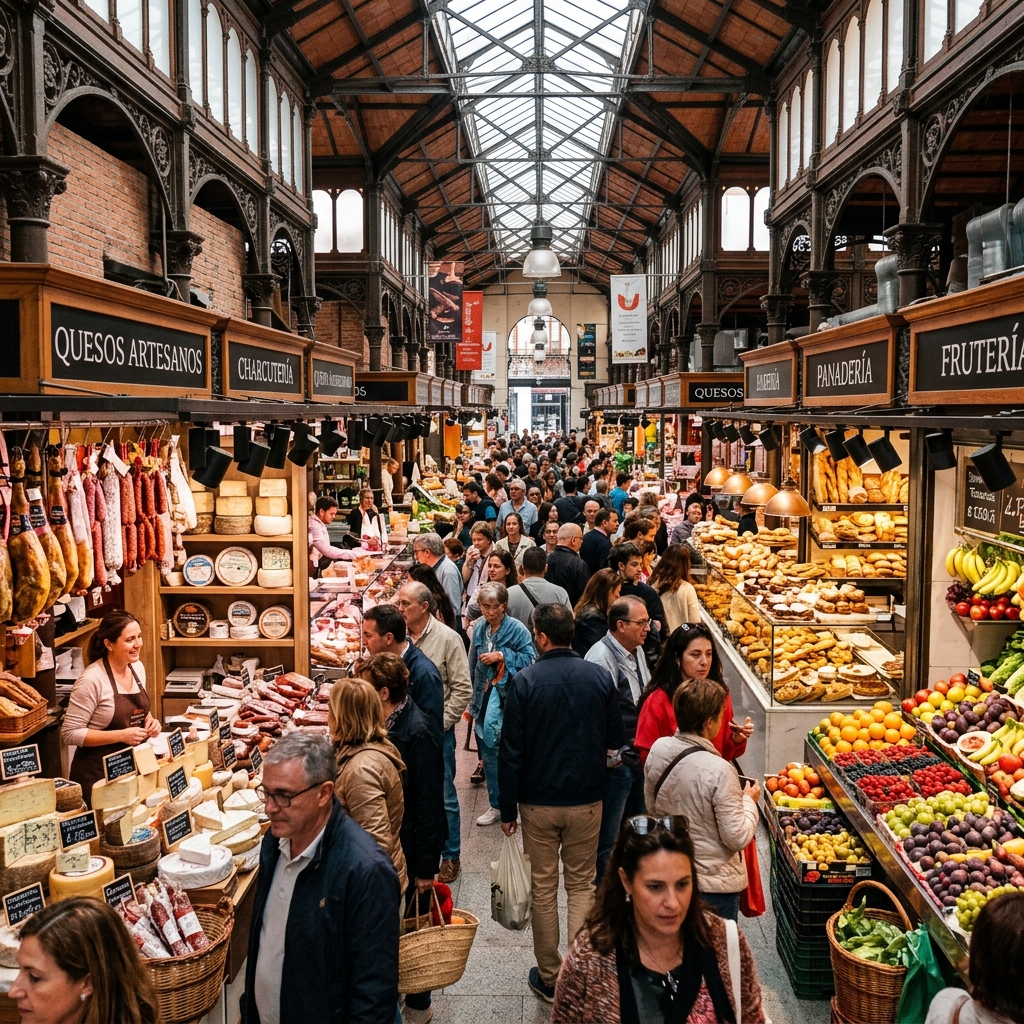
The best food in Europe is not in the expensive restaurants. It’s in the markets, the bakeries, the shops that have been selling the same cheese for four generations, the corner places where the menu is whatever they made this morning. And almost all of it is in cities you can reach by train and explore on foot.
This is not a guide to Michelin-starred dining. It’s a guide to cities where the everyday food is extraordinary, where you can walk into a market, eat standing at a counter, follow your nose down a side street, and have a food experience that no restaurant reservation can match. Every city on this list is reachable by train from a major European hub and walkable once you arrive.
We’ve written detailed food tour guides for several of these cities, Bologna, Barcelona, Lisbon, Lyon, Naples, Rome, Istanbul, and Copenhagen. This guide is the overview: which cities, why, and how to prioritise if you can’t visit them all.
TL;DR: Europe’s best food cities are all reachable by train and walkable on foot. Bologna, Lyon, San Sebastián, Naples, and Istanbul are the top five. Autumn is peak food season in most of Europe. Self-guided market tours cost 20-40 euros in food; guided tours run 60-120 euros per person.
The Top 12
1. Bologna, Italy
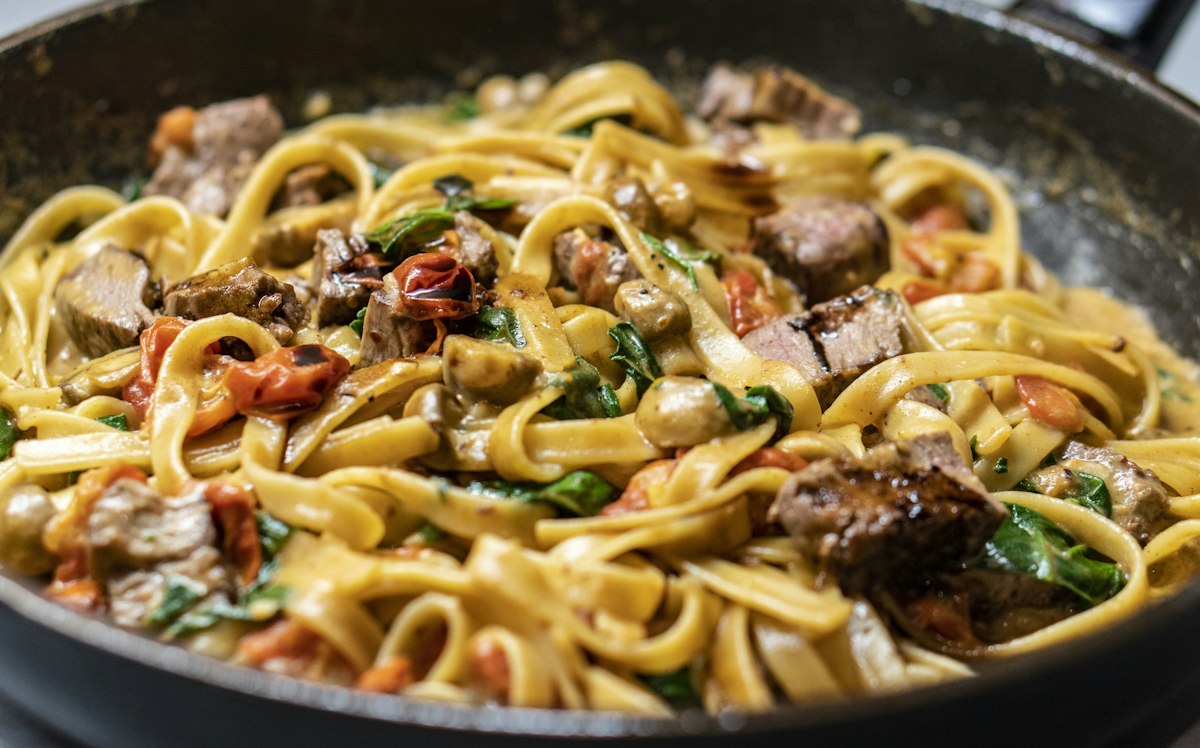
Bologna is the food capital of Italy, which makes it one of the food capitals of the world. The city sits at the heart of Emilia-Romagna, the region that produces more protected-designation-of-origin food products than any other in Europe. Parmigiano-Reggiano, prosciutto di Parma, mortadella, balsamic vinegar of Modena, and the fresh egg pasta that defines the cuisine are all from here.
The Quadrilatero, a tangle of medieval streets near Piazza Maggiore, is the city’s historic food market. Cheese shops, salumerie, pasta shops, and wine bars occupy the same buildings they’ve occupied for centuries. A morning spent walking the Quadrilatero, eating as you go, is one of the best food experiences in Europe.
Bologna is a 35-minute train ride from Florence, 2 hours from Milan, and 2 hours from Venice. Everything you need to eat is within walking distance of the station. Our full Bologna food tour guide covers the essential stops.
2. Lyon, France
Lyon has been called the gastronomic capital of France since the 1930s, when the food critic Curnonsky made the declaration. It still holds the title, not because of its fine dining (though that’s excellent) but because of its bouchons: small, traditional restaurants serving Lyonnaise food in portions that assume you’ve been doing manual labour.
Quenelles de brochet (pike dumplings in cream sauce), salade lyonnaise, tablier de sapeur (breaded tripe), and praline tarts are all Lyon specialities. The Halles de Lyon Paul Bocuse, the city’s covered market, is the place to start. The market has about 60 vendors selling cheese, charcuterie, pastries, wine, and oysters, all of which can be consumed on the spot.
Lyon is 2 hours from Paris by TGV, 1 hour 40 minutes from Marseille. The old town (Vieux Lyon) and the market are both walkable from Part-Dieu station. Full Lyon food tour guide.
3. San Sebastián, Spain
San Sebastián has the highest concentration of Michelin stars per capita of any city in the world. But forget the Michelin stars, the reason to come is the pintxos. These are the Basque version of tapas: small, elaborate bites displayed on bar counters throughout the old town (Parte Vieja), each one a miniature composition.
The pintxos crawl, moving from bar to bar, eating one or two pintxos at each stop, is the city’s defining food ritual. A typical evening involves 5-8 bars and costs about 25-40 euros including drinks. The quality is absurdly high. Chefs compete to produce the best pintxos, and the results would be credible as starters in fine dining restaurants.
San Sebastián is reachable by train from Madrid (5h) or Barcelona (5h 30min). The old town is a 15-minute walk from the station. Our San Sebastián food guide covers the essential bars and routes.
4. Naples, Italy
Naples has a defensible claim to being the birthplace of pizza, and eating pizza in Naples, the real thing, made with San Marzano tomatoes, fior di latte, and baked in a wood oven at 485 degrees for 60-90 seconds, is a corrective to everything you thought pizza was.
But Naples is much more than pizza. The city’s street food tradition is among the richest in Europe: frittatina di pasta (deep-fried pasta cakes), cuoppo (fried seafood in a paper cone), sfogliatella (shell-shaped pastry with ricotta filling), and taralli (savoury biscuits). The Spaccanapoli street and the Pignasecca market are the best areas for eating on foot.
Naples is 1 hour 10 minutes from Rome by Frecciarossa. The historic centre is walkable from Napoli Centrale station. Our Naples food tour guide has the essential stops.
5. Istanbul, Turkey
Istanbul’s food scene spans two continents and several centuries. The city’s markets, the Spice Bazaar, the Kadıköy Market on the Asian side, the Balık Pazarı (fish market) in Beyoğlu, are overwhelming in the best possible way. Spices, dried fruits, fresh fish, street simit (sesame bread), baklava that shatters into a thousand layers, and kebabs that range from street-corner to transcendent.
The Asian side of Istanbul (Kadıköy) is increasingly the centre of the food scene. The ferry across the Bosphorus costs about 2 lira and takes 20 minutes, and is itself one of the great food-adjacent experiences in Europe, because you’re crossing a continental boundary while eating a fish sandwich from the dock vendors.
Istanbul is reachable by train from Ankara (4h by YHT high-speed) and Sofia (8-10h). The city is served by metro, tram, and ferry, no car needed. Our Istanbul food tour guide covers both sides of the city.
6. Lisbon, Portugal
Lisbon’s food scene is built on simplicity and quality of ingredients rather than technique. Grilled fish (sardines, sea bass, octopus), pastéis de nata (custard tarts), bifanas (pork sandwiches), and the extraordinary variety of Portuguese cheese and charcuterie are the foundations.
The Mercado da Ribeira (Time Out Market) is the famous food hall, but the real Lisbon food experience is in the old neighbourhoods: Alfama’s tascas (taverns), Mouraria’s multicultural food scene, and the traditional cervejarias (beer halls) that serve shellfish and cold beer.
Lisbon is the terminus of the Portuguese rail network, with trains to Porto and connections to Spain. The city is hilly but walkable, trams help on the steepest stretches. Our Lisbon food tour guide and Portugal food guide cover the details. See also our Lisbon slow travel guide.
7. Barcelona, Spain
La Boqueria market on La Rambla is the most famous food market in Europe for good reason, it’s beautiful, overwhelming, and full of things you want to eat immediately. But Barcelona’s food scene extends well beyond one market. The Mercat de Sant Antoni (recently renovated), the vermouth bars of Poble-Sec, and the seafood restaurants of Barceloneta are all excellent and all walkable.
Barcelona combines Catalan cuisine (suquet de peix, escalivada, crema catalana) with one of Spain’s best tapas scenes and a growing contemporary food culture. The combination of beach, market, and old town makes it one of the most pleasurable cities in Europe to eat your way through.
Barcelona is reachable by high-speed AVE from Madrid (2h 30min), TGV from Paris (6h 30min), and regional trains along the Costa Brava. Our Barcelona food tour guide.
8. Rome, Italy
Rome’s food is defined by a small number of dishes executed with fierce local pride: cacio e pepe (pecorino and black pepper pasta), carbonara (guanciale, egg, pecorino), amatriciana (guanciale, tomato, pecorino), and supplì (fried rice balls). The Roman approach to food is conservative, they’ve been making the same dishes for centuries and see no reason to change.
The Testaccio neighbourhood is Rome’s traditional food district, built around the former slaughterhouse. The Testaccio Market, the surrounding trattorias, and the bakeries that still make maritozzi (cream-filled buns) are all within a few blocks.
Rome is the hub of the Italian rail network, connected to everywhere. Our Rome food tour guide and Rome slow travel guide cover the food and the pace.
9. Copenhagen, Denmark
Copenhagen’s food revolution over the past two decades, led by Noma and the New Nordic movement, has transformed the city into one of Europe’s most exciting food destinations. But you don’t need a Noma reservation (or budget) to eat well here.
The Torvehallerne market has two glass halls full of Danish and international food. Smørrebrød (open sandwiches) from Hallernes Smørrebrød, fresh pastries from Danish bakeries, and hot dogs from the street vendors are all excellent and affordable.
Copenhagen is reachable by train from Hamburg (4h 45min), Malmö (35min), and Stockholm. The city is flat and ideal for walking or cycling. Our Copenhagen food tour guide.
10. Porto, Portugal
Porto’s food scene is less famous than Lisbon’s but arguably better for market-based eating. The Mercado do Bolhão, recently restored to its original iron-and-glass grandeur, is one of Europe’s most beautiful markets. The francesinha (a layered meat sandwich drenched in beer-and-tomato sauce) is Porto’s signature dish and a genuine original.
Port wine, obviously, defines the city’s drink culture. The cellars in Vila Nova de Gaia, across the river from the old town, offer tastings that are often free or very cheap. The combination of food and wine in Porto is hard to beat at any price point.
Porto is reachable by train from Lisbon (2h 40min by Alfa Pendular). The old town is walkable from Campanhã or São Bento stations. Our Porto slow travel guide.
11. Vienna, Austria
Vienna’s food culture is built on the Kaffeehaus tradition (coffee and cake), the Beisl tradition (traditional Viennese taverns), and the Naschmarkt, a half-mile-long open-air market that sells everything from Austrian cheese to Turkish baklava. The Wiener Schnitzel, properly made from veal and pan-fried in butter, is one of the great simple dishes of European cuisine.
The Saturday Naschmarkt farmers’ market is exceptional, producers from across Austria selling direct. Combine it with a walk through the first district’s bakeries (Kipferl, Strudel, Sachertorte) and a coffee at a traditional Kaffeehaus and you have a food day that costs under 30 euros.
Vienna is a major rail hub with connections to Budapest, Prague, Munich, and across Europe. Our Vienna slow travel guide.
12. Palermo, Sicily
Palermo’s street food is the best in Italy, a bold claim, but defensible. Arancine (fried rice balls), panelle (chickpea fritters), pane con la milza (spleen sandwich, better than it sounds), and sfincione (Sicilian pizza) are all available from street vendors for 1-3 euros each. The Ballarò and Vucciria markets are the centres of the action.
Sicilian food is its own cuisine, influenced by Arab, Norman, and Spanish cooking traditions, and Palermo is its capital. The seafood is exceptional, the pastries (cannoli, cassata) are legendary, and the market culture is more alive here than anywhere else in Italy.
Palermo is reachable by overnight ferry from Naples (10h) or by train from mainland Italy via the Strait of Messina crossing. Our Palermo guide.
How to Plan a Food Tour Trip by Train
Pick 2-3 cities on the same rail line. Bologna-Florence-Rome. Lisbon-Porto. Barcelona-Lyon. San Sebastián-Bilbao. Cluster your food cities to minimise transit time and maximise eating time.
Stay at least 3 days per city. A proper food exploration takes time, markets operate on different days, restaurant recommendations accumulate, and your stomach needs recovery periods between major meals. Our slow travel planning guide covers the case for longer stays.
Visit markets in the morning. Most European markets peak between 8 and 12 AM. Go early, eat breakfast at the market, and do your serious food exploration before lunch. Afternoons are for recovery and lighter eating.
Book one guided food tour per city. Even if you prefer self-guided exploration, a single 3-hour guided food tour in each city gives you local knowledge, context, and recommendations that transform the rest of your stay. Our best food tours in Europe guide has recommendations.
Travel light. Food cities reward walking, and walking rewards light luggage. Our carry-on packing guide covers the essentials.
See also our guide to the best food cities in Europe for the broader picture, and eating on trains for making the most of the journeys between them.
We evaluate destinations and travel services independently. To learn more about our editorial standards, read our Editorial Policy.